
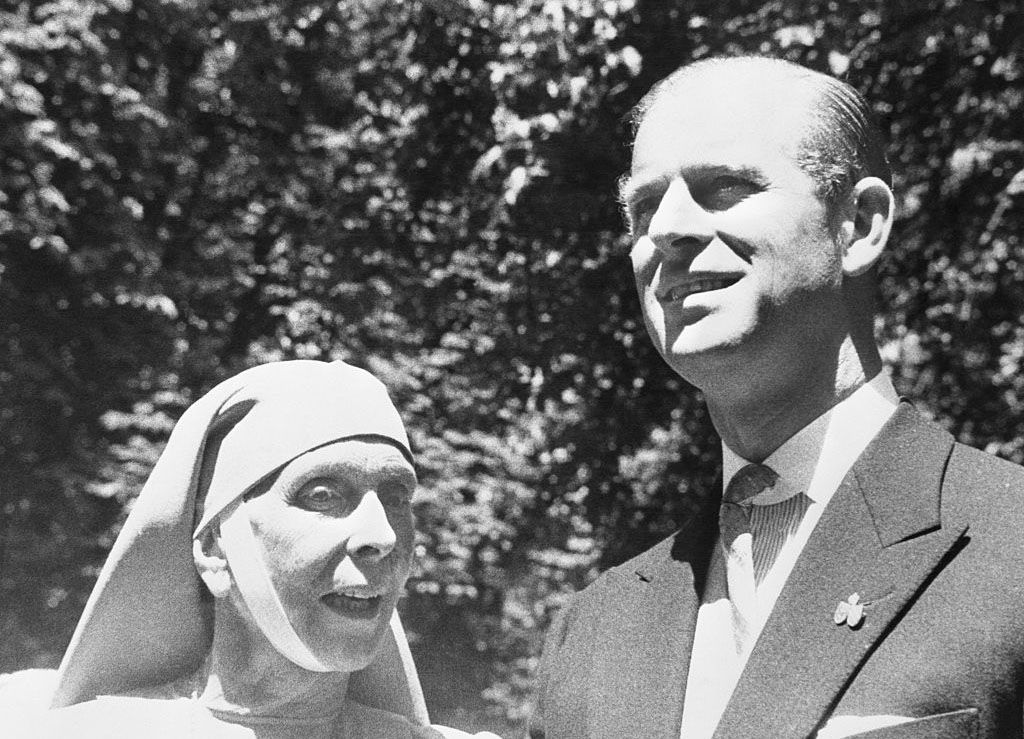
History often celebrates the loudest voices, the crowned heads, the men who command armies or parliaments. Yet sometimes the most extraordinary life is lived in near silence.
Such was the life of Princess Alice of Battenberg, a woman born into royalty, tested by suffering, and remembered today for her remarkable courage and compassion.

Born in 1885 at Windsor Castle, during the reign of Queen Victoria who was present at her birth, Alice entered the world with a challenge that shaped the rest of her life.
She was profoundly deaf from childhood. In the rigid social world of European royalty, deafness was often misunderstood.
Many mistook silence for lack of intelligence. Alice quietly proved them wrong. Through sheer determination she learned to lip read in three languages: English, German, and French.
Conversations that others heard with ease she read from the flicker of lips and the movement of faces. It was a mental feat that required discipline, patience, and brilliance.
As a young woman she married Prince Andrew of Greece and Denmark in 1903, entering the turbulent political life of the Greek royal family.
The marriage brought four daughters and a son, the young prince who would later become Prince Philip.
Yet royal life in Greece proved anything but stable. Coups, wars, and exile stalked the family.
Alice’s life took a tragic turn in the late 1920s. Under enormous stress and religious intensity, she began experiencing severe psychological distress that was later diagnosed as schizophrenia. In an era when mental illness was poorly understood, her treatment became harsh and deeply controversial.
She was examined by the famed psychoanalyst Sigmund Freud, whose treatment methods now appear shocking.
Alice was forcibly removed from her family and placed in sanatoriums across Europe.

For years she was separated from her young son Philip. The experience was devastating. Yet Princess Alice possessed an iron resilience. Eventually she escaped the institutions and rebuilt her life piece by piece.
If tragedy marked her early life, courage defined her later years.
During the Second World War, while living in Nazi occupied Athens, Alice performed one of the bravest acts recorded among European royalty. She sheltered a Jewish family, the Cohens, inside her home, hiding them from the occupying forces and certain death.
For this act of quiet heroism she was later recognized by Yad Vashem as one of the Righteous Among the Nations, a title given to non Jews who risked their lives to save Jews during the Holocaust.
By this stage Alice had embraced an intensely religious life. She founded the Christian Sisterhood of Martha and Mary, a Greek Orthodox nursing order devoted to caring for the poor and sick.

In a world of tiaras and court protocol, she appeared in public wearing the simple grey habit of a nun.
At royal gatherings she looked almost like a ghost from another world, serene, humble, and utterly unconcerned with royal display.
Her mission unfolded during one of Greece’s most turbulent periods, including civil conflict and tensions surrounding Cyprus.
Through it all she continued nursing the sick and aiding the destitute.
In her later years, frailty forced her to leave Greece. She was welcomed into Buckingham Palace by her son Philip and his wife, Queen Elizabeth II. After decades of separation, mother and son were reunited under the roof of the British monarchy.
She died in 1969.
True to her wishes, her remains were eventually transferred to Jerusalem and laid to rest on the Mount of Olives, a quiet resting place overlooking one of the most ancient landscapes on earth.
Princess Alice’s life reads less like a royal biography and more like a pilgrimage through suffering, redemption, and compassion. Deaf from birth, separated from her child, confined in institutions, she might easily have faded into the margins of history.
Instead she chose service.
In the end, the woman once dismissed as silent spoke louder than many rulers. Not with speeches or proclamations, but with courage when it mattered most.
And history, eventually, learned how to listen.


