
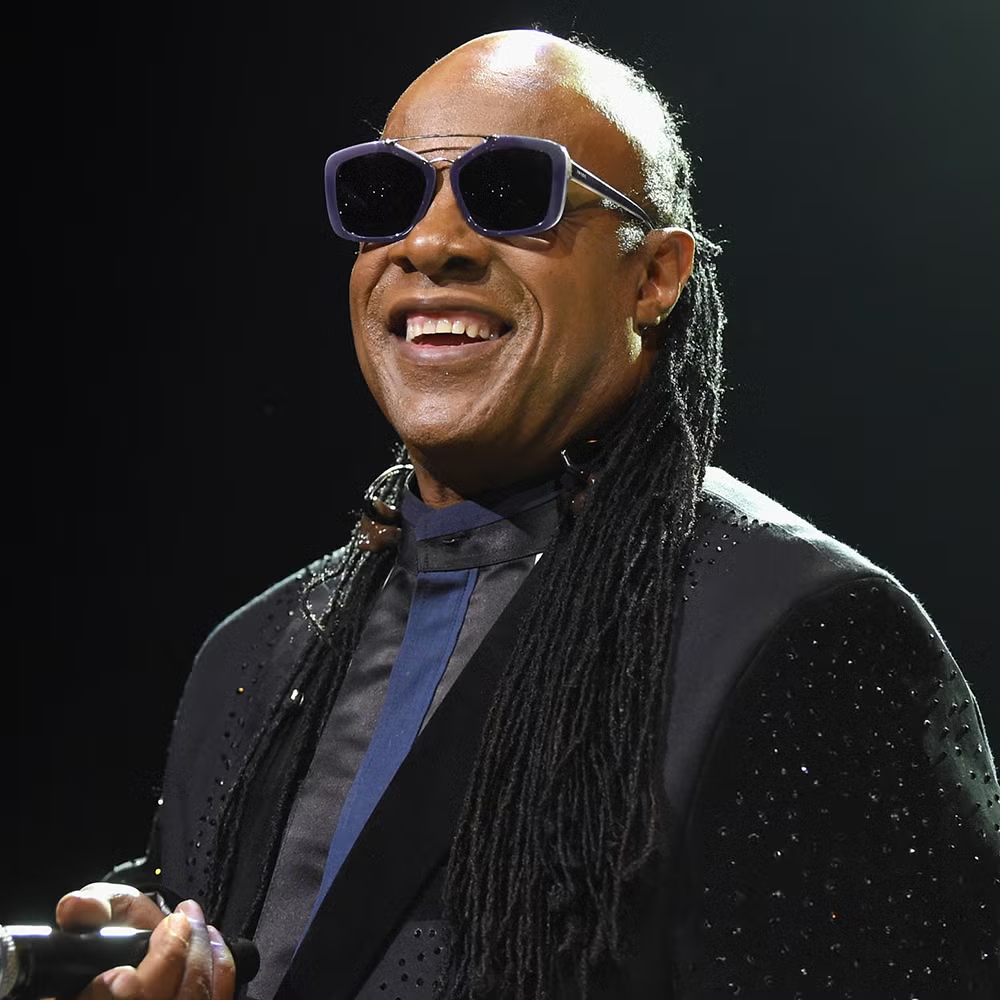
He entered the world early, tiny and fragile, in Saginaw, Michigan. The incubator meant to keep him alive instead stole his sight. Retinopathy of prematurity. A clinical phrase for a lifelong darkness. Yet out of that darkness came a man who would flood the planet with light.
Stevie Wonder was born Stevland Hardaway Judkins in 1950. Blind from infancy, yes. But never sightless in spirit. As a child he found instruments the way other children find toys. Piano, drums, harmonica. They were not objects. They were doorways. Sound became his compass, rhythm his map, melody his sunrise.
When he signed to Motown at just eleven years old, the label christened him “Little Stevie Wonder.” It was not a gimmick. It was an admission. The boy was astonishing. His fingertips seemed wired directly into the bloodstream of America. Gospel in one hand, jazz in the other, pop dancing between them.
Blindness did not shrink his world. It sharpened it. Listen to “Living for the City” and you hear concrete and injustice breathing. Hear “Sir Duke” and you taste brass and joy like sunlight on polished trumpets. And then there is “Isn’t She Lovely,” written for his newborn daughter, which feels like the universe pausing to smile.
He did not write songs that sat politely on the radio. He wrote songs that marched. “You Haven’t Done Nothin’” was aimed squarely at political failure. “Higher Ground” pulses with spiritual electricity. And of course, “Superstition” struts with a clavinet riff so infectious it could start a street parade in a library.
In the 1970s he delivered a run of albums that critics still treat like sacred texts. Talking Book. Innervisions. Fulfillingness’ First Finale. And then Songs in the Key of Life, a double album that feels less like a record and more like a city. It contains love songs, protest songs, lullabies, funk sermons, quiet prayers. It is human life pressed into vinyl.
Here is the truth. Stevie Wonder’s music resonates because it does not pity itself. It does not beg. It celebrates. It confronts. It dances. He sings about heartbreak without collapsing into it. He sings about injustice without losing hope. There is steel in his optimism.
Blindness shaped his path, but it never defined his ceiling. He became an advocate for civil rights and disability rights. He campaigned for Martin Luther King Jr. Day to become a national holiday, and when it finally did, you could almost hear the chord resolve.
He hears what many of us miss. The tremor in a voice. The rhythm of a crowd. The heartbeat of a nation. Perhaps that is why his songs travel so far. They are built not on what he saw, but on what he felt. And feeling, unlike sight, belongs to everyone.
He is Mr Know It All, not because he claims to have every answer, but because he understands something essential. Music is not about perfection. It is about connection. It is about turning personal struggle into communal celebration.
In a world addicted to surfaces, Stevie Wonder reminds us that depth is where the treasure lives. Close your eyes and listen


