
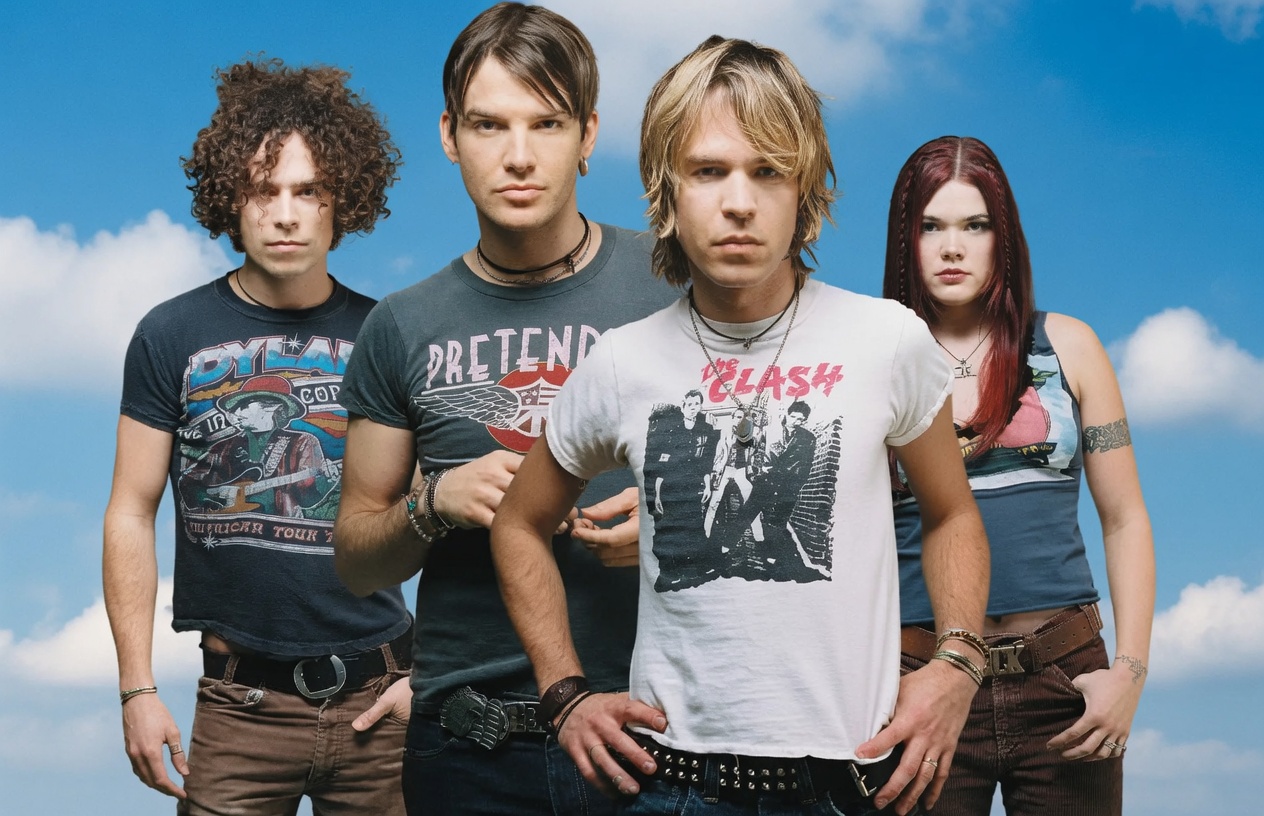
By the early 2000s, Portland’s The Dandy Warhols had perfected a sound that seemed to live somewhere between the detached cool of the Velvet Underground, the grit of garage rock and the hazy excess of psychedelic pop
.Frontman Courtney Taylor-Taylor delivered his lyrics with an almost studied nonchalance, sounding less like a singer desperate to command attention than someone who had already decided the room belonged to him. There was confidence in the band’s music, certainly, but also humour, irony and a sense that rock and roll did not always have to take itself quite so seriously.
“Bohemian Like You” became the song that captured all of those qualities at once. Built around an instantly recognisable guitar riff and a rhythm that seems to swagger rather than simply move, it has the rare ability to make an ordinary street feel briefly cinematic. There is something wonderfully effortless about the whole performance. The band never sound as though they are straining for a hit, and perhaps that is exactly why the song became one. It arrives with the easy confidence of a record that already knows you are going to remember it.

The charm of the song lies partly in its wonderfully uncomplicated picture of attraction. The narrator notices someone, clocks the car, the clothes, the attitude and the apparent bohemian credentials, and decides that perhaps they belong to the same tribe. There are no enormous declarations of eternal love and no anguished romantic metaphors. Instead, the song captures something much more recognisable: that first moment of sizing someone up, exchanging signals and deciding that there might be something interesting going on. It is flirtation reduced to instinct, style and mutual curiosity.
That mixture of irony and sincerity is central to what made The Dandy Warhols so appealing. They understood the strange theatre of being cool, in which clothes, records, cars, parties and attitude appear to matter enormously while everyone involved pretends they matter very little. “Bohemian Like You” plays with that contradiction beautifully. It is knowingly stylish without becoming smug, and playful without collapsing into parody. Beneath the pose, there is still a genuine sense of excitement in discovering someone who seems to understand the same cultural language.

The track also carries the atmosphere of a particular kind of summer night, one in which everything feels slightly brighter, louder and more possible than usual. It could end in legendary fun, complete disaster or simply the sort of half-remembered story that becomes better with every retelling. That sense of possibility runs through the song. It is glamorous without being grand, decadent without being dark, and self-aware enough to recognise the absurdity of the whole performance.
Much of that spirit ran through Thirteen Tales from Urban Bohemia, the 2000 album that became the band’s defining statement. For a period, The Dandy Warhols seemed poised to become enormous mainstream stars, yet their career never followed the conventional route towards stadium domination. In retrospect, that may have suited them perfectly. Their appeal was always strongest at the edge of the mainstream, among listeners who liked their guitars a little dirty, their clothes a little theatrical and their nights out slightly unpredictable.
More than two decades later, “Bohemian Like You” still sounds remarkably fresh because its appeal was never built around a fleeting studio fashion. Its engine is much older and more dependable: a great riff, a strong rhythm, a memorable vocal and an attitude that refuses to apologise for enjoying itself. The fashions changed, the clubs closed, the early 2000s slipped into nostalgia, but the song somehow kept its strut.
Play it loudly now and the effect is still immediate. The room becomes a little brighter, the pavement seems to acquire more swagger and, for a few minutes, the world feels slightly more glamorous than it did before the first chord arrived. That may be the real triumph of “Bohemian Like You”. It does not merely remind you of a particular era. It briefly recreates the feeling of it.


