
From the London Streets to the African Savannah
Animal welfare began with pity but grew into something much bigger: the recognition that animals have needs, relationships, habitats and lives of their own.
There is something quietly remarkable about the history of animal welfare. What began with a handful of reformers objecting to horses being beaten and animals being used for blood sports has grown into an international movement embracing everything from the abandoned dog sleeping beneath a railway arch to the elephant pursued for its tusks, the shark caught for its fins and the lion condemned to spend its life behind somebody’s garden fence.
The underlying argument is deceptively simple. Animals are not ornaments, disposable possessions or machines. They experience fear, pain, security and, in ways increasingly understood by science, complex relationships with one another. Our responsibility towards them therefore cannot end merely because they belong to another species.
Britain played an unusually important part in turning that idea into an organised movement.
Two Hundred Years of the RSPCA
In June 1824, a group of reformers met at Old Slaughter’s Coffee House in London and established the Society for the Prevention of Cruelty to Animals. Among those associated with its creation were the clergyman Arthur Broome, MP Richard Martin and the great anti-slavery campaigner William Wilberforce.
It eventually became the Royal Society for the Prevention of Cruelty to Animals, the RSPCA, and developed into one of the world’s best-known animal welfare organisations.
Its beginnings matter because the attitudes of Georgian and early Victorian Britain could be extraordinarily brutal. Bull and bear baiting, cock fighting and the mistreatment of working animals were familiar sights. The RSPCA helped turn animal cruelty from something society frequently ignored into something society increasingly regarded as morally unacceptable. Two centuries later it continues rescuing animals, investigating allegations of cruelty and pressing for changes in law and public behaviour.
That transformation was revolutionary in its own quiet way. It asserted that possessing an animal did not give someone an unlimited right to mistreat it.
Battersea: A Door Opens in Victorian London
Sometimes animal welfare begins not with legislation or campaigning but with somebody simply opening a door.
In 1860, Mary Tealby founded what became Battersea Dogs & Cats Home, originally called the Temporary Home for Lost and Starving Dogs. It began in Holloway before moving to Battersea in 1871. Cats were formally admitted from 1883.
Think of what those words “lost and starving” meant in Victorian London. Animals were roaming streets without food, veterinary medicine was primitive and unwanted dogs and cats could easily become invisible casualties of urban life.
More than a century and a half later, Battersea’s philosophy is recognisably descended from Tealby’s original act of compassion. Subject to available space, it aims not to turn away dogs or cats because of their breed, age, health or condition. Animals may receive veterinary treatment, rehabilitation and behavioural support before eventually being reunited with an owner or found another home.
It is one of the great achievements of the animal welfare movement that the unwanted dog ceased to be regarded as rubbish and became somebody worth saving.
A Dog Is For Life
The same spirit produced another famous institution.
In 1891 Lady Gertrude Stock founded the National Canine Defence League, today known as Dogs Trust. The organisation campaigned against chaining, animal experimentation involving dogs and the exploitation of dogs in entertainment. It helped animals during both world wars and steadily developed its rescue and rehoming work. It adopted the Dogs Trust name in 2003.
Its philosophy eventually became distilled into one of Britain’s most memorable animal welfare messages: that acquiring an animal creates a responsibility lasting far beyond the excitement of bringing it home.
A dog is not furniture that can be discarded when circumstances become inconvenient. Neither is a cat, rabbit, horse, donkey or any other animal dependent upon human care.
The Animals Behind Laboratory Doors
Another strand of the movement questioned what happened to animals that most members of the public never saw.
The organisation now known as Cruelty Free International traces its history to 1898, when women’s rights campaigner Frances Power Cobbe established the British Union campaigning against vivisection. It later became the British Union for the Abolition of Vivisection, or BUAV, and in 2015 adopted its present name.
Its modern campaign combines opposition to animal experimentation with support for alternative scientific techniques that do not require animals.
The anti-vivisection movement has sometimes been fierce and controversial, but it asked a question that remains important: scientific progress does not remove society’s obligation to consider suffering. As technology produces organ-on-chip systems, sophisticated cell cultures, computer modelling and other alternatives, the ethical pressure to replace animal experiments wherever scientifically possible grows stronger rather than weaker.
PETA and the Activist Tradition
At the more confrontational end of the movement stands People for the Ethical Treatment of Animals, PETA.
PETA deliberately uses campaigning, investigations, demonstrations and publicity to challenge practices involving animals. Its campaigns address animal experimentation, the fur and clothing industries, food production and the use of animals in entertainment.
Its tactics can provoke arguments, and sometimes that is precisely the intention. Activism often works by forcing uncomfortable subjects into public view.
One does not have to agree with every campaign or every method employed by an organisation to recognise the importance of the underlying question: how much suffering are human beings prepared to inflict simply because the victim cannot object in a language we understand?
The Donkeys Nobody Wanted
Few charities illustrate practical compassion more warmly than The Donkey Sanctuary.
It was founded in 1969 by Dr Elisabeth Svendsen. What began relatively modestly changed dramatically when she inherited responsibility for more than 200 donkeys from another animal charity. From those beginnings grew an organisation whose work has affected the lives of donkeys and the communities dependent upon them around the world.
Donkeys are easily overlooked. Across many countries they work carrying goods, pulling carts and supporting families whose livelihoods depend upon them. They may not possess the glamour attached to a tiger or elephant, but animal welfare cannot be reserved for beautiful poster species.
The exhausted old donkey matters too.
Born Free and the Belief That Wild Means Wild
Then there is Born Free, whose philosophy perhaps expresses the central argument most clearly: wild animals belong in the wild.
Virginia McKenna and Bill Travers were profoundly affected while making the film Born Free, based upon the story of Elsa the lioness. Their later encounter with the suffering of Pole Pole, an elephant they had known while filming who subsequently lived at London Zoo and died young in 1983, helped inspire the creation of Zoo Check in 1984 with their son Will Travers. It became the Born Free Foundation in 1991.
Born Free has subsequently rescued animals from circuses, zoos and other forms of captivity. Where rehabilitation makes it possible, animals can be returned to the wild. Where captivity has left them incapable of surviving independently, the organisation supports spacious sanctuary care for the remainder of their lives.
That distinction is important. Compassion does not mean simply opening a cage door. A captive animal released without the ability to hunt, forage or protect itself may merely be condemned to another kind of death. Genuine rescue requires expertise as well as sentiment.
WWF: Protecting the Animal Means Protecting Its Home
The World Wide Fund for Nature, WWF, expanded that principle still further.
Founded in 1961, WWF developed into a global conservation organisation working not simply to save individual animals but to protect the ecosystems upon which entire populations depend.

That represents one of conservation’s greatest lessons.
You cannot save the tiger while destroying its forest. You cannot save an orangutan while removing every tree around it. You cannot protect whales while treating the oceans as an inexhaustible rubbish dump. Animal conservation and environmental conservation eventually become the same argument.
A creature requires somewhere to live.
Defending an Animal Humans Learned to Fear
The Shark Trust, founded in 1997, deals with creatures suffering from a rather different problem: humanity has spent generations being frightened of them.
Sharks became cinematic monsters in the popular imagination, yet their ecological importance is profound. The Shark Trust works internationally through science, education and policy to protect sharks, skates and rays, campaigning for endangered species protection, sustainable fisheries and responsible trade.
Its work has contributed to protections for species including basking sharks, porbeagles, common skates and angelsharks.
Perhaps sharks offer one of the strongest tests of our compassion. It is relatively easy to demand protection for an animal with large brown eyes and soft fur. Conservation means recognising the value of the creatures that do not look cuddly too.
The shark has as much claim to its ocean as the robin has to its tree.
The Elephants and the Bloody Price of Ivory
Few examples of human exploitation are more haunting than the slaughter of elephants for ivory.
The late Scottish zoologist Iain Douglas-Hamilton spent decades studying African elephants and became one of the leading voices warning of the devastation caused by poaching. He founded Save the Elephants in 1993. The organisation combines research, tracking technology, habitat protection and work with communities living alongside elephants.
Between 1979 and 1989, Africa lost roughly half its elephants amid the ivory crisis. The international ivory restrictions that followed helped populations recover in some regions, although illegal trafficking continues and habitat loss and human-elephant conflict remain serious threats.
In 2013 Save the Elephants and the Wildlife Conservation Network established the Elephant Crisis Fund, supporting organisations fighting poaching, trafficking and demand for ivory, and increasingly programmes protecting habitats and helping humans and elephants coexist.
An elephant tusk is not a trinket.

It once belonged to an elephant.
That should be the beginning and end of the argument.
Wild Animals Are Not Domestic Pets
The same principle ought to apply much closer to home.
Britain already regulates the private keeping of certain dangerous wild animals. Under the Dangerous Wild Animals Act 1976, licences are required for specified species, and applicants can face inspections and welfare and public-safety requirements. Government guidance lists animals including certain wild cats, primates, wolves and other exotic species among those for which licensing can be required.
So it would be wrong to suggest that Britain currently permits completely unregulated ownership of every wild species.
But that does not mean the law should stand still.
Born Free itself continues to campaign over the number of dangerous non-native wild animals being kept privately in Britain.
There is a serious argument for going considerably further.
The presumption should increasingly be that genuinely wild animals belong in appropriate natural environments, accredited conservation programmes or specialist sanctuaries, not in spare bedrooms, garden cages or private collections maintained primarily because somebody wants an unusual pet.
A licence should never become a certificate saying merely that someone has constructed a strong enough cage.
Welfare must mean asking whether that animal can live something approaching the life its biology demands.
A tiger requires more than food and fencing. A primate requires more than warmth. A reptile needs more than a glass box. Social animals require companionship, intelligent animals require stimulation and roaming species require space.
Some creatures simply cannot be reduced to pets without diminishing the creature itself.
One Movement, Many Voices

The organisations are very different.
The RSPCA investigates cruelty and campaigns for welfare. Battersea and Dogs Trust rehabilitate and rehome animals. The Donkey Sanctuary concentrates upon one frequently neglected family of animals. Cruelty Free International challenges animal experimentation. PETA uses activist pressure. Born Free fights wildlife exploitation. WWF protects ecosystems. The Shark Trust works for creatures beneath the ocean surface. Save the Elephants confronts poaching, trafficking and habitat destruction.
Sometimes they disagree. Their philosophies and methods are not identical.
They do not need to be.
A healthy animal welfare movement can contain the campaigner carrying a placard, the scientist studying a shark, the veterinary nurse cleaning a wound, the investigator exposing cruelty, the ranger protecting elephants, the volunteer walking an abandoned dog and the elderly person putting a few pounds into a collection tin.
They are different parts of the same moral architecture.
The Measure of a Civilised Society
Human beings possess extraordinary power over other species. We can destroy habitats, breed animals commercially, imprison them, experiment upon them, hunt them or extinguish entire populations.
“The greatness of a nation and its moral progress can be judged by the way its animals are treated.”
But power creates responsibility.
The great achievement of two centuries of animal welfare campaigning has been to persuade millions of people that cruelty should never become acceptable merely because its victim cannot vote, speak or employ a lawyer.
The abandoned mongrel brought through Battersea’s gates matters.
The old donkey matters.
The laboratory rabbit matters.
The shark disappearing beneath the waves matters.
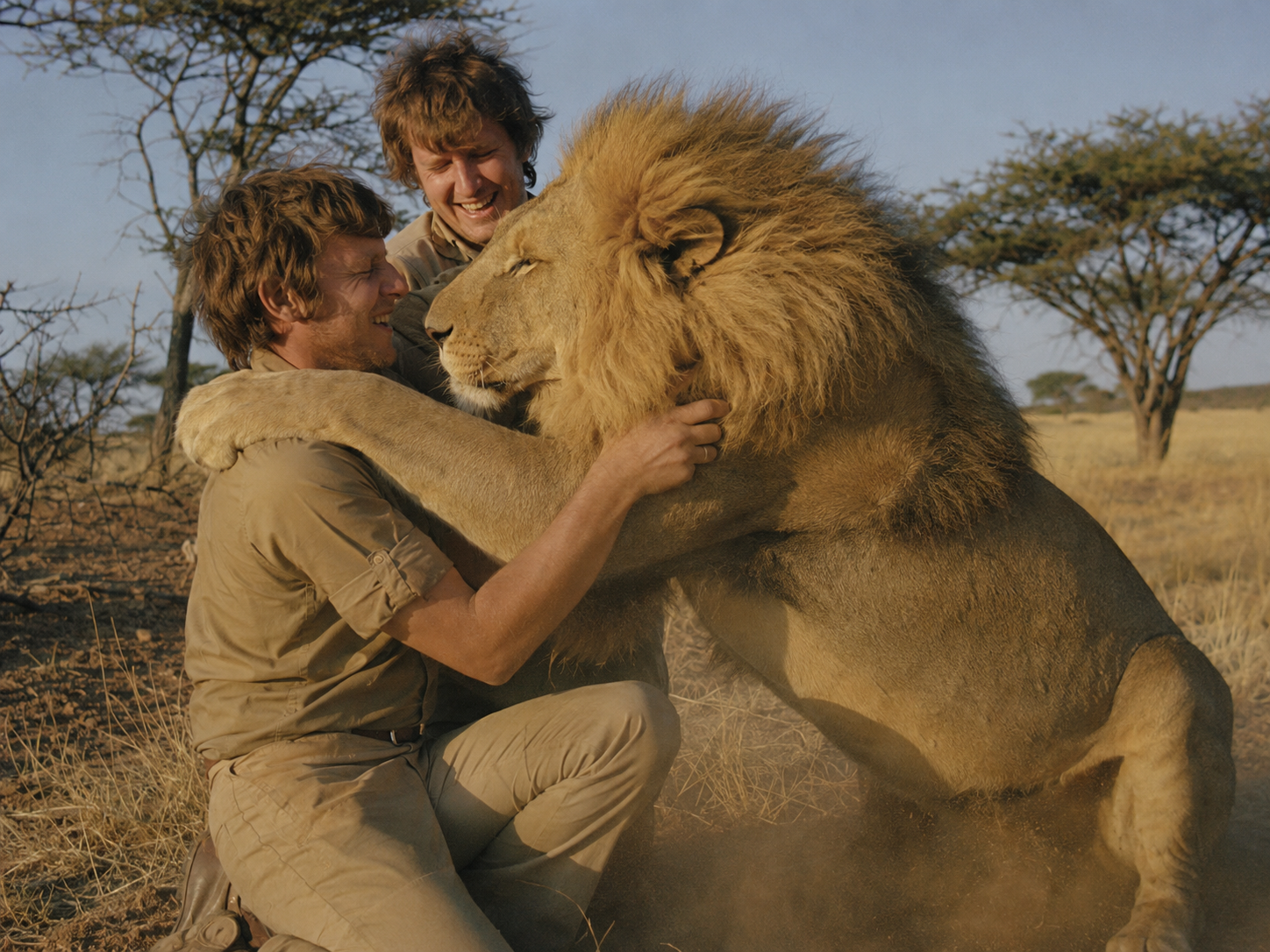
The lion belongs beneath an African sky, not pacing endlessly across a concrete floor.
And somewhere tonight an elephant herd will move through the darkness, mothers keeping calves between them, communicating across distances humans cannot hear.
They do not know the names RSPCA, PETA, Born Free, WWF, Dogs Trust, Shark Trust or Save the Elephants.
They should not have to.
Our job is simply to leave them a world in which they can continue to exist.
Caring for animals is not sentimentality. It is the recognition that the Earth was never ours alone.


