
THE ENDURING MYSTERY OF ‘ALEXANDER SMITH’ AND ‘JOHN TITOR’ EXTRAORDINARY CLAIMS
A Masked man who says the CIA sent him to the year 2118 continues to fascinate millions online, despite a lack of evidence; and another who used a old computer to calculate space time travel….
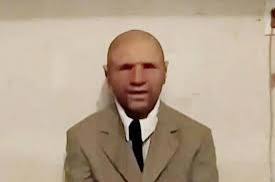
The internet has never been short of extraordinary personalities, but few have generated as much curiosity, scepticism and debate as the mysterious figure known only as Alexander Smith. Hidden behind a lifelike latex mask and claiming to be a participant in a secret CIA time travel programme, Smith has spent years captivating online audiences with elaborate accounts of journeys into humanity’s future.

First emerging on the YouTube channel ApexTV, a platform known for paranormal and conspiracy-themed content, Smith alleged that he was recruited into classified United States government experiments during the early 1980s. According to his account, he was transported from 1981 to the year 2118 before eventually returning to tell his story.
Protecting what he says is his true identity, Smith has consistently appeared disguised, claiming he fears repercussions for revealing classified information.
In a series of interviews, he has argued that humanity deserves to know what he witnessed, insisting that advanced technologies are deliberately being withheld from public knowledge.
“I believe the people deserve to know,” he said during one interview. “I believe that you deserve to know the truth because I feel it would be beneficial to the human race.”
A Journey to 2118
Smith paints a picture of a dramatically transformed world. According to his account, vast numbers of people live in immense futuristic cities where artificial intelligence is woven into everyday life.
Flying vehicles replace much of today’s transport, robotics has become commonplace, and humanity has established contact with intelligent extraterrestrial life.

He has also claimed that commercial time travel eventually becomes available to ordinary citizens, suggesting the technology enters public use surprisingly early in the twenty-first century. Among his most striking assertions is that governments eventually acknowledge the existence of intelligent alien life, fundamentally changing humanity’s understanding of its place in the universe.
A Dark Warning Before a Brighter Future
Central to Smith’s narrative is a warning that the world first endures a devastating global conflict before emerging into a more peaceful era.
According to his account, rising tensions between the United States and North Korea eventually escalate into a wider confrontation involving Russia. The conflict culminates in missile strikes that inflict catastrophic damage, although Smith says he was never told precisely where the weapons landed.
Rather than leading to humanity’s destruction, however, he claims the tragedy becomes a turning point.
Smith alleges that the horrors of war encourage nations to abandon old rivalries, with international borders gradually losing significance as people develop a greater appreciation for peace and cooperation.
He describes the post-conflict world as one in which humanity becomes increasingly united, choosing collaboration over division and embracing technologies that improve everyday life.
Science Meets Speculation
While Smith’s story has attracted millions of views online, it has never been supported by independently verifiable evidence.
Scientists remain cautious whenever claims of time travel are presented as fact.
Theoretical physics does allow for fascinating mathematical possibilities. Certain solutions to Albert Einstein’s theory of general relativity suggest that unusual spacetime geometries could, in principle, permit forms of time travel under highly specific conditions.

Ideas involving rotating black holes, wormholes and other exotic structures continue to be explored by physicists, although none has ever been demonstrated experimentally.
Physicist Gary Horowitz of the University of California, Santa Barbara, has previously noted that the concept of time travel is not automatically ruled out by the laws of physics.
However, that observation should not be interpreted as evidence that humans have travelled through time.
Similarly, Professor William Hiscock of Montana State University has explained that while Einstein’s equations contain mathematical solutions allowing journeys to the past, physicists continue to debate whether such solutions could ever exist in the real universe rather than simply within mathematics.
An Internet Mystery That Refuses to Fade
For believers, Alexander Smith offers tantalising hints of hidden government projects, revolutionary technology and humanity’s future destiny. For sceptics, his interviews represent another example of the internet’s fascination with elaborate conspiracy theories and unverifiable extraordinary claims.
Years after first appearing online, Smith remains one of the web’s most recognisable self-proclaimed time travellers. His predictions continue to circulate across social media, conspiracy forums and video platforms, inspiring equal measures of fascination and disbelief.
Whether viewed as an imaginative storyteller, an internet performer or someone who genuinely believes his remarkable experiences, Alexander Smith has secured a lasting place in online folklore. Until credible evidence emerges to support his claims, however, his extraordinary account remains firmly in the realm of speculation rather than established fact.
Following in the Footsteps of John Titor
Alexander Smith is far from the first self-proclaimed time traveller to capture the public imagination. More than two decades earlier, another mysterious figure, known as John Titor, became one of the internet’s earliest and most enduring legends.
Beginning in late 2000 and continuing into 2001, Titor posted messages on online forums and reportedly contacted radio programmes, claiming to be an American military serviceman from the year 2036. According to his extraordinary account, he had travelled back in time on a mission to retrieve an IBM 5100 computer, which he claimed possessed little-known capabilities needed to solve computer problems in the future.
Like Alexander Smith, Titor insisted that time travel had already been perfected in his era, alleging it first became possible in 2034 through advances in physics based on miniature black holes and exotic gravitational technology.
His messages extended well beyond technology. Titor described a future shaped by environmental pressures, resource shortages, food insecurity and economic hardship.
He urged people to prepare for a world in which communities would become more self-reliant, arguing that humanity faced profound challenges involving famine, poverty and the consequences of political division.
Some followers later claimed Titor had anticipated the spread of mad cow disease, although critics argue that concerns over bovine spongiform encephalopathy were already widely reported at the time and cannot be regarded as a genuine prediction.
His more dramatic forecasts proved far less accurate. Titor claimed that the United States would descend into a civil war beginning in 2005, eventually leading to a global conflict, effectively a Third World War, around 2015. Neither prediction materialised.
Supporters have attempted to explain these failed forecasts by pointing to one of Titor’s central ideas: that travelling through time creates diverging or parallel timelines, meaning events witnessed in one future may never occur in another. Sceptics, meanwhile, regard this explanation as a convenient way of accounting for predictions that did not come to pass.
Like Alexander Smith, John Titor never produced independently verifiable evidence to support his extraordinary claims. Yet despite the absence of proof, his story continues to fascinate internet users, inspiring documentaries, books, podcasts and countless online debates about whether time travel could ever move from the realm of science fiction into scientific reality.
Both men occupy a curious place in internet culture. Their stories blend theoretical physics with conspiracy theories, secret government programmes and visions of humanity’s future, leaving readers to decide for themselves whether they are elaborate works of fiction, genuine personal beliefs or something stranger still.
For scientists, however, the verdict remains unchanged. While Einstein’s theory of general relativity allows mathematical solutions that hint at the possibility of travelling through time under highly unusual conditions, there remains no credible scientific evidence that any human being has ever journeyed into either the past or the future.
Science Fiction… or Tomorrow’s Science?
While the claims made by Alexander Smith and John Titor remain unsupported by credible evidence, the idea of travelling through time is not dismissed entirely by modern physics.
Indeed, some of the world’s leading theoretical physicists have spent decades exploring whether Einstein’s theory of general relativity might permit journeys through time under the most extraordinary circumstances.
One possibility lies in the mathematics describing Kerr black holes, first identified in 1963 by New Zealand mathematician Roy Kerr. Unlike an ordinary black hole, a Kerr black hole rotates, dragging the very fabric of spacetime around it in a phenomenon known as frame dragging.
The equations suggest that, under highly idealised conditions, a traveller might pass through the black hole’s ring-shaped singularity and emerge elsewhere in space, or perhaps even another point in time. Most physicists, however, believe such routes would be violently unstable and impossible to survive.
Another extraordinary proposal is the Tipler Cylinder, devised by American physicist Frank Tipler in the 1970s.
His calculations suggested that an unimaginably long, ultra-dense cylinder spinning at almost the speed of light could twist spacetime so severely that it would create what physicists call closed timelike curves; paths through the universe that loop back into the past.
Although mathematically valid, the cylinder would require engineering capabilities and materials far beyond anything humanity can currently imagine.
These concepts are not fantasies invented for Hollywood. They arise directly from Einstein’s equations, although whether they can exist in the real universe remains one of physics’ greatest unanswered questions.
Even more intriguing are theoretical wormholes, tunnels through spacetime that could, in principle, connect distant regions of the universe. If one end of such a wormhole experienced time differently because of extreme gravity or near-light-speed travel, it could potentially function as a time machine.
Yet no naturally occurring wormhole has ever been observed, and scientists believe they would require an exotic form of matter with negative energy to remain open.
Many physicists remain deeply sceptical that backward time travel is physically possible. The late Professor Stephen Hawking famously proposed his Chronology Protection Conjecture, suggesting that the laws of nature themselves prevent paradoxes by destroying any time machine before it can be used.
That would neatly explain why humanity has never encountered confirmed visitors from the future.
Others point to the Novikov Self-Consistency Principle, which argues that even if time travel were possible, history could never be altered. Any attempt to change the past would already form part of history itself, preventing famous paradoxes such as travelling back to prevent one’s own birth.
Curiously, this echoes one of John Titor’s own explanations. When questioned about predictions that failed to materialise, Titor claimed that travelling through time created diverging worldlines, or parallel timelines.
According to his account, his future represented only one possible version of history, allowing events in our timeline to unfold differently. To supporters, this explained why his predictions of a US civil war in 2005 and a global conflict by 2015 never occurred. To sceptics, it simply provided an escape route whenever prophecy met reality.
For now, both John Titor and Alexander Smith remain colourful figures in internet folklore rather than accepted history. Their stories continue to spark debate because they sit at a fascinating crossroads where theoretical physics, philosophy, conspiracy theories and humanity’s enduring desire to glimpse tomorrow all meet.
As Einstein once demonstrated, time is stranger than common sense suggests. Whether anyone has truly mastered it remains, for now, one of the greatest unanswered mysteries of all.


