
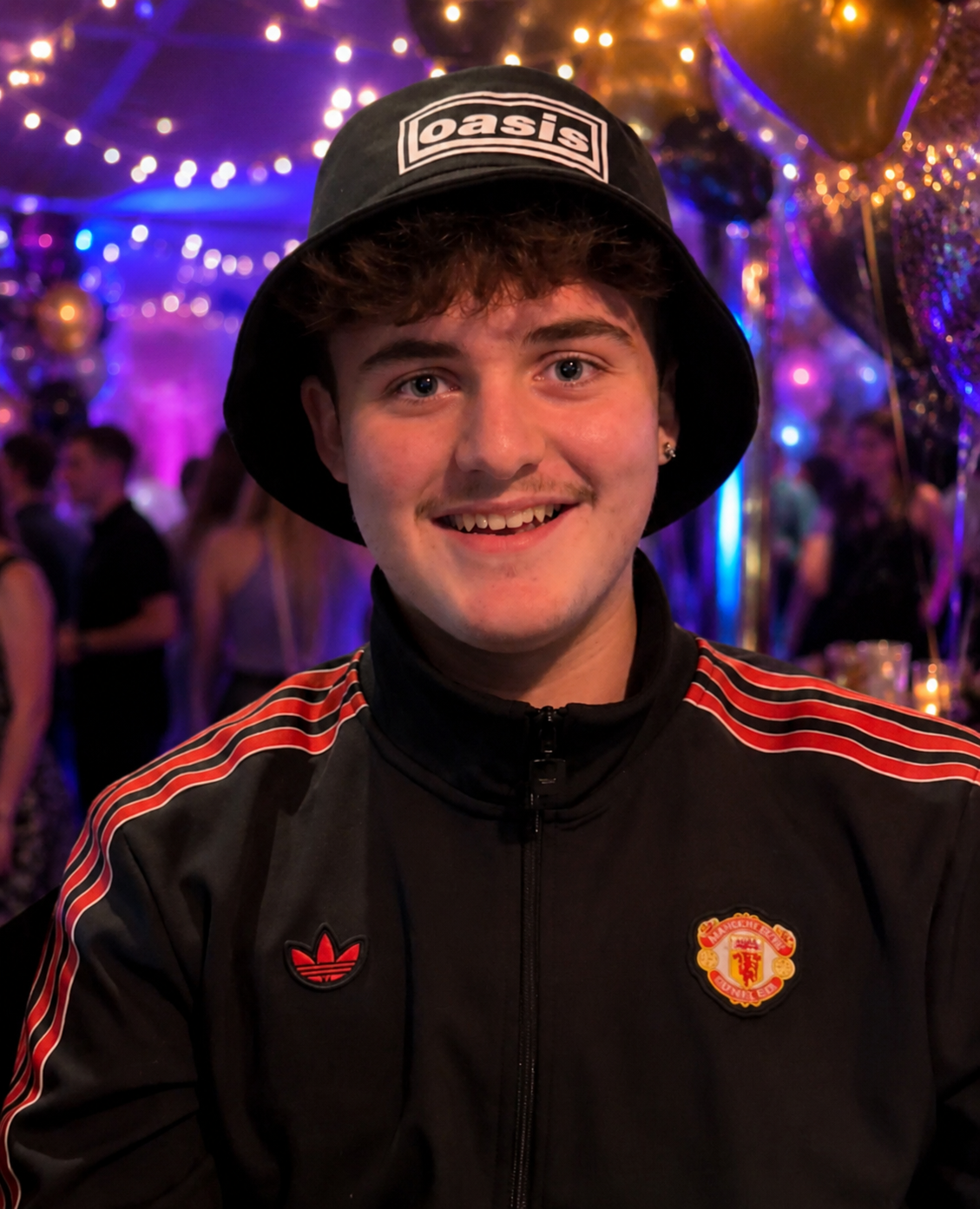
Football-loving 14-year-old Corby resident Max Hall’s fight against a rare and aggressive brain tumour prompts calls for increased funding as local MP raises his case in Parliament.
A Corby teenager’s courageous battle with an aggressive and inoperable brain tumour has shone a spotlight on the urgent need for greater investment in brain tumour research, with his family’s campaign now reaching the floor of Parliament.
Fourteen-year-old Max Hall, described by those who know him as a kind, funny and football-mad youngster, was living a healthy and active life until November 2025 when he suddenly collapsed at home after suffering a devastating seizure.
Following more than a year of persistent headaches that had repeatedly been diagnosed as teenage migraines, emergency scans revealed the unimaginable. Max was found to have a rare grade 4 diffuse glioma covering almost the entire left side of his brain, a tumour so aggressive that surgeons were unable to remove it.

His diagnosis transformed life overnight for Max and his family.
A Life Changed in Moments
According to his mother, Jackie, Max had always been the child who made everyone laugh.
A devoted Manchester United supporter, he spent much of his free time either training with his football team or cheering on his favourite club. At school he was equally well known for his kindness, regularly helping younger pupils and classmates with additional needs.
Everything changed on 27 November 2025 when Jackie discovered her son suffering a focal seizure in his bedroom before it progressed into a full-body seizure that caused him to stop breathing.
Max was rushed first to Kettering General Hospital before being transferred to Queen’s Medical Centre in Nottingham, where further scans confirmed the devastating diagnosis.
Doctors later identified the tumour as a rare paediatric grade 4 diffuse glioma, affecting only a small number of children in the UK each year.
Undergoing Treatment While Looking Abroad
Max is currently receiving specialist care in Nottingham, including radiotherapy and chemotherapy, although doctors have had to pause chemotherapy after his liver reacted badly to treatment.
His family has also agreed to full genomic sequencing of his tumour in the hope that analysing its genetic make-up could identify targeted treatments or clinical trials unavailable through conventional care.
At the same time, they are exploring immunotherapy treatment in Germany, where specialists may be able to develop a personalised vaccine using Max’s own immune cells.
The treatment comes with significant costs, prompting a fundraising effort that has received widespread support from the local community.
MP Raises Max’s Story at Westminster
Max’s fight has also reached the highest levels of national politics.
Corby and East Northamptonshire MP Lee Barron recently highlighted Max’s case during Prime Minister’s Questions after meeting Jackie through the charity Brain Tumour Research, calling for greater investment into research, wider access to clinical trials and improved treatment options for children diagnosed with aggressive brain tumours.
The campaign forms part of a growing national movement urging the Government to increase funding into brain tumour research, with campaigners pointing out that brain tumours remain the biggest cancer killer of children and adults under the age of 40, despite receiving only around one per cent of national cancer research funding.

“Trust Your Instincts”
Jackie hopes other parents will learn from Max’s experience.
She believes families should continue asking questions if something does not feel right, particularly where persistent headaches or unexplained symptoms continue despite reassurance.
While Max’s prognosis remains devastating, his determination continues to inspire those around him.
Despite daily seizures, extreme fatigue and relying largely on a wheelchair, Jackie says her son rarely complains and continues to talk enthusiastically about his future, hoping one day to learn to drive, pass his test and become a father.
Hope Through Research
The Hall family are now lending their support to the Brain Tumour Research Centre of Excellence at the University of Nottingham, believing advances in genomics, artificial intelligence and personalised medicine could eventually transform outcomes for future patients.
For Jackie, the campaign is about far more than one family.
“We simply want more time,” she says.
“And we want other families to have better treatment options than we have today.”
Their message is one increasingly echoed across Parliament and by campaigners nationwide: only sustained investment in research and access to innovative treatments can begin to change the outlook for children facing one of the most devastating cancer diagnoses imaginable.


