
By Our Science & Technology Desk
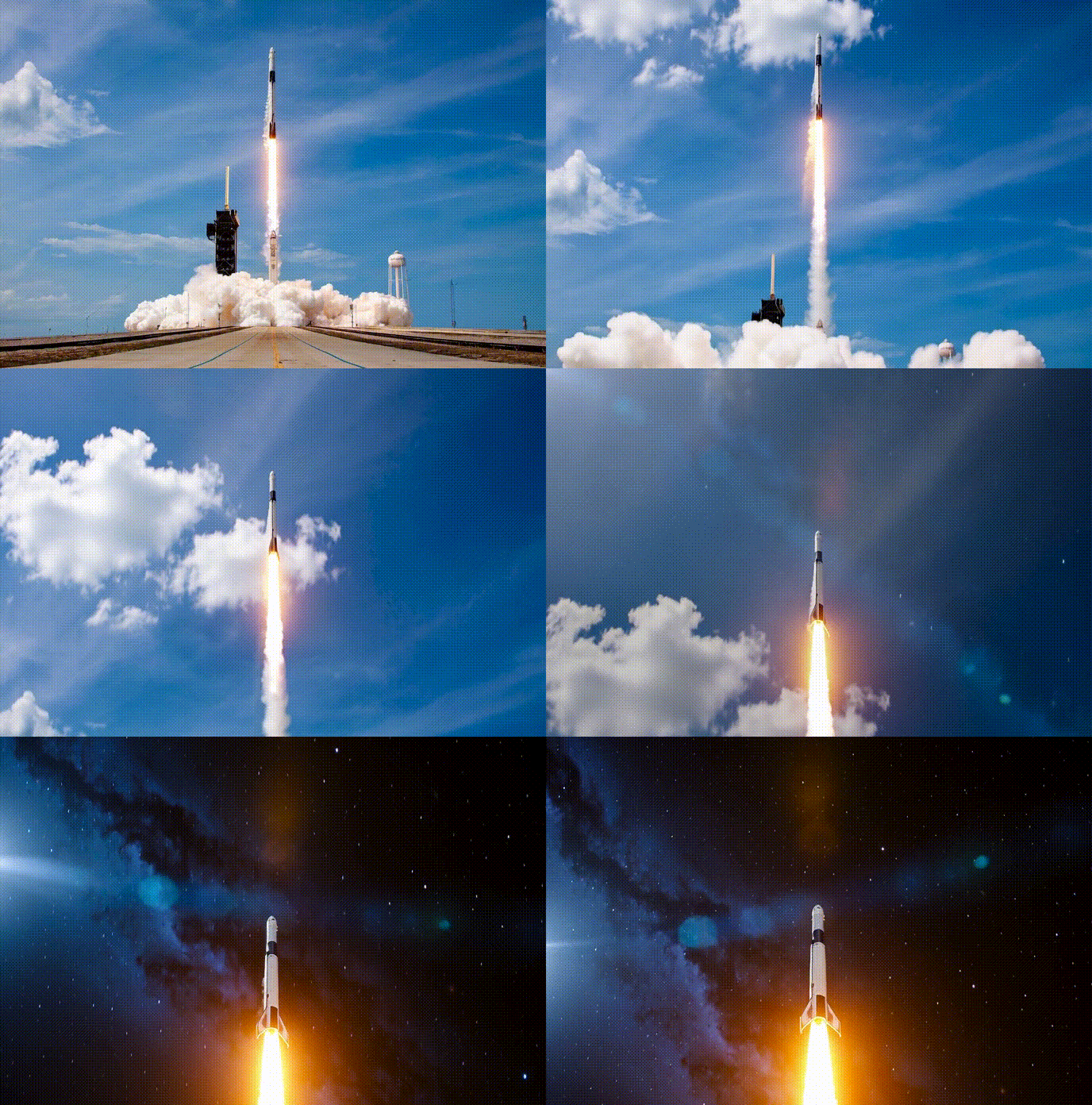
10 November 2025 CAPE CANAVERAL — SpaceX has cemented its status as the world’s most prolific launch provider, completing its 143rd Falcon 9 mission of 2025 on Sunday afternoon — a blistering cadence that has already shattered the company’s previous annual record and puts it on course to hit 175–180 flights by year-end. The latest success came with the Starlink 10-51 mission, which lifted off from NASA’s Kennedy Space Center at 4:03 p.m. EST (21:03 UTC).
A Falcon 9 carrying 29 next-generation Starlink V2 Mini satellites thundered into a twilight sky, just 24 hours after a scrub due to unspecified technical concerns. The workhorse first-stage booster, B1075, notched its 15th flight and executed a textbook landing on a droneship in the Atlantic eight and a half minutes later. The satellites were released into low-Earth orbit 65 minutes after launch, further bolstering the constellation that now delivers high-speed internet to millions worldwide.
This mission marked the 101st Starlink deployment of the year, with more than 2,600 satellites lofted in 2025 alone—a feat that underscores SpaceX’s near-total dominance of the commercial satellite broadband market. Relentless Rhythm from Coast to Coast The Florida launch followed a double-header on 6 November.
From Vandenberg Space Force Base in California, Starlink 11-14 roared aloft at 1:13 p.m. PST (21:13 UTC), delivering 28 satellites on a rare southeasterly track. Booster B1093 returned safely to Landing Zone 4 for its eighth flight. Hours earlier, from Cape Canaveral’s Pad 40, Starlink 10-37 had ignited at 12:35 p.m. EDT (16:35 UTC) — only the second time SpaceX maxed out the Falcon 9 payload for this variant.
That booster, on its 18th mission, capped the pre-dawn spectacle with a fiery ocean landing as the Space Coast glowed under the rocket’s plume.
What’s Next SpaceX’s November tempo — three launches in nine days — shows no sign of slowing. Another Starlink batch is targeting lift-off from Vandenberg as early as today or tomorrow, weather permitting. Later this month, the Crew-10 Dragon mission will ferry NASA astronauts to the International Space Station.
At Starbase in Texas, engineers continue ground tests for Starship Flight 7, though regulatory reviews may push the super-heavy booster’s next hop into December. No Falcon Heavy missions are scheduled for November, but the Dragonfly rotorcraft bound for Saturn’s moon Titan remains on track for a mid-2028 departure.
With zero failures in 2025, SpaceX’s reusable rocket fleet has turned science fiction into routine operations. As the company races toward its year-end goal, the night skies over Florida and California promise more fiery displays in the weeks ahead.


