
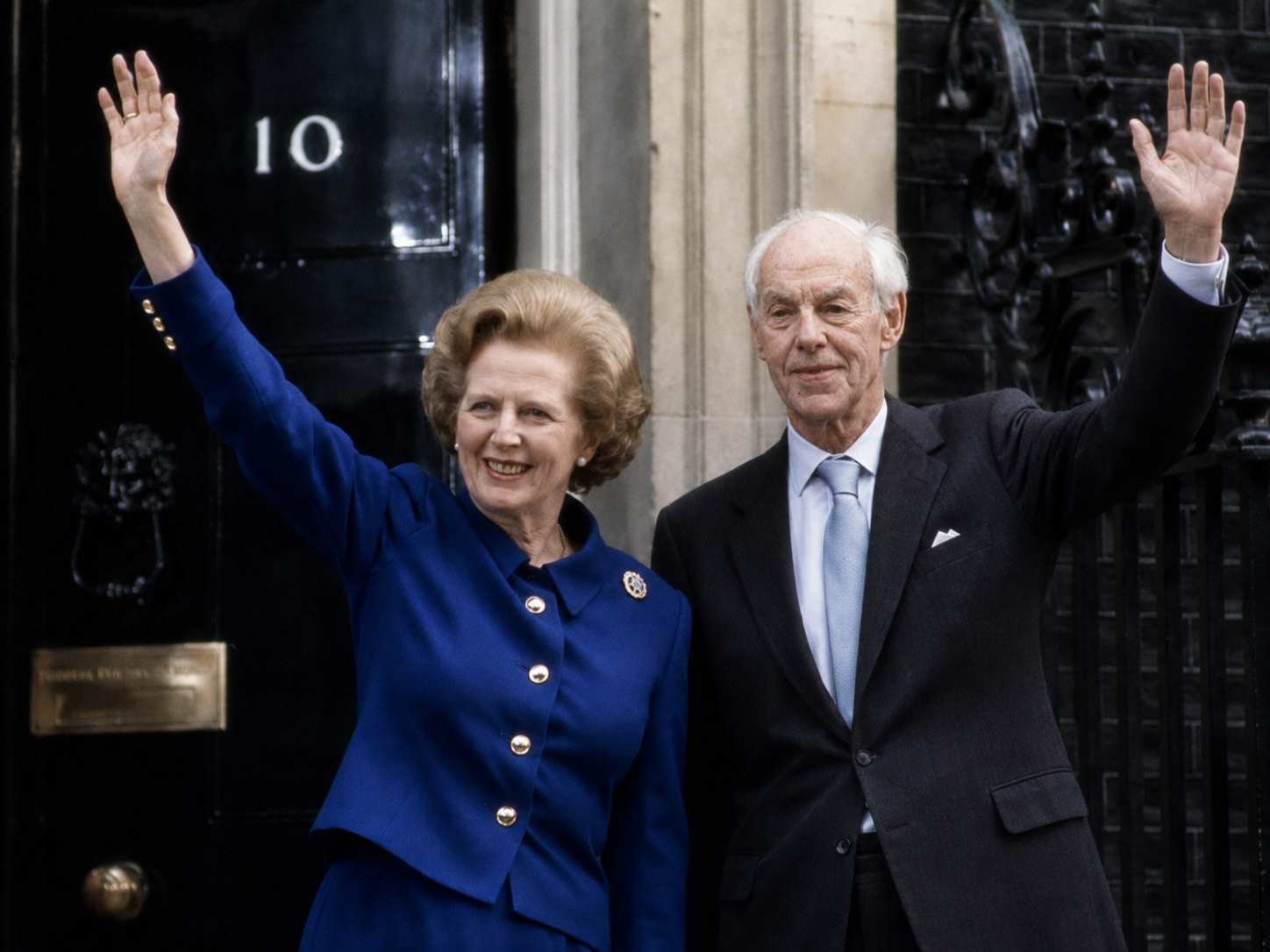
Margaret Thatcher left Downing Street in 1990, but the political and economic settlement she created never really left Britain. More than three decades after her resignation, arguments about trade unions, privatisation, public ownership, housing, inequality and the role of the state continue to echo through British politics.
Thatcher remains one of the most divisive prime ministers in modern history, admired by some for her determination and economic reforms, and blamed by others for tearing apart industries and communities that had taken generations to build. Whatever one thinks of her, she possessed something many politicians struggle to maintain: a clear vision of the country she wanted to create.
At the heart of that vision was a belief that the power of organised labour had become too great, that the state owned too much, and that private enterprise should play a much larger role in the British economy. Supporters called it modernisation. Critics saw something far harsher: the weakening of the trade unions, the dismantling of traditional industries and the transfer of major national assets into private hands.
The Battle With The Unions
The confrontation between Margaret Thatcher and Britain’s trade unions became one of the defining political battles of the 1980s. Her Conservative government argued that union power had grown excessive during the 1960s and 1970s, when strikes could disrupt transport, manufacturing and essential public services. Thatcher believed governments had become too frightened of organised labour and was determined to change that balance of power.
A series of laws introduced during the 1980s restricted union activity and made industrial action more difficult. The symbolic battle, however, came with the miners’ strike of 1984 and 1985, when mining communities across Britain found themselves in a bitter struggle with the government over pit closures and the future of the coal industry.
The dispute became about far more than coal. It developed into a contest over who would shape Britain’s future: organised labour or the Conservative government. The government won, but the social cost was enormous.
Mining towns across Yorkshire, Wales, Scotland, the Midlands and the North East lost not only jobs but the industries around which entire communities had been built. When a mine closed, it was rarely only miners who lost their livelihoods. Local shops suffered, engineering companies disappeared, transport businesses lost contracts and young people often moved away in search of work. The economic wound spread outward, and some communities never entirely recovered.
Selling The State
Thatcher’s second great revolution was privatisation. Large parts of the British economy had been owned by the state since the post-war period, but the Thatcher government believed many of these industries had become inefficient, bureaucratic and expensive.
The solution was to sell them.
British Telecom was privatised, followed by British Gas and British Airways, with electricity and water also moving into private ownership. Millions of ordinary people were encouraged to buy shares, often for the first time, as the government promoted the idea of a “share-owning democracy” in which citizens would have a direct financial stake in major companies.
For supporters, privatisation released businesses from government control, encouraged competition and brought private investment into industries that desperately needed modernisation. There were genuine successes, and British Airways, for example, became a highly successful international company.
But privatisation also created a question that Britain is still wrestling with today: should essential public services exist primarily to serve citizens, or should they also exist to generate profits for shareholders?
That debate has never disappeared. Water companies, energy companies and the railways have repeatedly found themselves at the centre of public anger over prices, investment and service quality. Britain may have sold many of these companies, but it never stopped arguing about who they should ultimately serve.
Selling The Family Silver
One of the most persistent criticisms of Thatcherism was that Britain sometimes behaved as though it were selling the furniture in order to pay for redecorating the house. Once major national assets were sold, they were difficult to recreate.
Future governments could regulate them, subsidise them or sometimes bring parts back into public ownership, but the original structure of the post-war economy had gone.
The transformation was enormous. Britain moved away from a country dominated by heavy industry, manufacturing and nationalised utilities toward an economy increasingly based around services, finance and private enterprise.
London became one of the great financial centres of the world and the City expanded dramatically. Yet prosperity was not evenly distributed. Parts of London and southern England benefited enormously from the new economy, while many former industrial areas did not.
That geographical divide became one of the most persistent problems in modern British politics.
The Right To Buy Revolution
Perhaps no Thatcher policy captured her political philosophy more clearly than Right to Buy. Council tenants were given the opportunity to purchase their homes, often at substantial discounts, and for hundreds of thousands of families it was life-changing.
People who had never imagined owning property suddenly became homeowners. For many working-class families, owning a home brought security, independence and something to pass on to their children. That achievement should not be dismissed.
But there was a serious long-term consequence. The council homes that were sold were not replaced in sufficient numbers and, over time, Britain’s stock of social housing shrank dramatically.
Decades later, local authorities across the country continue to face enormous housing waiting lists while governments spend billions supporting tenants in the private rental market. A policy designed to create homeowners also helped contribute to one of Britain’s modern housing shortages.
A Country Transformed
It would be too easy to portray Margaret Thatcher either as Britain’s saviour or its destroyer. History is rarely that tidy.
Britain in the late 1970s undoubtedly faced serious economic problems. Inflation was high, industrial relations were often chaotic and some nationalised industries were inefficient. The country needed reform.
The real argument is about how far those reforms should have gone and who ultimately paid the price.
Thatcher believed strongly that individuals should depend less on the state and take greater responsibility for their own lives. Her critics argued that society cannot function purely through individual responsibility because communities, public services and collective institutions also matter.
That philosophical argument remains alive today.
The Thatcher Settlement
Perhaps Margaret Thatcher’s greatest political achievement was not simply winning three general elections. It was changing the political assumptions of the governments that followed her.
Even Labour governments after 1997 did not reverse most of her reforms. Tony Blair accepted much of the market economy Thatcher had created. Privatisation largely remained, trade union laws largely remained, the financial services sector remained central to Britain’s economy and Right to Buy stayed part of the political landscape.
Thatcher once described Tony Blair and New Labour as among her greatest achievements because they had accepted many of the economic changes introduced during her premiership.
Whether that was boastful exaggeration or political insight, there was considerable truth in it.
Britain had changed.
The Legacy We Still Live With
Today, some of the biggest political debates in Britain are still arguments about Thatcherism. Should water remain privately owned? Should railways return to public control? Should trade unions have greater power? Should governments build more council housing? Should energy companies be publicly owned? How should Britain revive towns that lost their industries decades ago?
These are not new questions. They are echoes from the 1980s.
Margaret Thatcher remains controversial because she did not merely govern Britain. She altered its economic architecture. She weakened institutions that had once dominated national life and strengthened others.
She encouraged home ownership and share ownership while presiding over the decline of industries that had supported millions of working-class families. She helped create a more entrepreneurial Britain, but also a Britain where wealth and opportunity became increasingly concentrated in particular regions and sectors.
It is entirely possible to respect her determination while believing some of her decisions were profoundly wrong.
That may ultimately be the fairest judgement.
Margaret Thatcher believed Britain needed to change, and she succeeded beyond almost any political leader’s expectations. The argument today is not whether she changed the country.
The argument is whether the country she created was ultimately better for everyone.
Almost forty years later, Britain is still trying to answer that question.


