
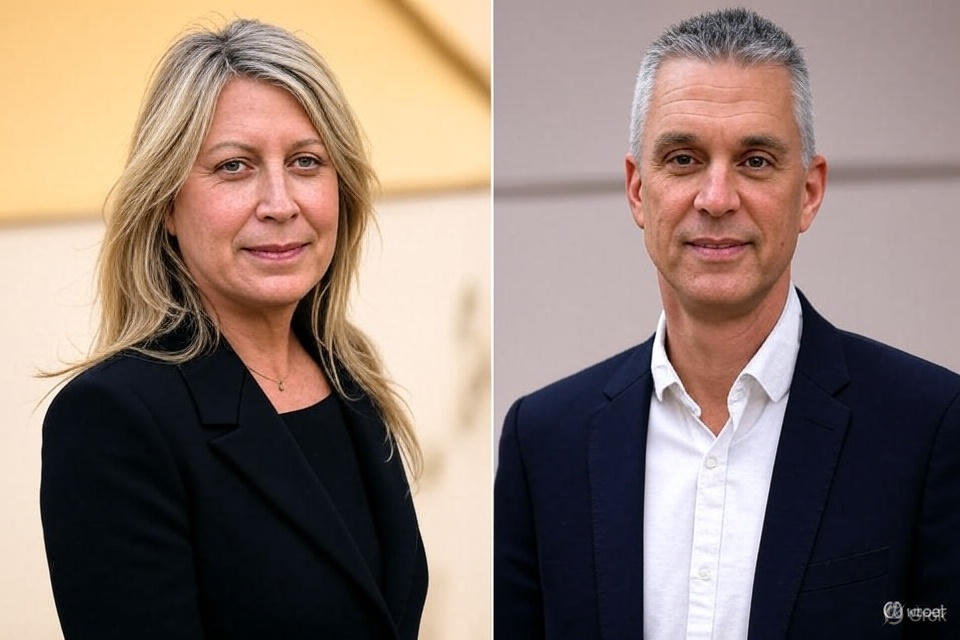
In a dramatic turn for the UK’s national broadcaster, BBC Director-General Tim Davie and News & Current Affairs Chief Deborah Turness have stepped down, following revelations of editorial failings tied to a documentary on Donald Trump.
What happened
A leaked internal memo—prepared by former independent adviser Michael Prescott to the BBC’s Editorial Standards Committee—alleges that the BBC’s flagship documentary programme Panorama edited two parts of Trump’s Washington DC 6 January 2021 speech together, thereby creating the impression he urged his supporters to storm the US Capitol.
Specifically:
Trump’s original phrase in the speech: “We’re going to walk down to the Capitol, and we’re going to cheer on our brave senators and congressmen and women.”
Panorama’s edited version: “We’re going to walk down to the Capitol… and I’ll be there with you. And we fight. We fight like hell.”
The two fragments were more than 50 minutes apart in the original speech.

The memo additionally raises concerns beyond this single edit, including alleged bias in coverage of transgender issues and the Middle East by BBC Arabic.
The resignations
Davie, who took up the Director-General role in September 2020, issued a statement acknowledging that “some mistakes have been made and, as Director General, I have to take ultimate responsibility”. He described his departure as his own decision, though taking into account the cumulative pressure.
Turness, leading BBC News since 2022, wrote that “the ongoing controversy around Panorama on President Trump has reached a stage where it is causing damage to the BBC – an institution that I love. As the CEO of BBC News and Current Affairs, the buck stops with me.” She denied the claim of institutional bias, stating: “While mistakes have been made … I want to be absolutely clear recent allegations that BBC News is institutionally biased are wrong.”
BBC Chair Samir Shah expressed respect for their decisions, but acknowledged the severity of the situation: “The whole board respects the decision … I understand the continued pressure on him, personally and professionally.”

Wider context & implications
This is not the first time the BBC has faced scrutiny for editorial judgement. In the past year it has been criticised for controversial coverage: the withdrawal of a Gaza conflict documentary, debates around its Glastonbury coverage, and high-profile presenter disputes.
Politically, the story has ignited fierce debate. Conservative leadership figure Kemi Badenoch welcomed the resignations but argued they were only “the tip of a catalogue of serious failures that runs far deeper”. She demanded a full overhaul of BBC Arabic and the BBC’s US and Middle East coverage, warning that taxpayers should not continue funding the BBC through a compulsory licence fee unless it can demonstrate true impartiality.
The memo’s release and fallout have also prompted analysts to describe the event as a politically charged attack on the BBC’s independence — some arguing the broadcaster bent under pressure rather than upholding its remit of impartial public service.
Finally, the issue lands at a strategic moment for the BBC: its charter renewal is approaching, licence-fee model under strain, and questions over editorial trust and neutrality are more acute than ever.
What this means
The BBC leadership change marks a moment of reckoning for the broadcaster’s standards of fairness and accuracy.
The splicing of presidential speech segments, if accurately reported, suggests significant editorial lapse — or worse, manipulation of narrative.
It raises deeper questions about how publicly-funded media navigate polarised politics, editorial independence, and the pressures of global news.
For UK citizens and licence-fee payers, the incident may fuel scepticism about the BBC’s impartiality and value.
For journalists and media-watchers, the episode will become a test case: does the BBC reform, rebuild trust, and regain autonomy — or will this accelerate a shift toward alternative news models?
Conclusion
The departures of Davie and Turness represent more than mere executive turnover; they are emblematic of a crisis in trust, credibility and governance at one of the world’s most recognised news institutions. Whether the BBC emerges from this with renewed commitment to its public-service mission or becomes further embattled by political forces remains to be seen.
In the words of the memo’s author, the issue is not just one edited speech: it is about what it means when a national broadcaster appears to mis-frame history. The real test now is: will the BBC fix the mechanics and guard the culture of its journalism?


