
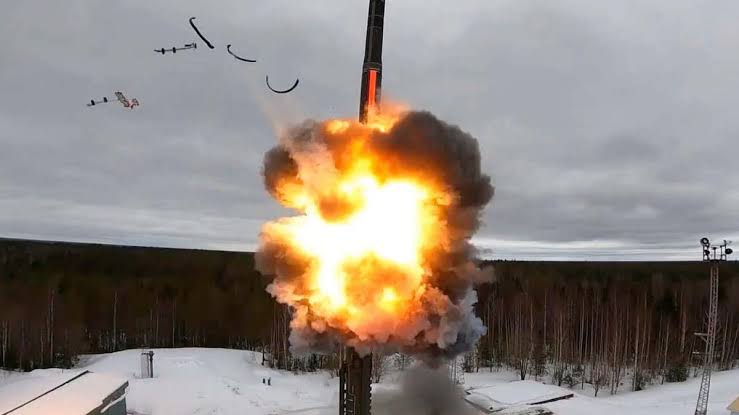
The Oreshnik is Russia’s new hypersonic intermediate-range ballistic missile. The name means “hazel tree” in Russian, which is grimly poetic for something built to fall from the sky like metal lightning. Reuters says it is designed for conventional or nuclear warheads, and Russia claims it can travel at around Mach 10, making interception extremely difficult
Kyiv, May 24, 2026 — Ukrainian President Volodymyr Zelenskiy has stated that Russia is preparing a strike on Ukrainian territory, potentially including the capital Kyiv, using the advanced hypersonic Oreshnik intermediate-range ballistic missile. The warning, issued on May 23, is based on intelligence from Ukrainian services, the United States, and European partners.
In a post on X, President Zelenskiy indicated that preparations for a combined strike involving various types of weaponry had been detected, with the Oreshnik among the systems that could be deployed. He urged residents to remain vigilant and use shelters in response to air-raid alerts.
The statement follows an order from Russian President Vladimir Putin on May 22 directing the Russian military to prepare retaliation options. This directive was issued in response to a Ukrainian drone strike on a student dormitory in the Russian-controlled Luhansk region of eastern Ukraine. Russian authorities reported multiple fatalities and injuries in the attack. Ukraine’s military has denied responsibility, stating that its forces targeted military objectives rather than civilian infrastructure.
Russia has previously used the Oreshnik missile on two occasions. The first strike occurred in November 2024 against a claimed military factory in Dnipro, where Ukrainian sources reported the use of dummy warheads and limited damage. The second attack took place in January 2026 in the Lviv region of western Ukraine.
President Putin has described the Oreshnik as nearly impossible to intercept due to its velocity exceeding 10 times the speed of sound. Western leaders from Britain, France, and Germany previously condemned the January use of the missile as escalatory and unacceptable.
President Zelenskiy emphasized the global implications of such actions, noting that the prolonged use of advanced weaponry in the conflict sets a dangerous precedent for other potential aggressors. He called on partners in the United States and Europe to apply preventive pressure on Moscow rather than responding after the fact.
“We count on a response from the world – and on a response that is not post factum, but preventive,” Zelenskiy stated. He stressed the need to prevent further expansion of the war.
This latest development highlights the continued risk of escalation in the Russia-Ukraine conflict, now entering its fourth year, with significant consequences for regional stability and international security norms. Independent verification of the specific intelligence remains difficult amid ongoing hostilities.


