
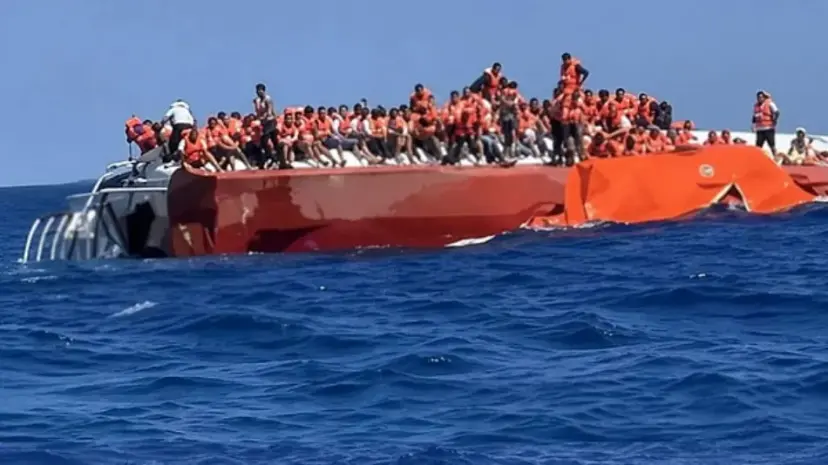
Search operation continues after Filo Jet overturns near Kyrenia, with 18 people still unaccounted for. The captain and seven crew of a passenger boat that capsized near northern Cyprus have been taken into custody.
A passenger ferry carrying 267 people has capsized and sunk off the northern coast of Cyprus, killing at least eight people and leaving 18 others missing in one of the region’s most serious maritime disasters in recent years.
The privately operated Filo Jet overturned on Sunday after leaving the port of Kyrenia, also known as Girne, for Taşucu on Turkey’s southern Mediterranean coast. The crossing is one of several regular passenger services linking northern Cyprus with the Turkish mainland.
Early official reports said 237 passengers and crew members had been rescued. That figure was subsequently revised to 241 as additional survivors were accounted for. With eight deaths confirmed, the latest reported total leaves 18 people unaccounted for, although the figures may change as authorities reconcile passenger records with the names of those brought ashore.
VESSEL RAN INTO TROUBLE SHORTLY AFTER DEPARTURE
The catamaran-style ferry reportedly began taking on water shortly after leaving Kyrenia at about 12.30pm. It was approximately four nautical miles, or seven-and-a-half kilometres, from the coast when the emergency developed.
Survivors described the vessel moving violently and erratically before suffering a hard impact with the surface of the sea. Some witnesses said part of the bow appeared to break or sustain serious damage, allowing water to enter the ferry rapidly. Passengers put on life jackets, while some entered the water as the vessel rolled on to its side.
Images recorded during the emergency showed scores of people clinging to the overturned hull while awaiting rescue. The ferry later disappeared beneath the surface and is reported to have sunk in water more than 500 metres deep.
The precise sequence of events has not yet been independently established. Reports of an explosion or catastrophic structural failure remain unconfirmed, and officials have warned against drawing conclusions before the investigation has examined the vessel, its maintenance history and the prevailing sea conditions.
LARGE-SCALE RESCUE OPERATION
Turkish and Turkish Cypriot coastguard vessels, helicopters, naval units, fishing boats and civilian craft were sent to the area. Rescuers recovered passengers from the water and removed others from the exposed hull before the ferry sank.
Those brought ashore were taken to Kyrenia harbour, where ambulances and emergency medical teams were waiting. Injured survivors were transferred to hospitals across northern Cyprus. Some passengers were reported to be receiving intensive medical treatment, although authorities had not released a comprehensive account of their conditions.
Relatives gathered at Kyrenia and Taşucu ports seeking information about family members who had been travelling aboard the ferry. Officials established crisis arrangements as hospitals and rescue agencies attempted to identify survivors and confirm the names of those still missing.
SEARCH COMPLICATED BY DEPTH AND FADING LIGHT
The search continued across the surrounding waters as aircraft and vessels looked for survivors, bodies and floating debris. The depth of the sea at the reported sinking point means that any examination or recovery of the wreck is likely to require specialised equipment.
The passage of time presents an increasingly severe danger to anyone who remains in the water. Search teams must also contend with currents capable of carrying people and debris far from the original accident site.
Authorities have said all available resources will remain committed to the operation. The mission has increasingly combined the urgent search for possible survivors with the difficult task of recovering those who died and establishing an accurate final casualty figure.
CAPTAIN AND CREW DETAINED
Police have detained the ferry’s captain and seven other crew members for questioning as part of the investigation. Their detention does not by itself establish criminal responsibility, and officials have not publicly set out any charges against them.
Investigators are expected to examine whether the vessel was seaworthy, whether safety and evacuation procedures were followed, how many life jackets and emergency craft were available, and whether the ferry should have sailed in the conditions prevailing at the time.
Attention will also focus on reports that the ferry began taking on water within minutes of departure. Maritime investigators will seek to determine whether the initial damage resulted from rough seas, a collision, structural weakness, mechanical failure or some combination of factors.
WEATHER ROLE REMAINS UNCERTAIN
Storms had affected parts of Cyprus before the disaster, but accounts of conditions at the time of departure have differed. Some reports referred to difficult or unusual seas, while Turkish Cypriot leader Tufan Erhürman said the weather did not appear sufficiently severe to justify immediate conclusions about the cause.
That distinction will be central to the inquiry. Poor weather may contribute to an accident without being its sole cause, particularly if investigators discover weaknesses in the vessel’s structure, operation or maintenance.
OFFERS OF ASSISTANCE ACROSS A DIVIDED ISLAND
The internationally recognised Republic of Cyprus offered assistance despite the island’s longstanding political division. Cyprus has been separated since 1974, with the Turkish Cypriot administration in the north recognised only by Turkey and the Republic of Cyprus controlling the south.
The tragedy has nevertheless prompted calls for cooperation based on the overriding need to protect human life. Turkish authorities have worked directly with the Turkish Cypriot emergency services, while the government of the Republic of Cyprus has indicated its readiness to contribute if required.
Turkish President Recep Tayyip Erdoğan offered condolences to the families of those killed and said Turkey would continue supporting the rescue operation. Turkish Cypriot leaders also expressed their sorrow and promised that the circumstances surrounding the loss of the ferry would be investigated.
QUESTIONS THAT WILL OUTLAST THE RESCUE
The immediate priority remains finding those still missing and caring for the survivors. Beyond that effort lies an inquiry carrying profound consequences for ferry regulation and maritime safety on routes between northern Cyprus and Turkey.
For the families waiting beside the ports, however, institutional questions must wait. Their concern is more immediate: whether the next rescue vessel entering Kyrenia harbour will carry someone they love, or bring the news they most fear.


