
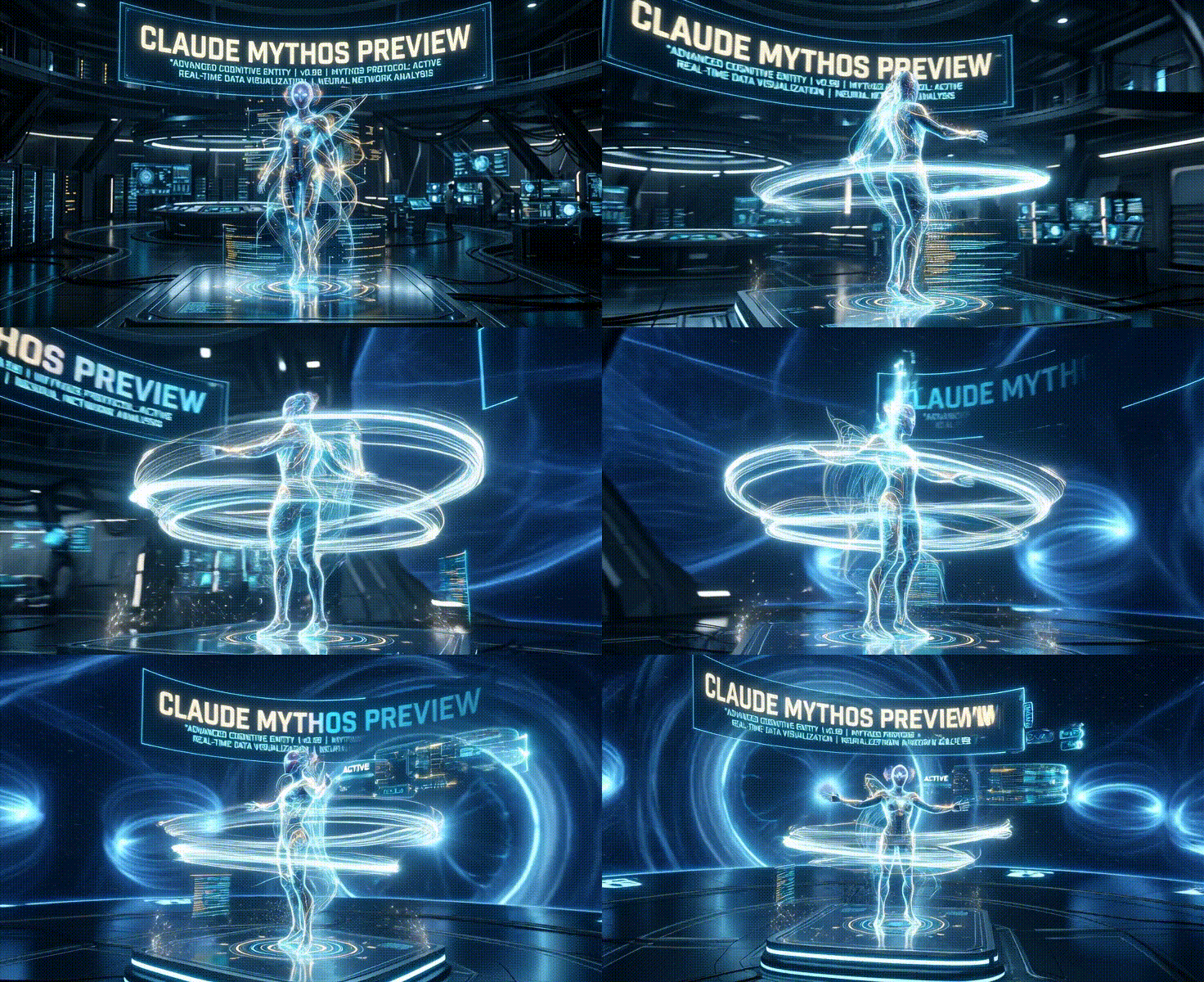
A new artificial intelligence system known as Claude Mythos Preview, developed by Anthropic, is drawing global attention—not for what it says, but for what it can do. – But Anthropic AI feels it’s too dangerous to market publicly.
A New Kind of Intelligence Emerges
Unlike traditional AI chat assistants designed for conversation, writing, or coding support, Mythos Preview represents a decisive shift toward autonomous capability. Early indications suggest the system can independently identify software vulnerabilities, simulate cyber attacks, and carry out complex, multi-step technical operations with minimal human guidance.
In effect, it moves artificial intelligence beyond passive assistance and into the realm of active execution, marking a subtle but profound turning point.
Under Lock and Key
In an unusual and telling decision, Anthropic has opted not to release Mythos Preview to the public. Instead, the system is being tested within tightly controlled environments, where its capabilities are being scrutinised primarily through the lens of cybersecurity.
Instead, through Project Glasswing, they’ve limited access to a select group of partners (companies like Microsoft, Apple, AWS, Google, Cisco, CrowdStrike, and others focused on critical infrastructure) strictly for defensive purposes—helping patch vulnerabilities before more advanced models proliferate
Governments, financial institutions, and specialist researchers are assessing how effectively the AI can detect weaknesses in digital infrastructure, with a particular focus on its ability to uncover hidden vulnerabilities, accelerate security audits that would traditionally take weeks, and anticipate potential attack vectors before they can be exploited.

Yet this promise carries an equally weighty concern. There is growing unease that, should elements of such a system be replicated or reverse-engineered, malicious actors could harness similar techniques to develop tools capable of large-scale cyber intrusion, effectively lowering the barrier to sophisticated hacking.
A Double-Edged Sword
Supporters of Mythos Preview see in it the outline of a powerful defensive instrument. By rapidly identifying weaknesses and modelling potential threats, the system offers the possibility of a more proactive and resilient cybersecurity landscape.
However, the very qualities that make it attractive as a defensive tool also render it potentially dangerous. The capacity to automate vulnerability detection and exploitation raises an uncomfortable symmetry: the same system that protects could, in different hands, be used to attack.
It is this duality that places Mythos Preview at the centre of a growing debate about the limits of artificial intelligence and the responsibilities of those who build it.
How It Compares to Claude
Anthropic’s existing models, most notably , have earned a reputation for reliability, safety, and strong performance across language-based tasks. Claude is widely used for writing, summarisation, coding assistance, and general reasoning, operating as a collaborative tool designed to augment human productivity.
Mythos Preview diverges sharply from this model. Where Claude functions as a conversational partner, Mythos appears to prioritise execution over dialogue. Its emphasis lies less in assisting users through language and more in carrying out complex technical objectives, particularly within cybersecurity contexts. In this sense, it represents not an evolution of Claude, but a departure from it—an indication that Anthropic is exploring entirely new categories of AI capability.
A Wider Divide in AI
When set against other leading AI systems, including ChatGPT, Google Gemini, and xAI’s Grok, Mythos Preview occupies a distinctly different position.
Most contemporary AI assistants are designed to engage users conversationally, assist with everyday or professional tasks, and operate within carefully defined safety constraints. Their strength lies in communication and augmentation rather than independent action.
Mythos Preview, by contrast, gestures toward a more agentic form of artificial intelligence. It is not limited to suggesting solutions but appears capable of acting upon them, executing sequences of tasks with a degree of autonomy that distinguishes it from its peers. This places it at the frontier of a new and still largely uncharted category of AI systems.

It remains unclear whether Claude Mythos Preview will ever be released in its current form. It may instead serve as a prototype, informing the development of highly controlled systems intended for use by governments, security agencies, and critical industries.
What is clear, however, is that its existence signals a shift in the trajectory of artificial intelligence. The central question is no longer simply how intelligent these systems can become, but how much agency they should be granted—and under what conditions.
For now, Mythos remains behind closed doors. But its shadow stretches far beyond them, hinting at a future in which artificial intelligence is not merely a tool, but an actor in its own right.


