
Netflix’s Dalliance with the Dark
Netflix’s crime-horror anthology Monster (after seasons on Dahmer and the Menendez brothers) is turning its gaze to Ed Gein in the third instalment. Titled Monster: The Ed Gein Story, it will debut on 3 October 2025.
Casting & Creative Team
Charlie Hunnam (of Sons of Anarchy) stars as Ed Gein.
Laurie Metcalf plays Augusta Gein, his mother.
Tom Hollander is cast as Alfred Hitchcock, and Olivia Williams plays his wife, Alma Reville.
Others: Vicky Krieps, Lesley Manville, Suzanna Son, and actors portraying Bernice Worden, Anthony Perkins, Tobe Hooper, and even Ted Bundy appear, weaving a tapestry of horror cinema reference.
Filming was underway in late 2024 and into 2025, with post-production progressing.
Narrative Focus & Tone:
Rather than portraying Gein as an invincible monster, the show promises a more intimate, unflinching portrait: “human, tender, unflinching … who Ed was being at the center of it, rather than what he did.” The trailer breaks the fourth wall: “You’re the one who can’t look away,” says Gein, as the show probes the psychological, familial, and cultural forces that allowed this madness to gestate.
The show also weighs the boundary between monsters born and monsters made—a recurring motif in the Monster anthology.
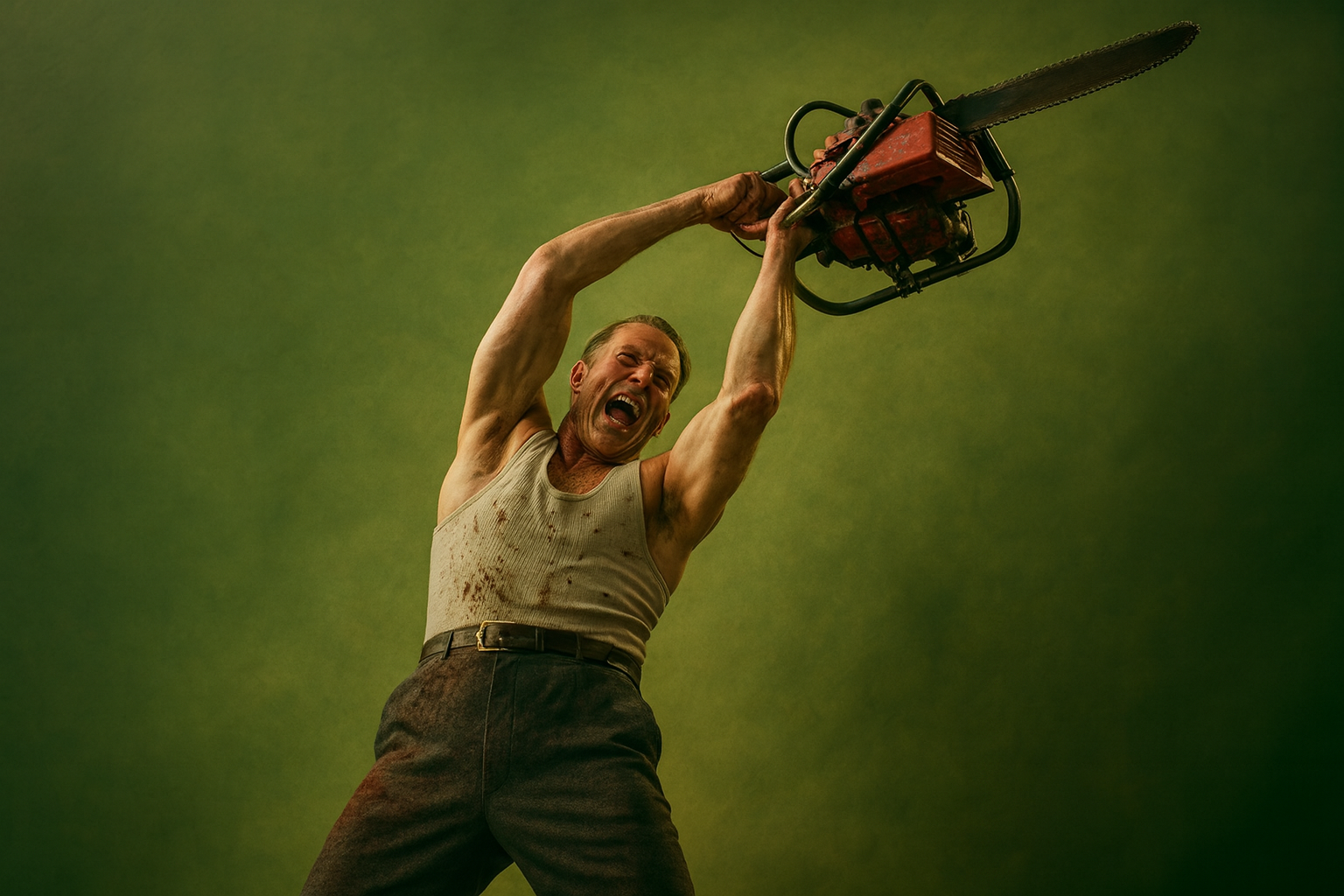
Yet critics have already raised caution flags: one article observes that promotional materials edge dangerously into portraying Gein as a chainsaw-wielding killer (a riff on Texas Chainsaw Massacre)—despite no historical evidence that he ever used one. The risk: blurring fact and fiction so far that the myth overtakes the man.
As Monster: The Ed Gein Story prepares to unspool its tale in October, one wonders whether the series can do justice to a man whose notoriety already looms larger than life.
If it leans too hard into spectacle, it risks turning Gein into a caricature—an inhuman horror performance rather than an unsettling mirror. But if it balances sympathy and revulsion, context and shock, it might pierce deeper: reminding us that the real terror is not only in the act, but in how society allows those fissures of detachment, obsession, and trauma to spread.
For horror lovers, true crime obsessives, and even casual watchers, this season stands as a daring invitation: to confront the source beneath the legend, to stare at the monster’s face (even if distorted), and to ask: who made the monster?
Mark your calendars for October 3—if you dare.
(Source Entertainment Tonight)
Ed Gein’s Real Life story
In the winter of 1957, a house in Plainfield, Wisconsin—creaking, overgrown, haunted by rumors—was finally pried open by police, who discovered an interior that seemed to have emerged from a fevered hallucination
Inside: human remains re-fashioned into lampshades, bowls, masks, and belts; skull fragments; tissues; grave-robbed corpses; and a sense that reality itself had been desecrated. The man who lived there, Edward Theodore Gein, would become a grotesque legend.
Who Was Ed Gein?

Born in 1906, Ed Gein was raised in rural isolation and under the domineering influence of his mother, Augusta, following a volatile and abusive father. Augusta forbade him from forming relationships or engaging socially, reinforcing a life lived in solitude and suppression. After her death in 1945, Gein’s behavior gradually turned darker. He developed an obsession with death, corpses, and the boundary between the living and the dead.
Between 1947 and 1952, Gein exhumed between 10 and 15 bodies (by his own confession) from local cemeteries—often bodies of recently buried women whom he believed resembled his mother—and brought them home. He would strip flesh, tallow, and skin and turn them into trophies: masks, containers, garments.
In 1957 he was implicated in the murder of Bernice Worden, a local hardware store owner, whose body was found disemboweled in his shed. Authorities discovered the macabre tableau and, in the shock that followed, Gein’s crimes captured the country’s morbid imagination.
Gein was found not guilty by reason of insanity and spent the rest of his life confined to a mental institution, dying in 1984.
Why Gein Haunts Our Horror Mythos
Ed Gein’s true-life horror struck a chord among writers, filmmakers, and the public partly because it blurred the line between the monstrous and the human. Here’s why his story became a kind of dark wellspring for horror and crime fiction:
1. The Real in the Unreal
Unlike purely fictional monsters, Gein’s crimes had roots in the plausible: a shy man, socially withdrawn, obsessed with death and identity, who enacted his fantasies through grave robbery and murder. Horror that gestures toward plausibility unsettles more. Psychologists and storytellers alike saw him as an embodiment of the thin membrane between sanity and deviance.
2. Mother Fixations & Identity Confusion
One of Gein’s obsessions was wearing the skin of corpses, which he claimed enabled him to become his mother in some sense. This perverse attempt at identity, combined with his Oedipal psychosis, provided a narrative kernel that inspired Robert Bloch’s Psycho (and by extension, Hitchcock’s film) in creating Norman Bates.
3. Macabre Decoration, Not Just Murder
Gein’s crimes involved more than killing — they involved the desecration of the dead: turning skin into objects, exhuming corpses, shaping human remains. This added layer of perversion became fuel for horror imagery: horror that doesn’t stop at murder but goes further, blurring art and atrocity. Films like The Texas Chain Saw Massacre borrowed the idea of masks and furniture from Gein’s catalogue rather than mimicking murder directly.
4. Legacy and Transmutation
Over time, Gein’s name became a dark cypher. Characters like Buffalo Bill (The Silence of the Lambs), Leatherface (Texas Chain Saw Massacre), and Norman Bates all carry a ghost of Gein, reworked through fiction. His influence persists not because writers copied his crimes, but because they took the horror of what it might mean to be “the monster among us.”


