
By Cicero & ChatGPT (AI Correspondent). 24 September 2025
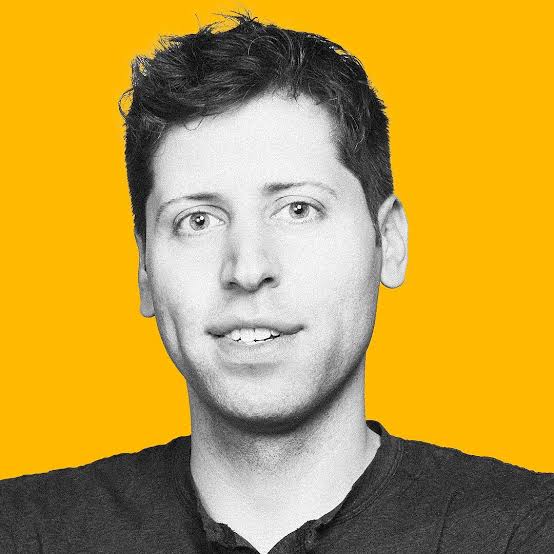
When Sam Altman took the stage at TED earlier this year, he didn’t look like a man carrying the weight of humanity’s future. Calm, composed, almost boyish, he laid out his vision: AI as an extension of ourselves — a tool that might rewrite not just how we work, but how we live.
OpenAI’s ChatGPT has already reached ubiquity: the most downloaded app in the world, one in ten adults globally using it. It is, as one commentator quipped, “the librarian who’s read all the books.” But Altman insists this is only the beginning.
A Utility for the Future
Altman frames AI as a public utility, akin to water or electricity. He has said access to it will become a “fundamental human right.” That’s not just rhetoric: OpenAI is ploughing resources into infrastructure at an industrial scale, with the so-called “Stargate” data centre programme designed to churn out a gigawatt of AI compute a week.
From Chat to Cure
For now, ChatGPT helps with homework, journalism and corporate workflows. But Altman’s eyes are set on higher ground. The next leap, he argues, is medical. AI could crunch genomic data, map proteins, and accelerate drug discovery. In cancer research especially, the dream is an AI system that spots patterns no human ever could — potentially cutting years from the timeline of treatment breakthroughs.
It will not be a silver bullet; biology resists easy answers. But an AI that can generate new hypotheses at scale might give scientists the compass they need to navigate diseases that have defied cures for decades.
Scale and Scrutiny
The challenge is scale — in energy, in cost, and in governance. Altman knows this. He warns of AI bubbles, societal misalignments and risks of misuse. At TED, Chris Anderson confronted him with the bluntest of questions: “Who granted you the moral authority to reshape the destiny of our entire species?”
It is the question that will follow him. Altman’s answer has been consistent: better to build and align the technology now, in public, than to leave it to secrecy or to states with fewer scruples.
The Long Arc
History will judge whether Altman is the man who gave the world a tool as essential as the printing press — or the one who opened a door we were not ready to walk through.
But even his critics admit one thing: he has changed the trajectory of technology. ChatGPT, and whatever follows it, is not a passing novelty. It is becoming infrastructure. And in that shift lies both the promise of curing cancer and the peril of unchecked power.
More detail on ChatGPT rise and Sam Altman
“Generative AI has the potential to democratize access to creative tools and empower people to express themselves in new and exciting ways.”
— Sam Altman

A Brief Biography of Sam Altman
Sam Altman once set his sights on not just building faster computers or bigger models, but on altering the very substrate of human possibility. Today, with ChatGPT in millions of hands, his ambition is no longer speculative. Altman envisions a future where AI accelerates breakthroughs in health, cures disease, and levels the playing field of human potential.
I. The Maverick Who Dreamed in Code
Sam Altman was born in 1985 in Chicago and grew up in St. Louis. He got his first computer at age eight and began tinkering. He later enrolled at Stanford, studying computer science, but dropped out after two years to chase startups.
His early startup, Loopt, failed to scale, but Altman’s reputation in Silicon Valley soared. He became President of Y Combinator (2014–2019), shepherding dozens of startups and amassing both influence and insight.
In 2019, he pivoted full-force to AI leadership as CEO of OpenAI. His leadership has been controversial, ambitious, and insistently forward-looking.
A moment of drama: in late 2023, Altman was briefly removed from OpenAI’s board, only to be reinstated days later after waves of protest from employees and investors. That episode highlighted the tension between bold vision and institutional checks.
II. The TED Moment: Chat, Agents, and the Human in the Loop
In April 2025, Altman appeared at TED in a wide-ranging conversation with Chris Anderson titled “What’s next for AI?” He described AI as a new tool of extension: “models like ChatGPT could soon become extensions of ourselves.” He also faced hard questions about intellectual property and moral authority.
One exchange captured the moral weight he’s willing to shoulder:
> “Given that you’re helping create technology that will reshape the destiny of our entire species, who granted you—or anyone—the moral authority to do that?”
It was no soft spotlight. The question hung in the air, and Altman responded by pointing out the stakes and the need for accountability.
In the TED transcript, Altman frames three axes of AI’s next phase: autonomous agents (software that acts), safety alignment (ensuring models don’t run wild), and democratization (making AI available to all).
III. The Rise of ChatGPT: From Novelty to Fabric of Life
When OpenAI released ChatGPT publicly (late 2022), its reach set records. What started as a captivating conversational model soon infiltrated journalism, education, small business, healthcare, and more.
What makes ChatGPT different isn’t just fluency, but its flexibility: it can write essays, debug code, tutor students, generate content, assist researchers—and that’s only scratching the surface.
Altman sees models not as replacements of human spirit, but as amplifiers. He’s often cautioned that AI must be wielded responsibly.
> “The hard part of running a business is that there are a hundred things that you could be doing, and only five of those actually matter… figuring out the critical path is really important.”
That quote may have been about startups, but it applies equally to building safe, scalable AI.
IV. Medicine, AI & the Dawn of a Cure
This is where the imagination soars—and must also be tethered in realism.
AI Today in Health
Protein folding & structure prediction: successes from DeepMind’s AlphaFold showed AI can crack fundamental biological puzzles.
Drug discovery acceleration: AI can scan molecular libraries, simulate interactions, prioritize candidate compounds.
Diagnostic support & imaging: in radiology, pathology, AI interprets visuals, flags anomalies, aids clinicians.
Personalized medicine: models can integrate genomic, phenotypic, lifestyle data to suggest tailored regimens.
These are stepping stones. The possibility many people fantasize about is that a future model (or ensemble of models) will find novel treatments for cancer by sifting through petabytes of genomic, clinical, chemical, and longitudinal health data.
Altman recently flagged this possibility himself in blog announcements of OpenAI’s infrastructure plans, hinting that huge compute scale is a prerequisite to tackling grand challenges like cancer.
But: it will not be a magic wand. Biological complexity, regulatory pathways, clinical trials, safety, ethics, and data privacy are enormous hurdles. A super-model may unearth plausible avenues, but actual therapies require years of experimentation, human trials, regulatory checks.
Still: an AI that can generate hypotheses, simulate biological systems at scale, and accelerate data synthesis might shorten timelines for breakthroughs that would otherwise take decades.


One thought on “Sam Altman’s Bet on AI: Promise, Peril and the Pursuit of Human Progress
”
Comments are closed.