
Washington and Tehran Escalate Tensions in Critical Maritime Chokepoint
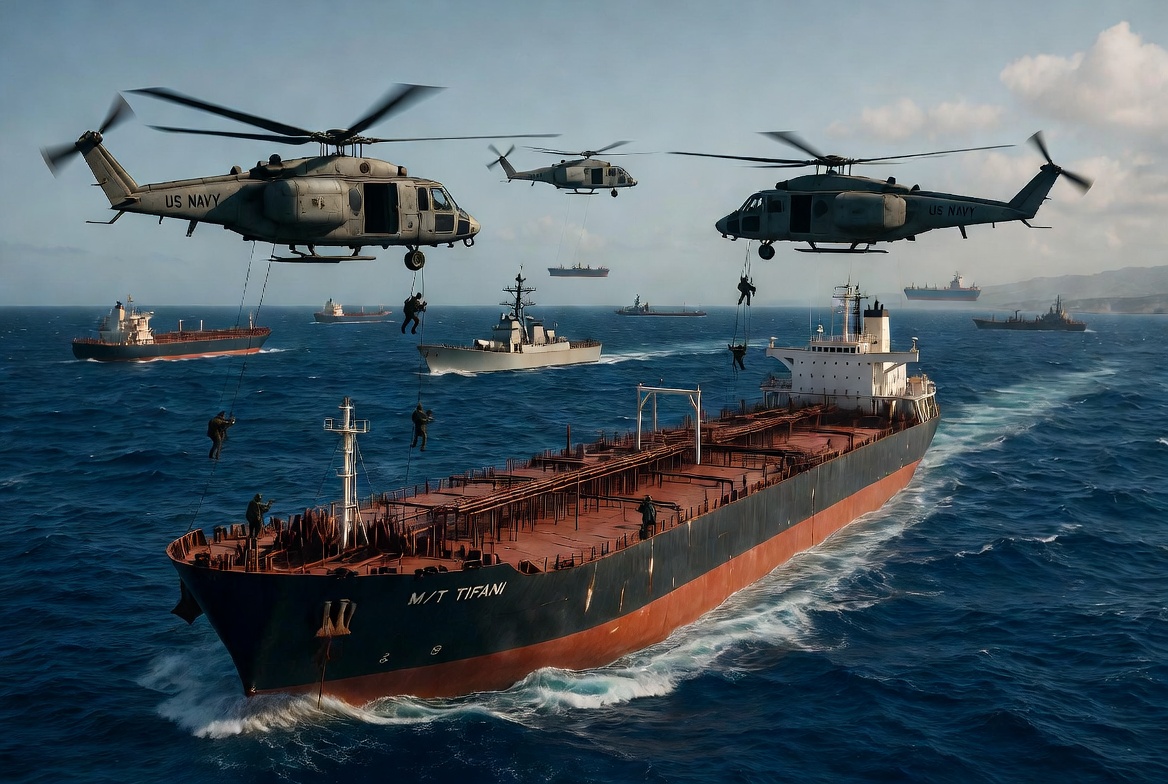
U.S. naval forces boarded the oil tanker M/T Tifani in the Indian Ocean on Tuesday, marking the second such seizure in as many days and intensifying a rapidly escalating confrontation with Iran in one of the world’s most vital shipping lanes.
The operation follows the capture of the vessel Touska near the Strait of Hormuz on Sunday, according to reports from both American and regional sources. The incidents come amid a tightening U.S. naval presence in the region, which Iranian officials have described as a blockade.
In a strongly worded statement broadcast on state media, Iran announced that the Strait of Hormuz — through which approximately one-fifth of global oil supplies pass — has been “closed completely until further notice.” Tehran characterised the latest U.S. boarding as “an act of aggression” and declared that it would refuse further negotiations until Washington lifts what it termed a naval blockade.

Central Command (CENTCOM) has confirmed that U.S. forces have turned back 27 vessels since 13 April as part of heightened maritime security operations in the area. Officials maintain the actions are necessary to protect international shipping and counter threats to freedom of navigation.
Escalating Crisis Raises Fears for Global Energy Markets
The closure of the Strait of Hormuz, a narrow waterway between the Persian Gulf and the Gulf of Oman, represents a significant escalation. The strait serves as the primary export route for oil from major producers including Saudi Arabia, Iraq, the United Arab Emirates, Kuwait, and Iran itself.
Analysts warn that any prolonged disruption could trigger sharp increases in global oil prices and threaten energy security for economies heavily dependent on Middle Eastern crude. Shipping companies have already begun rerouting vessels, adding significant time and cost to journeys.
Iranian state television showed images of naval vessels and warned that any attempt to breach the closure would be met with force. A senior Iranian Revolutionary Guard Corps commander was quoted as saying the decision was a “direct response to American piracy on the high seas.”
U.S. Maintains Actions Are Defensive
Pentagon spokespersons have declined to provide detailed operational information regarding the boardings of the M/T Tifani and Touska, citing security concerns. However, they reiterated that U.S. forces operate in accordance with international law to safeguard maritime commerce and respond to provocations in the region.
The sequence of events began intensifying in mid-April, with CENTCOM documenting the interception or diversion of 27 vessels over the past week. American officials have pointed to intelligence indicating heightened Iranian activity aimed at disrupting tanker traffic.
Diplomatic channels appear largely frozen. Iran has explicitly linked any resumption of talks to the immediate cessation of U.S. naval operations, while Washington has shown no indication of easing its posture.
Broader Implications for Regional Stability
The standoff occurs against a backdrop of longstanding tensions between the United States and Iran, including disputes over Iran’s nuclear programme, regional proxy conflicts, and sanctions. The current maritime crisis threatens to draw in other Gulf states and could complicate international efforts to maintain stability in the Middle East.
Market observers are closely monitoring developments, with oil futures already reflecting heightened risk premiums. Shipping insurance rates for the region have surged, and several major energy companies have placed their vessels on high alert.
As the situation unfolds, the international community watches with concern. The closure of the Strait of Hormuz, even if temporary, carries the potential for far-reaching economic and geopolitical consequences. Further updates are expected as both sides continue to assert their positions in this critical maritime domain.


