
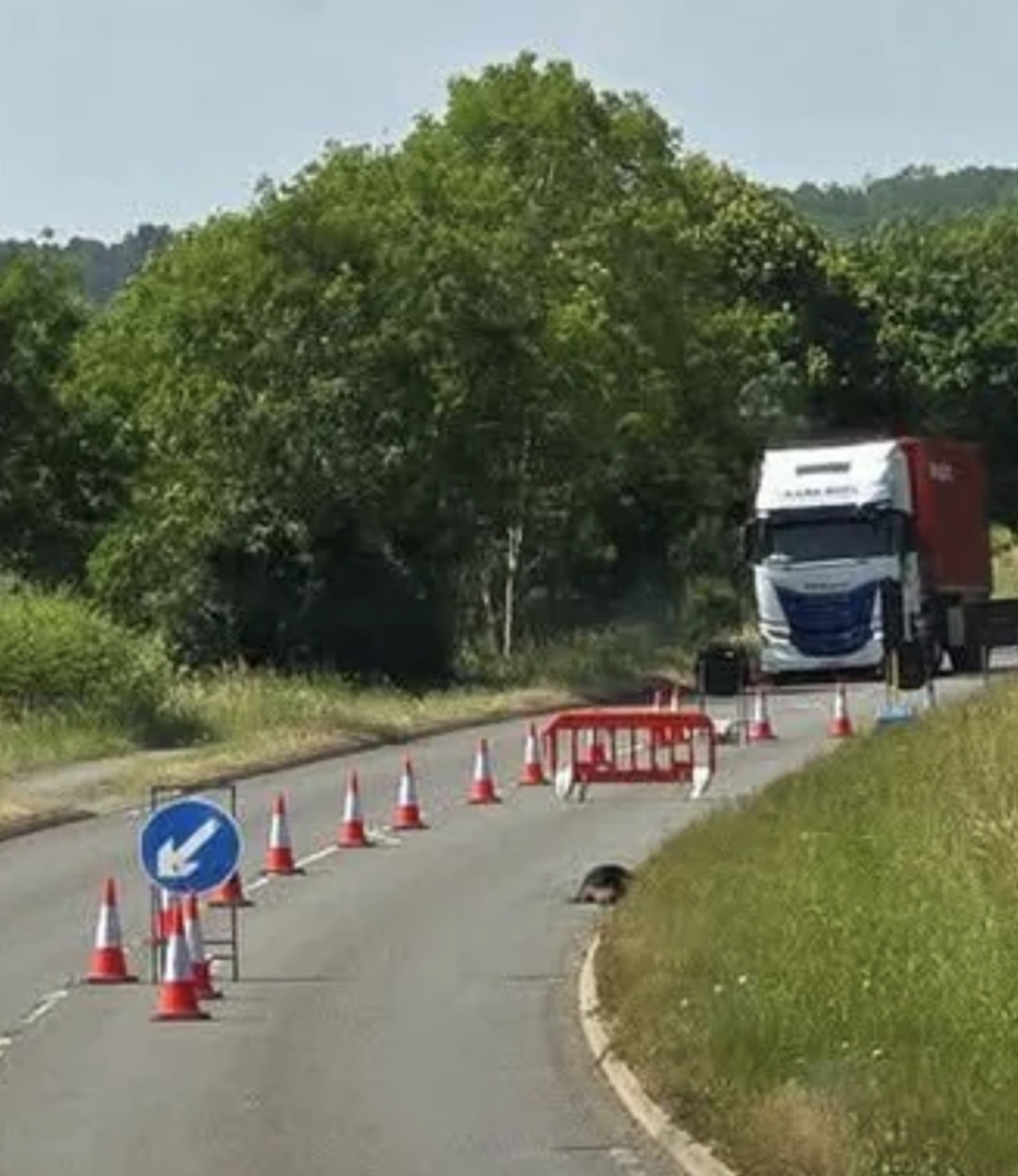
Drivers ask why road workers marked the animal with traffic cones but left it in the carriageway despite pledges to reduce bureaucracy
A small muntjac deer killed after being struck by a vehicle on a road in Corby has prompted questions over whether common sense has been replaced by procedure after council workers reportedly surrounded the carcass with traffic cones but left it where it lay.
The deer, believed to have been killed by passing traffic, was discovered lying in the road by motorists. Rather than moving the animal to the safety of the verge or removing it altogether, highways workers are said to have placed a number of traffic cones around the carcass before leaving the scene.
Witnesses questioned why such a small animal, weighing considerably less than larger species of deer commonly found across the countryside, could not simply have been moved a short distance away from the live carriageway while arrangements were made for its collection.
The incident has also reignited debate over the balance between health and safety procedures and practical decision-making by public authorities.
Critics argue that while traffic management is important, leaving a dead animal in the road, even when marked with cones, may itself create a distraction for motorists and prolong an unpleasant situation for residents and passing drivers.
The episode is likely to attract additional political attention following recent local elections, which saw Reform UK assume control of the local authority on promises to reduce bureaucracy, streamline council services and place greater emphasis on practical solutions.
Residents may reasonably ask whether situations such as this present an opportunity for the new administration to demonstrate that commitment in practice.

No suggestion has been made that highways staff acted improperly or outside existing procedures. Indeed, employees are often required to follow strict health and safety guidance, particularly where there are potential risks associated with lifting animal carcasses, biological hazards or working on busy roads. Any decision not to remove the deer immediately may therefore have reflected established operational policy rather than the judgement of the individuals on site.
Nevertheless, the incident has prompted wider discussion about whether current procedures always produce the most sensible outcome, especially when dealing with relatively small animals that could, in some circumstances, be moved safely from the carriageway.
For many residents, the sight of traffic cones protecting a dead deer, while the animal itself remained lying in the road, became an unfortunate symbol of bureaucracy overtaking practicality.
Questions remain over the council’s policy for dealing with animals killed on the road, particularly during periods of extreme weather.


