
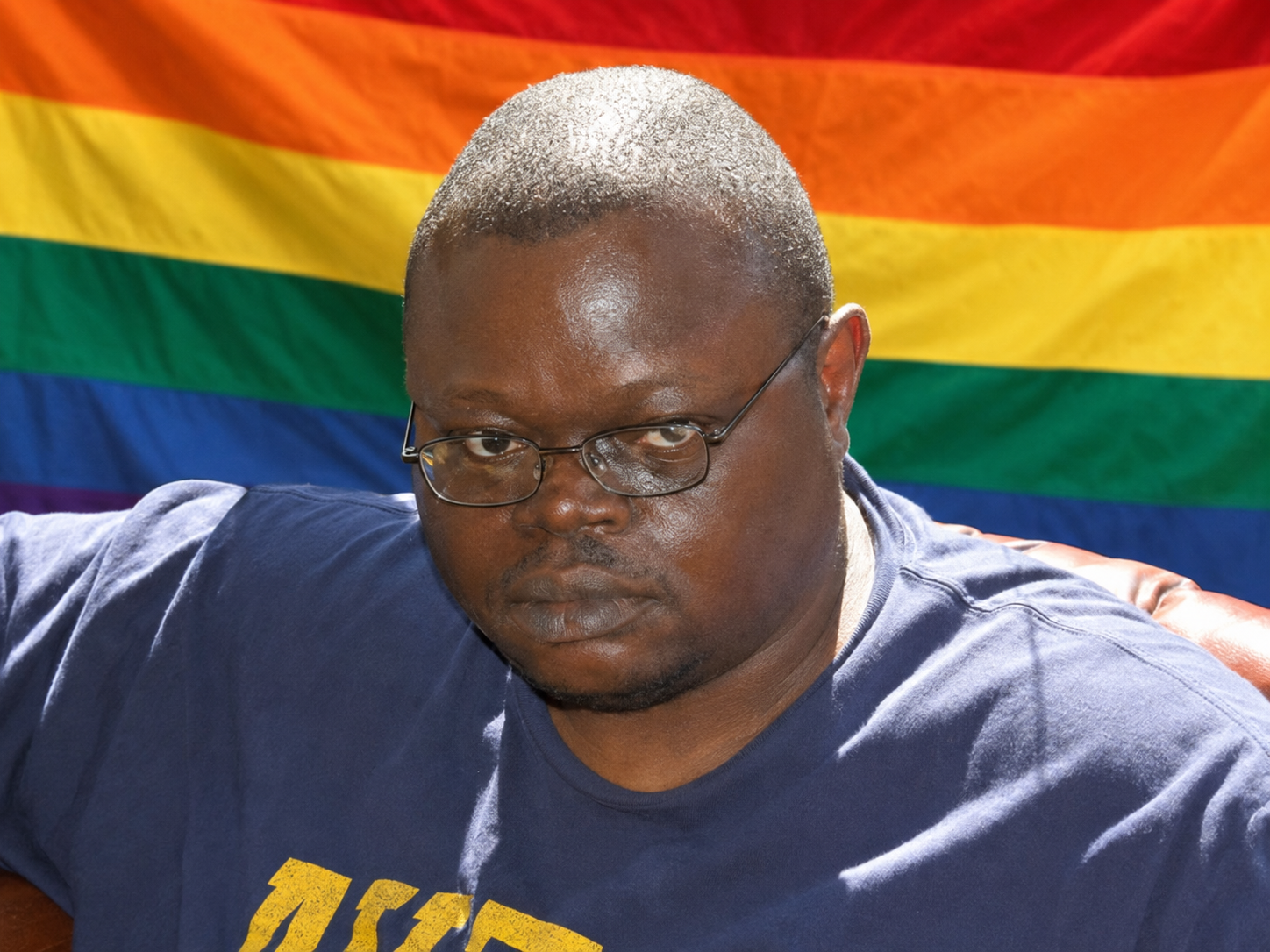
Long before diversity became a fashionable word in corporate mission statements, Ayo Oyebade was speaking openly about the reality of being both Black and gay in Britain..

I knew Ayo through the London Lesbian and Gay Teenage Group, one of the earliest organisations of its kind anywhere in the world. For young people growing up amid prejudice, silence and fear, the group offered something precious: a place where we did not have to pretend.
Founded in 1975, the group was revolutionary. Homosexuality had been partially decriminalised in England and Wales only eight years earlier, and openly gay teenagers remained extraordinarily vulnerable. Schools rarely acknowledged that lesbian and gay pupils existed, supportive information was scarce, and many young people feared rejection by their families.
The group gave us friendship, confidence and a sense that we belonged to a community larger than ourselves. Yet Ayo understood that entering the gay community did not automatically mean escaping discrimination.
Confronting racism within the gay community
As a young Black gay man, Ayo faced prejudices that white members of the community did not necessarily encounter or even recognise.
In an archived interview, conducted when he was 20, Ayo described the gay scene as predominantly white and middle class. He spoke plainly about the racism he had encountered within it.
That was an important intervention. The gay-rights movement was demanding equality from wider society, but Ayo recognised that it also needed the courage to examine inequalities within its own ranks.
A person could experience homophobia within the Black community while encountering racism in gay spaces. Those pressures did not exist separately; they could bear down upon the same person at the same time. Today we might describe this as intersectionality. Ayo did not require fashionable terminology to recognise the injustice in front of him.
His message was uncomfortable but necessary: a movement cannot credibly demand liberation while overlooking prejudice inside its own house.
Creating spaces where every identity mattered
Ayo’s activism was not confined to pointing out what was wrong. He became associated with efforts to create places in which people could bring their whole identity—not merely the parts that others found convenient.
In March 1993, Ayo reported on the groundbreaking Mosaic Conference in London. According to the contemporary newsletter of the London Lesbian and Gay Centre, it was the first conference organised for lesbians and gay men of mixed racial heritage.
The conference represented something important. Black, mixed-race and other minority-ethnic gay people were not asking to be decorative additions to somebody else’s movement. They were organising, speaking and defining their own experiences.
Ayo’s presence in that history deserves recognition. Activism is not only made by the celebrated figures standing on large stages. It is also made through youth groups, community newsletters, difficult conversations and the bravery of people who speak before society is ready to listen.
More than one struggle
Black gay activists of Ayo’s generation often had to challenge several kinds of exclusion at once.
They confronted a wider society in which both racism and homophobia remained entrenched. They challenged homophobia within their ethnic and cultural communities. At the same time, they demanded that predominantly white gay organisations take racism seriously.
There was no easy political home. Yet people such as Ayo persisted, widening the meaning of equality for everybody who followed.
Britain has changed since those years. Lesbian and gay people have secured legal protections and rights that once appeared impossibly distant. Public attitudes have shifted, and younger generations have inherited a language with which to discuss overlapping identities and discrimination.
But progress did not arrive by magic. It was built by people who were willing to say what others preferred not to hear.
A fellow member remembered
My memories of Ayo begin with our shared membership of the London Lesbian and Gay Teenage Group. We were young people trying to understand ourselves in a Britain that frequently told us—directly or indirectly—that we should remain silent.
Ayo would not remain silent.
His contribution reminds us that there has never been just one gay experience. Race, class, family, faith and cultural background all shape the circumstances in which a person comes to understand and express their sexuality.
A movement worthy of the name must make room for that complexity.
Ayo Oyebade helped force those questions into the open. By speaking about racism within the gay community, he demanded something more substantial than conditional acceptance. He demanded equality without an asterisk.
That is why his story matters—not only as part of Black British history or LGBT history, but as part of the continuing struggle to build a society in which nobody must divide themselves into acceptable and unacceptable pieces before walking through the door.
Ayo spoke when speaking carried a cost. The generations that followed owe something to that courage.
Sources include an archived contemporary interview with Ayo Oyebade, the London Lesbian and Gay Centre’s 1993 newsletter, and a history of the London Lesbian and Gay Teenage Group.


