
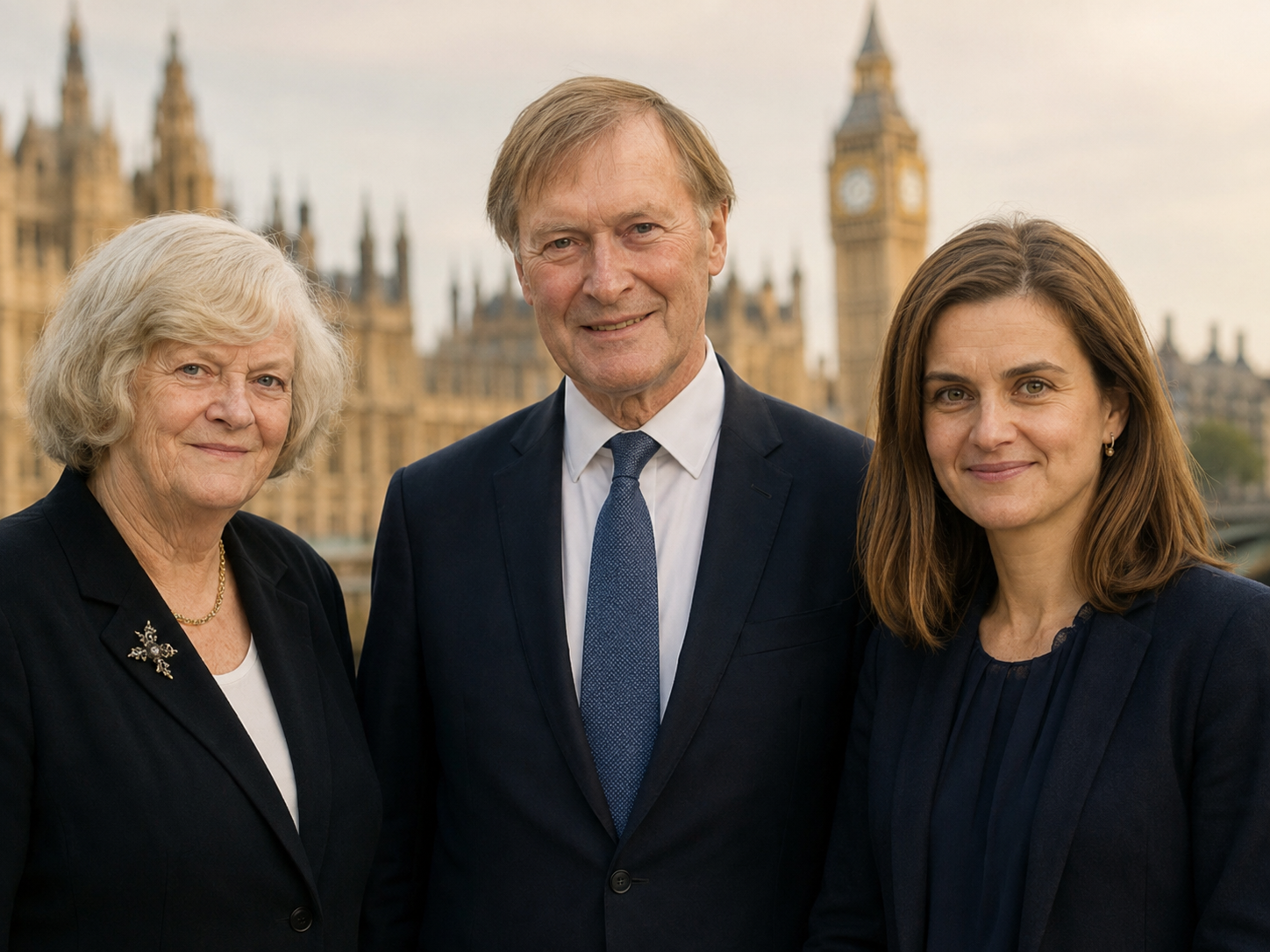
Britain must confront political violence without cutting elected representatives off from the communities they serve
Politics is supposed to be passionate. It should involve argument, protest, disagreement and the vigorous testing of those who seek public office.
But there is a line between political conviction and political hatred. When opponents are no longer treated as human beings, when anger becomes intimidation and when threats replace debate, democracy begins to curdle into something darker.
Britain understands the consequences all too painfully.
Jo Cox, the Labour MP for Batley and Spen, was murdered in June 2016 while carrying out the ordinary democratic work of meeting people in her constituency. Sir David Amess was murdered in October 2021 during a constituency surgery in Leigh-on-Sea.
Both were accessible parliamentarians doing precisely what voters expect their MPs to do: listening, helping and being present.
Their deaths left an unbearable question hanging over British politics. How can we protect elected representatives without separating them from the people they represent?
The answer cannot be to build an impenetrable wall around Parliament. Nor should MPs be expected to become distant figures who only appear through television screens, carefully managed events and social-media statements.
Protecting democracy does not mean closing democracy. It means making public participation safe.
The danger is not limited to sitting MPs. Parliamentary candidates, local councillors, mayors, campaign volunteers and election workers can all face intimidation. Britain holds elections and by-elections regularly, and those standing for office are often less protected and less experienced than established politicians.
The Electoral Commission has warned that abuse can discourage people from campaigning or standing for election, reducing the choice available to voters. Its research following the May 2024 elections found that women candidates were particularly likely to avoid campaigning alone because of safety concerns.
That is not merely unpleasant behaviour. It is democratic erosion.
If decent people begin to conclude that public service is not worth the danger to themselves or their families, politics will increasingly be left to those with the thickest armour, the greatest resources or the least concern for personal consequences.
Practical protection without political isolation
Candidates and elected representatives should receive clear security briefings before campaigning begins. They should have a named police contact, straightforward systems for reporting threats and rapid support when intimidation appears to be escalating.
Election organisers and police forces should share relevant information, particularly where individuals repeatedly threaten candidates across different constituencies or platforms. In March 2026, the Government announced a national police unit intended to identify repeat offenders and help forces build stronger cases against people who threaten or harass election candidates.
Candidates should also avoid attending potentially risky meetings alone. Constituency surgeries can take place in suitable public buildings with trained staff nearby, controlled entry arrangements and an agreed emergency procedure. Campaign teams should keep reliable schedules, check venues in advance and make sure somebody knows where candidates are expected to be.
Home addresses and private family information should be guarded carefully. Online accounts require strong passwords, two-step verification and sensible separation between public campaigning and private life. Threatening messages should be preserved as evidence rather than immediately deleted.
Police guidance already recognises dedicated contacts for elected officials and candidates, while election administrators are encouraged to work with police specialists on security planning and intelligence.
None of this prevents an MP from listening to a constituent or a candidate from knocking on doors. It simply recognises that openness without preparation can become vulnerability.
Words can prepare the ground
Responsibility also belongs to political parties, campaign organisations, broadcasters and commentators.
Nobody should confuse criticism with violence. Politicians must be challenged, investigated, mocked and, where necessary, removed by the electorate. Robust debate is not the enemy of democracy. It is democracy breathing.
But language matters.
When politicians are routinely described as traitors, enemies or vermin, or accused without evidence of deliberately destroying the country, unstable or enraged individuals may begin to believe that violence is justified.
Most people expressing fierce political opinions will never harm anyone. Yet public figures should still understand that words released into a heated atmosphere do not always land in reasonable minds.
Politics becomes dangerous when disagreement becomes personal obsession. A person may begin by following every speech, consuming increasingly furious online material and treating an opposing politician as the source of every national or personal grievance.
At that point, politics is no longer functioning as civic participation. It has become fixation.
The warning signs should never be ignored: repeated threats, fantasies about punishment, attempts to discover private addresses, stalking campaign events or language suggesting that violence is necessary or inevitable.
Such behaviour is not patriotism. It is not activism. It is a collapse of democratic responsibility.
We have more in common
Following the murder of Jo Cox, Britain repeatedly returned to her belief that people have more in common than that which divides them.
That idea must not be reduced to a ceremonial quotation brought out after each tragedy. It should guide how political parties campaign, how broadcasters conduct debates and how citizens speak to one another.
We can oppose a politician completely while recognising their humanity. We can protest outside Parliament without threatening those inside it. We can demand accountability without demanding blood.
The country must protect MPs, councillors and candidates of every party, including those whose views we profoundly dislike. Security cannot become another partisan weapon, granted enthusiastically to allies and grudgingly to opponents.
A threat against one candidate is a warning to every candidate.
Britain should remain a country where an ordinary person can meet an MP, challenge a councillor, attend a campaign meeting or stand for election themselves. But accessibility must be supported by competent policing, sensible precautions and a political culture that refuses to glorify intimidation.


