
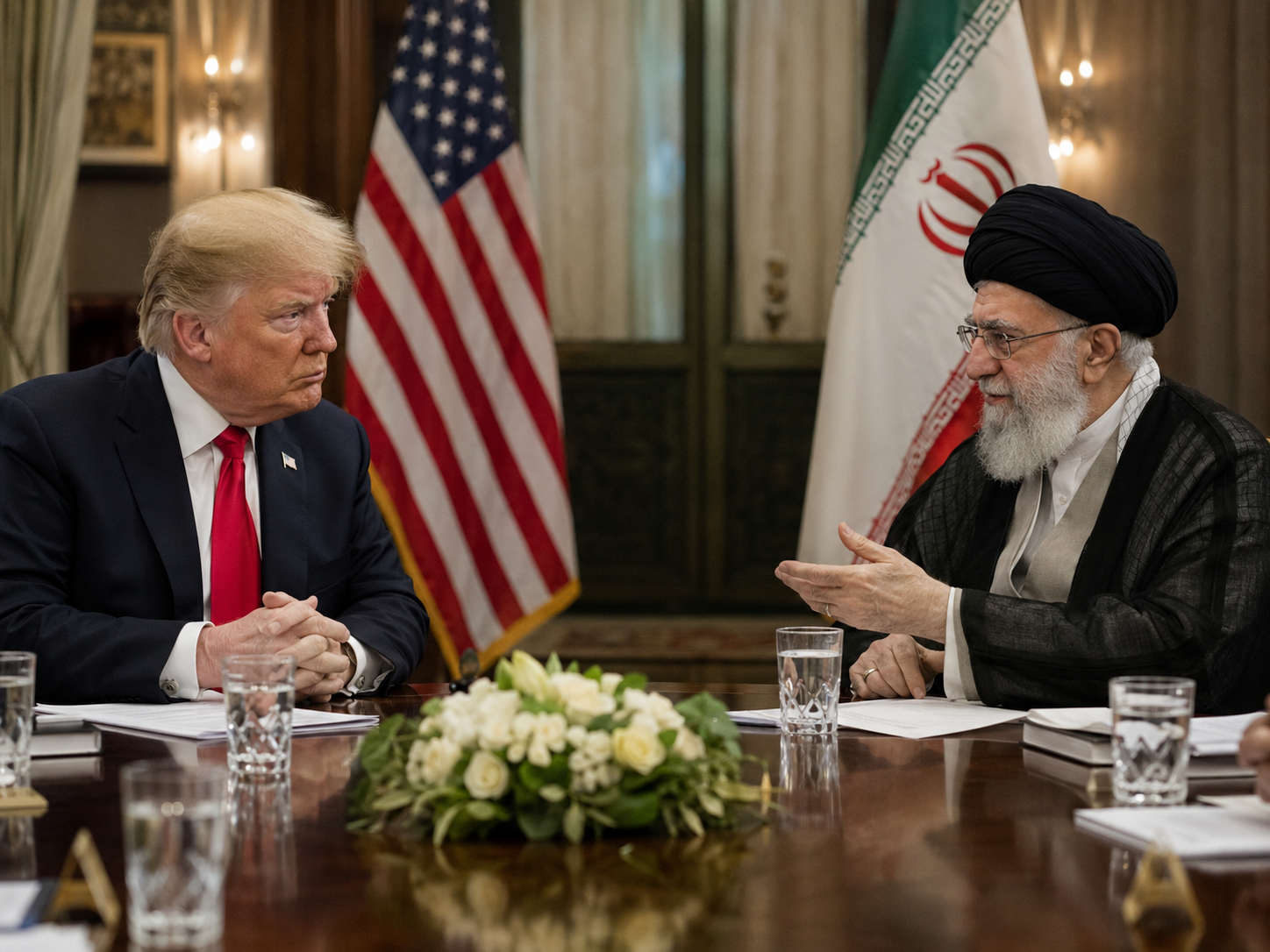
Donald Trump deserves some credit for attempting what many American presidents have found politically hazardous: negotiating directly with Iran. But diplomacy cannot flourish indefinitely at the end of a missile.
For a brief moment, it appeared that the United States and Iran might be inching away from confrontation.
In June, the two countries signed an interim memorandum intended to halt military operations, reopen the Strait of Hormuz and provide time for negotiations over Iran’s nuclear programme. American officials called the agreement a historic breakthrough. Talks involving Iranian and American representatives, assisted by mediators including Qatar and Pakistan, appeared to have established at least the beginnings of a diplomatic process.
That fragile structure has since cracked.
Fighting has resumed, the United States has carried out further strikes, Iran has retaliated against American interests and Gulf states hosting US forces, and commercial shipping remains vulnerable. The interim agreement has not delivered the durable ceasefire that Washington promised, while disagreements continue over nuclear inspections, sanctions, oil exports and control of the Strait of Hormuz.

Trump nevertheless insists that Iran still wants a deal. The White House has said communication continues, even while military operations intensify. There may be truth in that. Governments can negotiate during wars, and sometimes the moment of greatest pressure produces the strongest incentive to compromise.
But pressure and diplomacy are not interchangeable.
The Case for Trump
Trump’s willingness to engage Iran should not simply be dismissed because of his manner or politics.
The relationship between Washington and Tehran has been poisoned by more than four decades of hostility. The 1979 Islamic Revolution and hostage crisis remain central to the American understanding of Iran, while many Iranians remember the United States’ role in the 1953 overthrow of Prime Minister Mohammad Mosaddegh. Sanctions, proxy conflicts, assassinations, military threats and mutual accusations have accumulated ever since.
Breaking that cycle requires political nerve.
Trump is also correct that ignoring Iran will not make it disappear. Iran is a major regional power with substantial military capabilities, influence across the Middle East and important relationships with Russia and China. It sits beside one of the world’s most strategically important shipping routes. America may dislike the Iranian system of government, but it cannot pretend that Iran is irrelevant.
The nuclear question must also be addressed through some form of negotiation. Air strikes may destroy buildings, centrifuges and missile installations, but they cannot permanently erase scientific knowledge. Without inspections and a verifiable agreement, military action may merely delay a programme while encouraging Iran to rebuild it more secretly.

The International Atomic Energy Agency has repeatedly stressed that rigorous inspections can provide confidence that nuclear material is not being diverted towards weapons. Yet access and cooperation remain disputed, with the IAEA urging Iran to meet its obligations and resolve outstanding questions.
On that point, negotiation is not weakness. It is the only realistic route towards lasting verification.
Where Trump’s Approach Goes Wrong
The problem is that Trump often treats diplomacy as a public act of submission by the other side.
His method relies heavily on threats, sanctions, deadlines and overwhelming military pressure. The theory is straightforward: weaken Iran until its leaders conclude that an agreement is preferable to continued punishment.
That can bring officials to the negotiating table. It does not necessarily make them willing to sign, implement or defend an agreement.
Iranian leaders cannot easily appear to surrender to American bombing. Even officials who privately favour compromise must consider domestic legitimacy, military factions and the danger of being portrayed as collaborators. Every public humiliation strengthens those in Tehran who argue that America understands only force and cannot be trusted.
Washington faces the same credibility problem.
Trump withdrew the United States from the 2015 nuclear agreement during his first presidency, despite that arrangement having placed significant limits and inspection requirements on Iran’s nuclear activities. Whatever one thinks of the agreement’s weaknesses, its collapse taught Tehran that a deal signed by one American administration might be abandoned by the next.
That history cannot be bombed out of Iranian memory.
Nor can the humanitarian consequences be brushed aside. Renewed attacks have brought anxiety, inflation, disrupted employment and further restrictions on communications for ordinary Iranians. A strategy intended to pressure the government can instead punish people who have little influence over its decisions.
Trump’s great danger is therefore not that he is negotiating. It is that he appears to believe military dominance can substitute for diplomatic patience.
Should America Simply Leave Iran Alone?
The suggestion that Trump should return to the approach of his predecessors and leave Iran alone is tempting, but historically inaccurate.
Previous American governments did not leave Iran alone. They imposed sanctions, supported regional rivals, conducted covert operations, negotiated nuclear restrictions and maintained a substantial military presence around the Persian Gulf. Barack Obama helped negotiate the 2015 nuclear agreement. Trump abandoned it. Joe Biden attempted unsuccessfully to revive it.
The choice is not between Trump’s pressure campaign and peaceful American detachment. No recent president has practised genuine detachment.
Nor would complete disengagement necessarily produce stability. Iran’s nuclear programme, regional alliances and capacity to disrupt shipping would continue to affect America’s allies and the global economy. The Strait of Hormuz normally carries a major share of internationally traded oil, meaning disruption can raise prices far beyond the Middle East.
But engagement need not mean permanent military intervention.
America could maintain deterrence while reducing theatrical threats, working through mediators and offering staged sanctions relief in exchange for measurable Iranian actions. Any final agreement would need independent inspections, clear timelines, dispute procedures and guarantees strong enough to survive changes of government in Washington.
Saudi Arabia and the Gulf states must also be involved. Iran is predominantly Shia Muslim, while Saudi Arabia is predominantly Sunni and has historically been strongly influenced by Wahhabism, a conservative Sunni movement. Religion is not the sole cause of their rivalry, but identity, regional power and security competition are tightly entwined. A US-Iran agreement that ignores Gulf concerns would probably prove unstable.
Fool’s Gold or a Narrow Opening?
At present, Trump’s diplomatic achievement looks less like solid gold than an ore still buried beneath layers of danger.
There is something real within it. The two countries have communicated. Mediators have been involved. An interim framework was signed. Even after renewed fighting, neither side appears to have closed every diplomatic channel.
But a negotiation is not a peace settlement, and a memorandum is not a permanent agreement.
Trump should continue talking to Iran. He should do so more diplomatically, with fewer public ultimatums and a clearer understanding that compromise must allow both governments to claim something other than defeat.
Iran, in turn, must accept meaningful nuclear inspections, stop threatening commercial shipping and recognise that regional security cannot be built through proxies, missiles and intimidation.
Neither side needs to trust the other completely. International agreements are often made precisely because trust is absent. What they need is a system in which cheating can be detected and compliance rewarded.
Trump may yet achieve something valuable. His instinct that America must speak to its enemies is sound. His belief that they must first be battered into submission is far more questionable.
Diplomacy conducted under fire can occasionally succeed. But unless Trump lowers the temperature and gives negotiation room to breathe, his promised breakthrough may prove to be exactly what its critics fear: a glittering announcement that crumbles when held in the hand.


