
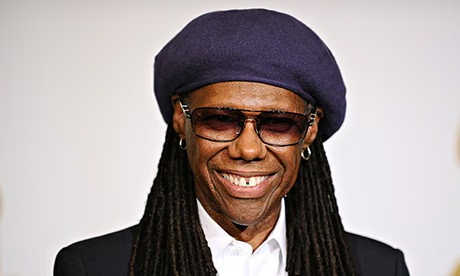
By Cicero
Some musicians write songs. A rarer breed designs eras. Nile Gregory Rodgers Jr., born on September 19, 1952, belongs firmly in the second category. Guitarist, songwriter, producer, bandleader, cultural lightning rod. If modern pop music has a backbone, chances are it’s strung with his famously clean, razor-sharp rhythm guitar.

Rodgers is best known as the co-founder of Chic, the band that didn’t just soundtrack the late 1970s but rewired popular music altogether. With Chic, Rodgers helped turn disco from a club movement into a global force, fusing funk discipline, jazz intelligence, and pop immediacy into songs that felt effortless yet were engineered with surgical precision. Le Freak, Good Times, Everybody Dance. These were not novelty hits. They were architectural blueprints.
The numbers still stagger. Records written, produced, or performed by Rodgers have sold over 750 million albums and 100 million singles worldwide. That is not a career; that is an ecosystem.
But focusing only on Chic misses the larger truth. When disco’s backlash arrived like a cultural guillotine in the early 1980s, Rodgers didn’t retreat. He reinvented. Where others saw a genre collapse, he saw open ground. His production work in the following decades reads like a roll-call of pop royalty. David Bowie’s Let’s Dance emerged sleek, modern, and global under Rodgers’ guidance. Madonna’s Like a Virgin turned pop provocation into mass art. Diana Ross, Duran Duran, Sister Sledge, INXS, The B-52’s. Different voices, different worlds, one unifying groove.
What makes Rodgers singular is not just taste but restraint. His guitar playing is famously economical. No wasted notes, no indulgent solos. Just rhythm, locked tight with the drums, leaving space for voices, for bodies, for movement. His signature “chucking” style became a language spoken across dance floors, radio waves, and decades.
In later years, Rodgers proved again that relevance is not something you age out of. His collaborations with Daft Punk on Random Access Memories helped reintroduce funk and human musicianship to a digital generation, earning global acclaim and Grammy glory. The lesson was quietly radical: the future sounds better when it remembers its past.
Rodgers has also been open about his personal struggles, including serious illness, speaking publicly with clarity and grace. There is no myth-making in his honesty. Survival, like groove, is about timing and resilience.
Today, as head of Chic Organization and a tireless collaborator, Rodgers remains everywhere without ever overstaying his welcome. He doesn’t chase trends; trends chase him, decades late, still trying to decode how his work feels so timeless.
Nile Rodgers didn’t just help people dance. He taught popular music how to move forward without forgetting its pulse. In a noisy world obsessed with spectacle, his legacy is simpler and stronger.
Find the groove. Lock in. Let the music breathe.


