
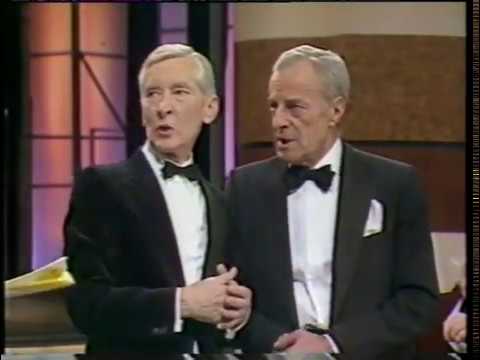
They burst onto Round the Horn like fireworks in a tweed jacket, two fabulous jobbing actors mincing through life with a wink and a Polari quip. Hugh Paddick as Julian and Kenneth Williams as Sandy – cheeky, clever, utterly irresistible.
No matter how bonkers the topic, they’d turn it into a giggle fest: from bogus law firms to Bona Tours holidays in Tangiers. Half the fun was not understanding a word, yet feeling right at home anyway. Their magic? Real affection wrapped in nonsense. They snuck joy and truth into millions of living rooms, long before it was polite to say so out loud.
HORNE: Can you help me? I’ve erred.
SANDY: Well, we’ve all erred, ducky. I mean, it’s common knowledge, ennit, Ju1e?
HORNE: Will you take my case?
JULIAN: Well, it depends on what it is. We’ve got a criminal practice that takes up most of our time.
HORNE: Yes, but apart from that – I need lega1 advice.
SANDY: Ooh – isn’t he bold? Time has not withered nor custom staled his infinite variety
JULIAN: What is it you’ve done?
HORNE: (shyly) I don’t like to say.
JULIAN: Oh, you can tell us. Sand and me have handled the most bizarre briefs – nothing could shock us.
HORNE: Well – look, it’s here on this charge sheet.
SANDY: Let’s have a vada. Oh Jule, look at this!
JULIAN: Ooh! He didn’t!
SANDY: He did. Look, it’s written down.
JULIAN: But I mean – in broad daylight – outside the Corner House – aren’t you ashamed?

Julian and Sandy, played by Hugh Paddick and Kenneth Williams, were the comic revolution nobody saw coming. Their sketches—high camp, quick-witted, and delivered with a conspiratorial wink—became the beating, laughing heart of the BBC’s legendary 1960s radio hit. In a world still policed by the shadow of Section 28’s ancestors and decades before decriminalisation truly settled, these two were smuggling queer joy into millions of British homes every Sunday afternoon.
And they did it through Polari.
Ah yes—Polari: that delicious underground cant of theatrical folk, sailors, and anyone who needed to speak freely without being understood by the straight world. Julian and Sandy wielded it like wizards wielding wands. “Bona to vada your dolly old eek!” they’d cry, and suddenly the drab grey wallpaper of British repression would peel away and reveal something delightfully naughty, defiantly human.
The genius, of course, wasn’t just in the subversion—it was in the chemistry. Paddick’s gentler, fluttering Julian and Williams’ sharper, waspish Sandy played off each other like seasoned vaudevillians who could communicate an entire novella with a single raised eyebrow. They mocked propriety, teased the host Kenneth Horne mercilessly, and reinvented the English innuendo with such precision that even now—sixty years on—the timing still dazzles.
Behind the laughter, though, lay something more tender: two gay actors navigating a Britain where their identity was criminalised, yet finding a way to turn their truth into art. There was courage in that—stealthy, sly, and delivered with a giggle rather than a slogan. They taught a listening nation that being camp didn’t mean being weak. If anything, they were guerrilla comedians, staging a cultural rebellion from the safety of the radio dial.
Today, Julian and Sandy feel like prophets of queer visibility—holy fools with immaculate comic timing. They prised open a door that would take decades to swing fully, but they did it lovingly, cheekily, and with the sort of charm that could melt even the frostiest suburban listener.
Their legacy? Immense. Without Julian and Sandy, the cultural landscape of Britain might have taken far longer to soften. They didn’t just entertain—they changed the airwaves. They bent the rules until the rules giggled and gave in.
Bona performers, brave men, and timeless icons.
Through laughter, they rebelled. Through radio, they endured. And through Polari, they whispered to generations: We’re here, duckie. And isn’t it simply fantabulosa?


