
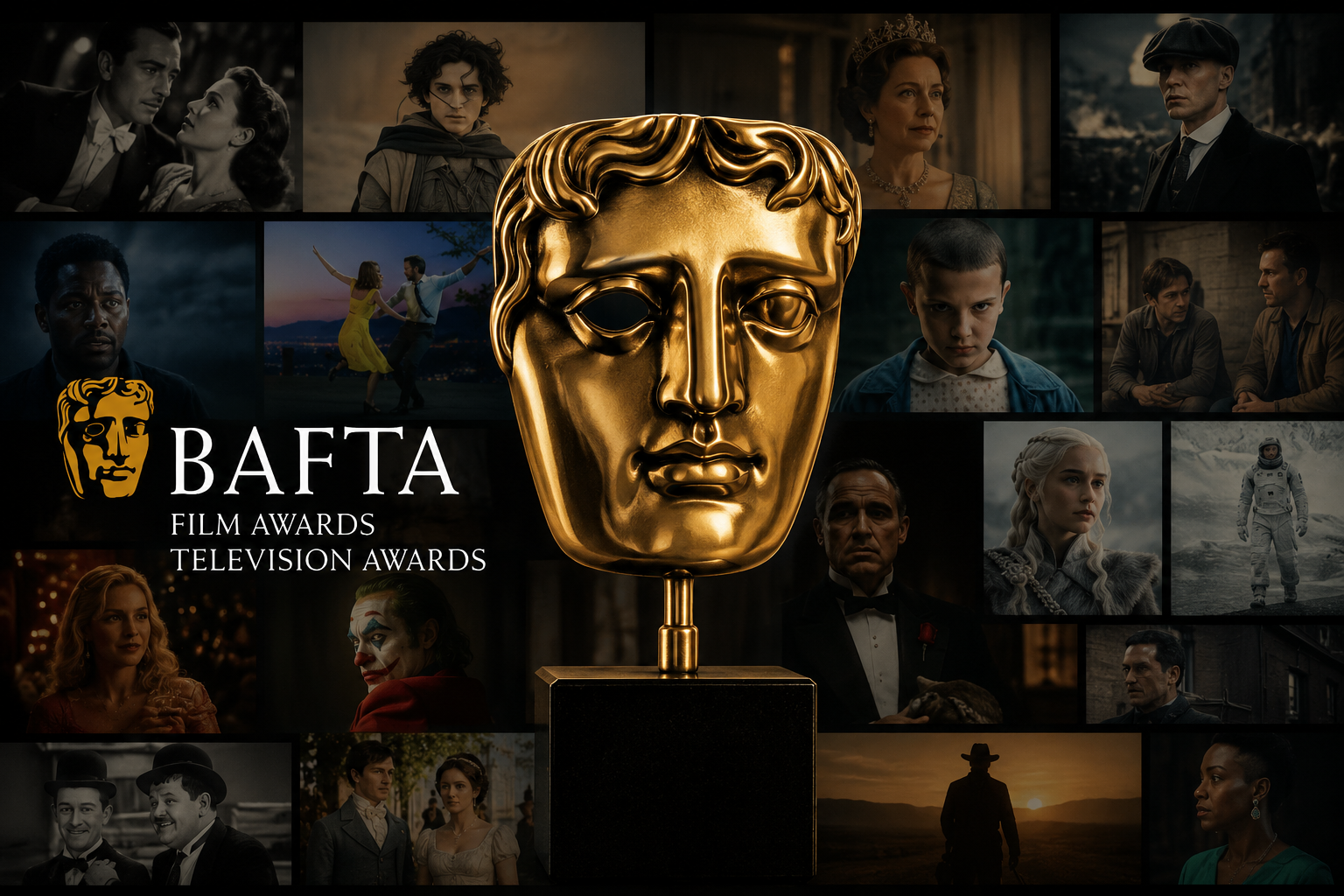
The BAFTA awards are no longer just a celebration of acting, writing and production. They have become a mirror held up to the changing face of British television itself.
For decades, the BBC stood as the great national stage: drama, comedy, documentaries, news, royal events and cultural moments all gathered under one public-service roof. ITV brought the popular heartbeat, from entertainment and soaps to crime dramas and familiar faces who felt like part of the family. Channel 4 arrived as the rebel, sharper, younger, stranger and more willing to take risks. Channel 5, once dismissed too easily, has quietly grown into a more confident broadcaster, with factual programming, drama and audience-friendly television finding stronger ground.
But now Netflix stands in the room like a new empire.
The rise of streaming has changed everything. Audiences no longer wait politely for the evening schedule. They watch when they want, pause when they like, binge when they can, and abandon a show after ten minutes if it fails to grip them. The remote control has become a battlefield, and attention is the new gold.
That is why BAFTA 2026 feels important. It is not simply about who wins Best Drama, Best Actor or Best Comedy. It is about who understands the future of storytelling.
Netflix has the money, the reach and the global machine. A British-made series can now travel around the world overnight, finding viewers in America, Europe and beyond before the traditional broadcasters have even poured the tea. If a Netflix drama dominates nominations, it sends a clear message: streaming is no longer the outsider. It is now one of the main players.
Yet the BBC remains powerful because it still carries something no algorithm can fully replace: national memory. The BBC can still turn a programme into a shared public event. It can still make drama feel important, comedy feel communal, and documentary feel necessary.
ITV, meanwhile, understands the living room. It knows the value of familiarity, warmth and mass appeal. In an age of fractured audiences, that is not a weakness. It is a survival skill.
Channel 4 remains vital because it still has edge. It is the place where television can be awkward, bold, political, funny and uncomfortable. British broadcasting needs that rebellious streak, otherwise everything becomes polished wallpaper.

Channel 5 deserves more respect than it used to receive. It has found strength in accessible factual shows, human stories and a growing confidence in drama. It may not always shout the loudest, but it has learned how to reach viewers who simply want good, watchable television.
So the BAFTA race ahead is not just BBC versus ITV, or Channel 4 versus Netflix. It is a bigger contest between public service, commercial instinct, creative risk and streaming power.
The future may not belong to one channel at all. It may belong to whoever can still make Britain stop scrolling.
The BBC built the temple. ITV filled the living rooms. Channel 4 kicked the doors open. Channel 5 learned to surprise us. Netflix arrived with a cheque book and a thunderclap.
BAFTA 2026 will show us more than winners. It will show us where British television is going next.


