
The letter from the police arrived when I was out.
It was early March. I’d been at a meeting with actors and artists, discussing how we could collectively speak out against Israel’s actions in Gaza. After the meeting, I saw multiple missed calls. My wife had opened the letter, and that was the beginning of a months-long ordeal for our family.
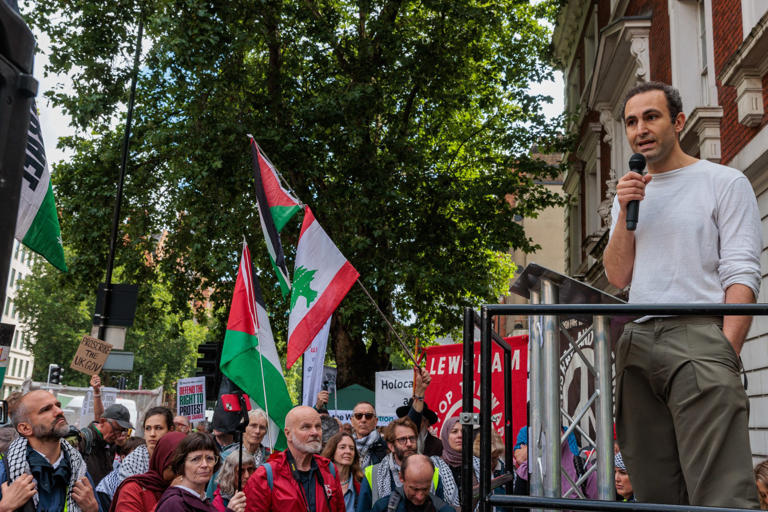
Six weeks earlier, on January 18, I had spoken at a Palestine Solidarity protest. It was the day before a temporary ceasefire and two days before Trump’s inauguration.
From the moment I stepped out of Westminster station, I sensed something unusual. The police presence was more forceful than I’d ever seen at a peaceful UK protest. It reminded me of scenes from Egypt’s military regime.
The police blocked our planned march and imposed a labyrinth of confusing restrictions using new protest laws—some of which have since been ruled unlawful by the Supreme Court.
As we reached Trafalgar Square, carrying flowers to protest the clampdown on Palestine solidarity demonstrations, we were met by a line of officers and instructed to “filter through.” Despite complying peacefully, arrests were made. Later, I received a letter summoning me to an interview under police caution.
When I read it, I was filled with a mix of outrage and deep sadness. It felt like a sign of what this country might be turning into. I had committed no crime. I believed I was speaking out against what I saw as a genocide. One of those also summoned was Stephen Kapos, an 87-year-old Holocaust survivor. That detail alone underlined the absurdity of the situation.
Determined not to be intimidated, I chose to go public. I shared my story, and thousands reached out in solidarity. I said: “The right to protest is under attack in this country and it requires us all to defend it. The days of silencing through intimidation are gone.”
In the lead-up to my police interview, strangers offered support—sometimes just a quiet thumbs-up on the Tube. But the toll on my family was heavy. Outside our child’s school, other parents hesitated to speak to us, unsure if we’d told our children what was happening. It brought back generational echoes. My father and grandfather were both imprisoned in Egypt for their political beliefs. One of my father’s earliest memories was visiting his own father in jail. I feared my children might now carry something of that legacy.
By the time I walked to Charing Cross police station for interrogation, the ceasefire had broken again. Hundreds more were dead. Palestinians faced the looming threat of ethnic cleansing. Trump was pitching Gaza as a future playground for elites.
That day, I recorded a video on my way to the station. I called it a “canary in the coal mine” moment—a warning about the state of our right to protest in the UK.
When the police informed me weeks later that they would not be pressing charges, I barely felt relief. The process itself had already done its damage. It felt like a deliberate distraction from the ongoing catastrophe in Gaza: thousands killed, people shot while trying to collect food, an entire population pushed to the brink of starvation.
The pattern is clear. There has been a rise in arrests for so-called ‘nuisance’ actions at protests—yet only a tiny fraction ever lead to charges. It’s a tactic. A chilling one. Campaigners—whether for climate justice, anti-racism, disability rights, or the NHS—are being targeted and intimidated.
I strongly opposed the recent move to label Palestine Action a terrorist organisation. The arrest of an 83-year-old priest for allegedly supporting them left me shocked. Draw a line between her treatment and mine, and you see where things are heading.
We are living through an age of overlapping crises—climate breakdown, soaring inequality, rising authoritarianism. Politicians are failing to act. And so, it falls to us—the public—to stand up.
The rights we cherish today were not handed down kindly. They were won by people who stood in the streets, raised their voices, and refused to sit down.
If we want a better future, we must keep that spirit alive. We must defend protest—not criminalise it.


