
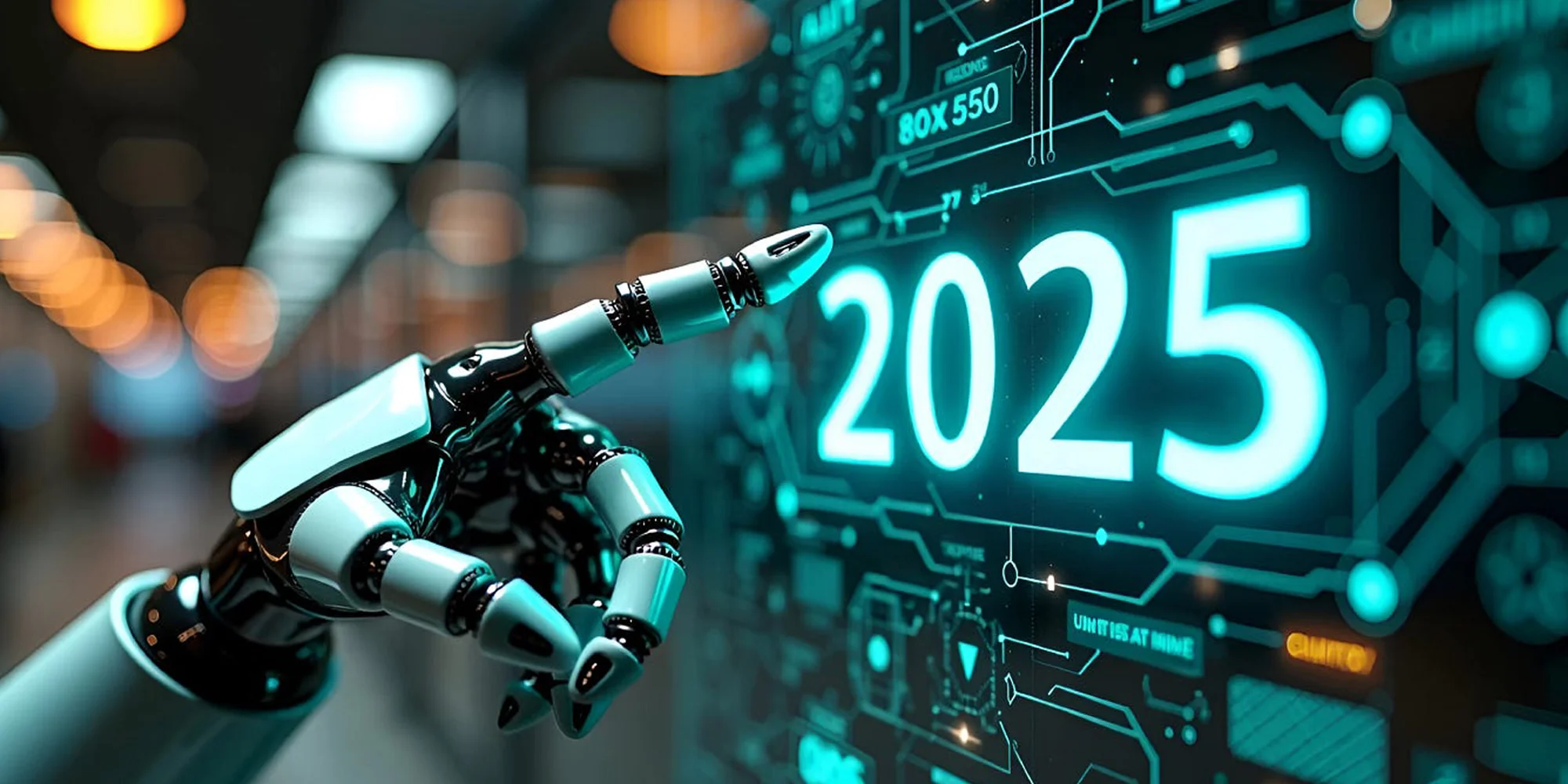
“Any sufficiently advanced technology is indistinguishable from magic.”
— Arthur C Clarke
🌐 Agentic AI: The Dawn of Autonomous Decision-Makers
Forget yesterday’s static software. Enter Agentic AI — autonomous systems that don’t just follow instructions, they chart their own course. From customer service to technical design, these digital agents are rewriting the rules of work itself.
⚙️ Smart Factories: Minds of Metal and Code
The factory floor is no longer a brute-force affair. AI-driven cognitive automation and digital twins are turning machines into self-aware workhorses. Maintenance becomes predictive. Production becomes poetry in motion.
🔬 Biotech Breakthroughs: Healing at the Molecular Level
In the labs, gene therapies offer new hope for patients with drug-resistant epilepsy, while synthetic biology dreams up microbes that build materials we haven’t even imagined yet. Meanwhile, bioprinting and gene editing race ahead, promising precision therapies tailored to each patient.
🧠 Neuromorphic Computing: Silicon Dreams of Neurons
Chips that think like brains? Neuromorphic computing is no longer a sci-fi dream but a bold new approach. Faster, leaner, and more adaptable, it’s reshaping what we expect from our digital companions.
🌿 Clean Energy & Green Steel: Forging a Carbon-Free Tomorrow
From Sweden’s Hybrit project to Spain’s Hydnum Steel and American startups like Electra, the steel industry is forging ahead with green hydrogen and solar-powered arc furnaces. Solar, wind, and battery storage aren’t far behind, powering a world that wants to breathe easier.
🌐 Quantum & 3D Printing: A Marriage of Mind-Bending Possibilities
Quantum computing is still a mystery wrapped in superconducting tape, but it’s making real-world inroads, thanks in part to 3D printing. Intricate components crafted at microscopic precision are bringing lab-scale experiments closer to everyday use.
🛠️ Polyfunctional Robots: Jacks-of-All-Trades, Masters of Many
Laundry robots that iron your shirts? Check. Drones that switch from delivery to surveillance in a heartbeat? Check. Polyfunctional robots are the Swiss army knives of the future.
🌟 Summary: A Snapshot of the Future
🧠 Agentic AI: Autonomous, goal-driven digital minds.
🌿 Green Tech: Clean steel and renewable energy revolutions.
🔬 Breakthrough Biotech: From epilepsy cures to custom microbes.
🏭 Smart Factories: Digital twins and real-time AI oversight.
🌐 5G-Advanced & Edge Computing: Lightning-fast, low-latency connections.
🤖 Polyfunctional Robots: Robots that pivot, adapt, and learn.
🧪 Scientific Marvels: Solar fuel reactors and early cancer detection tests.
🧠 Neuromorphic Computing: Brain-like chips for energy-efficient processing.
As these technologies bloom and tangle like wild vines, they promise not mere convenience but a fresh, electrifying vision of what it means to be human in a machine-shaped world.
By 2025, several innovative technologies are expected to be in widespread production or significantly impacting various industries. Here’s a list of some of the most prominent ones:
Artificial Intelligence (AI):
* Generative AI: This is a major trend, moving beyond chatbots to create sophisticated, human-like content, code, and even design solutions. It’s driving personalized experiences across industries.
* Agentic AI: Gartner has identified this as a top tech trend for 2025. Agentic AI refers to autonomous “agents” that can plan and take actions to achieve user-defined goals, performing enterprise-related tasks independently.
* AI in Cybersecurity: AI-driven solutions are becoming critical for predicting, preventing, and responding to increasingly complex cyber threats.
* AI for Scientific Discovery and Drug Discovery: AI is accelerating breakthroughs in medicine and materials science by processing vast datasets and identifying patterns humans might miss.
* AI-driven Robotics: Robots are becoming more versatile, intelligent, and collaborative, with AI enabling them to learn, adapt, and perform complex tasks in manufacturing, logistics, and healthcare.

* AI-enhanced Decision-making: AI is being integrated into production planning and optimization, providing predictive analytics and improving quality control.
Other Cutting-Edge Technologies:
Quantum Computing:
While still in its early stages for widespread commercial application, quantum computing is expected to emerge into more mainstream applications by 2025, redefining data processing, encryption, and problem-solving.
* Spatial Computing: This merges physical and digital environments through 3D interactions, offering immersive experiences and enhancing the physical world using technologies like augmented reality (AR) and virtual reality (VR).
* Extended Reality (XR) (Augmented Reality & Virtual Reality): AR and VR are transforming workforce training, operational processes, and consumer applications, with improved hardware making them more accessible.
* Digital Twins: These virtual replicas of physical assets, processes, or systems are becoming vital for reducing downtime, improving product quality, and accelerating time-to-market in manufacturing, urban planning, and healthcare.
* Edge Computing: With the rise in data, edge computing is essential for reducing latency and providing real-time responses, especially in industries like manufacturing and logistics.
* Blockchain Technology (beyond cryptocurrency):
Beyond cryptocurrencies, blockchain is increasingly adopted in various industries, including supply chain management, for its secure and transparent nature.
* 5G Expansion: The continued global rollout of 5G networks is facilitating transformative technologies like IoT, AR, and autonomous vehicles by providing high-speed, low-latency connectivity.
* Sustainable Technologies: Driven by growing consumer awareness and regulatory mandates, there’s a strong push for sustainable solutions in energy (solar, wind, energy storage, potentially nuclear for AI infrastructure), manufacturing, and materials (e.g., biodegradable bioplastics, green chemistry).


* Additive Manufacturing (3D Printing): No longer just for prototyping, additive manufacturing is being used for rapid production in various industries.
* Autonomous Vehicles: Self-driving cars, trucks, and drones are likely to become an everyday reality, especially in freight and passenger transportation.
* Biotechnology (e.g., Synthetic Biology, Bioprinting, Gene Editing): Innovations in areas like engineering microbes for industrial applications, producing human tissues, and precision therapies are gaining momentum..
* Post-Quantum Cryptography: This is emerging as a critical focus to address the looming threat of quantum computers breaking current encryption methods.
* Polyfunctional Robots: Robots capable of performing multiple tasks and seamlessly switching between them as required.
* Energy-Efficient Computing: An increasing focus on more efficient architecture, code, and algorithms, as well as hardware optimized for efficiency and the use of renewable energy to run systems.
Tech Horizons 2025: Innovations Shaping Our World
As we reach the midpoint of 2025, a wave of transformative technologies is not only reshaping industries but also promising tangible benefits for everyday life. Here’s a roundup of the most impactful innovations making headlines this year:
⚙️ Green Steel Revolution: Forging a Sustainable Future
The steel industry, a significant contributor to global CO₂ emissions, is undergoing a green transformation. Innovations like Direct Reduced Iron (DRI) using green hydrogen and electric arc furnaces (EAFs) are leading the charge. Europe is at the forefront, with Sweden’s Hybrit project already producing clean steel for automakers. Spain’s Hydnum Steel is constructing a €1.65 billion plant powered by solar energy, aiming to produce 1.5 million tonnes of green steel annually. In the U.S., startups like Electra and Boston Metal are developing electrolytic processes to produce iron with lower carbon footprints, aiming for commercial-scale production before 2030.
🧠 Agentic AI: Autonomous Decision-Makers
Agentic AI systems, capable of making autonomous decisions to achieve specific objectives, are emerging across various sectors. These systems combine memory, planning, environmental sensing, and tool usage to carry out tasks independently. They’re being integrated into complex technical projects, customer service automation, and decision-making processes, enhancing productivity and efficiency.
—
🧬 Gene Therapy for Drug-Resistant Epilepsy
A groundbreaking gene therapy developed at University College London offers hope for patients with drug-resistant focal epilepsy. Using an adeno-associated virus vector to deliver the LGI1 gene, the therapy has shown positive results in preclinical trials, potentially providing a non-surgical treatment option for this challenging condition.
—
🏭 Smart Factories: The Rise of Cognitive Automation
Manufacturing is embracing cognitive automation, with AI-driven systems enabling real-time monitoring, predictive maintenance, and process optimization. These smart factories utilize technologies like digital twins, machine learning, and augmented reality to enhance efficiency and reduce downtime, marking a significant shift in industrial operations.
—
🔬 Additive Manufacturing in Quantum Technologies
Additive manufacturing, or 3D printing, is playing a crucial role in advancing quantum technologies. By enabling the creation of intricate components with high precision, this approach supports the miniaturization and scalability of quantum devices, facilitating their transition from laboratory settings to real-world applications.
—
🌐 5G-Advanced: Enhancing Connectivity
The deployment of 5G-Advanced networks is enhancing mobile connectivity with faster speeds, lower latency, and improved reliability. This evolution supports advanced applications like extended reality (XR), autonomous vehicles, and massive machine-type communications, paving the way for more connected and responsive digital environments.
—
🔋 Clean Energy Innovations: Powering a Sustainable Future
Advancements in clean energy technologies, including wind, solar, and battery storage, are accelerating the transition to sustainable power sources. Policy support, such as green bonds and streamlined grid integration processes, is crucial in fostering these innovations and addressing climate change challenges.
—
🧪 Breakthroughs in Scientific Research
Recent scientific achievements include the development of a solar-powered reactor that converts atmospheric CO₂ into sustainable fuel, and a new blood test capable of detecting early-stage pancreatic cancer with 85% accuracy. These breakthroughs hold significant promise for environmental sustainability and healthcare advancements.
—
🧠 Neuromorphic Computing: Mimicking the Human Brain
Neuromorphic computing, which emulates the neural structure of the human brain, is gaining traction. This approach offers the potential for more efficient and adaptive computing systems, with applications ranging from advanced AI to energy-efficient data processing.
—
🧬 AI in Materials Design: Accelerating Innovation
Generative AI tools like Microsoft’s MatterGen are revolutionizing materials science by enabling the rapid design and testing of new materials. This accelerates innovation in various fields, including electronics, construction, and biotechnology, by reducing the time and cost associated with traditional research methods.


