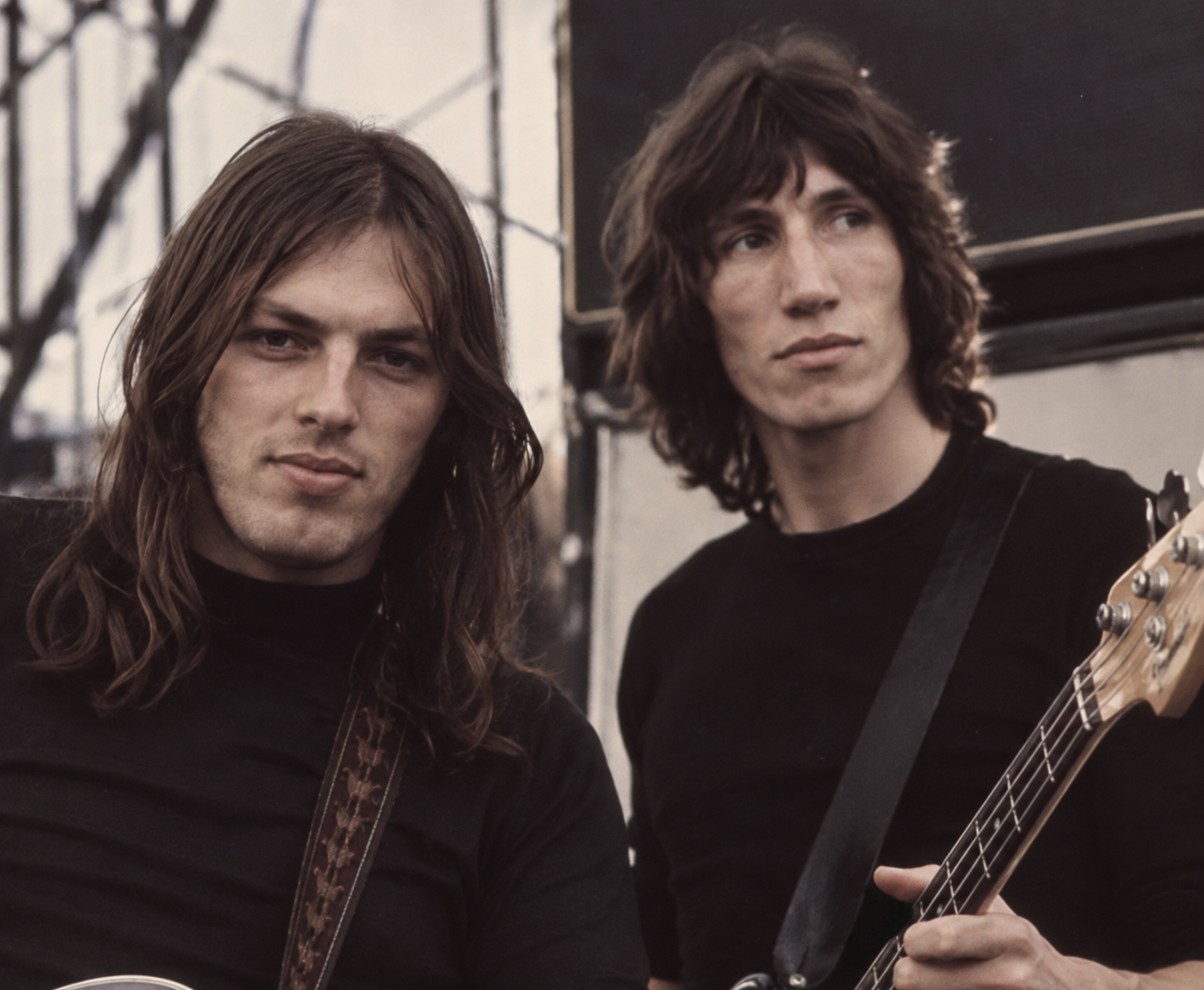
Few bands have altered the landscape of popular music as profoundly as Pink Floyd.
Their music could be intimate enough to sound like a private thought and, moments later, enormous enough to fill a stadium. They wrote about madness, mortality, war, greed, loneliness and the strange machinery of modern life. They experimented with tape loops, synthesisers, sound effects and extended instrumental passages at a time when rock music was still discovering what it could become.
Yet behind some of the most meticulously constructed records in popular music lay a remarkably turbulent human story.
Pink Floyd became a band of extraordinary contrasts: Syd Barrett’s brilliant but tragically brief leadership, Roger Waters’ increasingly dominant creative vision, David Gilmour’s unmistakable guitar, Richard Wright’s atmospheric keyboards and Nick Mason’s understated percussion.
Together, they created music that has survived far beyond the era that produced it.
The Strange Beginning
Pink Floyd emerged from London’s underground music scene in the mid-1960s.
The early group centred around Roger Waters, Richard Wright, Nick Mason and Syd Barrett, with Barrett becoming its principal songwriter and charismatic frontman.
Even the band’s name carried the fingerprints of his imagination. Barrett combined the names of American blues musicians Pink Anderson and Floyd Council to create “Pink Floyd”.
Their earliest music belonged to the psychedelic explosion of 1960s London, but Barrett’s songwriting was considerably stranger than the label suggests.
Songs could be whimsical, surreal, distinctly English and unexpectedly unsettling.
The band’s 1967 debut album, The Piper at the Gates of Dawn, remains one of the defining documents of British psychedelia.
But the man responsible for much of its extraordinary character was already struggling.
Barrett’s behaviour became increasingly unpredictable, and his ability to perform with the band deteriorated. The precise relationship between his mental health and his use of psychedelic drugs has been debated ever since, and simplistic explanations do little justice to what happened to him.
What is certain is that Pink Floyd faced an extraordinary dilemma.
Their creative leader was slipping away.
Enter David Gilmour
David Gilmour joined Pink Floyd at the end of 1967, initially with the intention of supporting Barrett during live performances.
For a brief period, Pink Floyd effectively had five members.
It could not last.
By 1968, Barrett had left the group he had done so much to create.
His absence became a ghost that would haunt Pink Floyd’s music for years.
The remaining musicians could easily have disappeared with him. Instead, Waters, Gilmour, Wright and Mason gradually constructed a new musical identity.
They experimented relentlessly.
Albums including A Saucerful of Secrets, Ummagumma, Atom Heart Mother and Meddle reveal a band searching for a language large enough to express its ambitions.
Then came Echoes.
Occupying an entire side of Meddle, the 23-minute composition pointed towards what Pink Floyd was about to become. Rock, electronics, soundscape and long-form composition began merging into something that no longer fitted comfortably inside conventional pop music.
The spacecraft was leaving the launchpad.
The Dark Side of the Moon
In 1973, Pink Floyd released The Dark Side of the Moon.
It became one of the most successful albums ever recorded.
Yet its endurance cannot be explained simply by sales.
The record deals with remarkably ordinary human anxieties: time passing, money, conflict, death, mental illness and the pressures that gradually grind against a person’s sanity.
Its famous prism cover became almost as recognisable as the music.
Inside were songs including Time, Money, Us and Them and The Great Gig in the Sky.
Clocks erupt. Cash registers establish rhythms. Voices drift through the record. Clare Torry’s extraordinary wordless vocal on The Great Gig in the Sky turns the human voice itself into an instrument of fear, surrender and transcendence.
And then there is Gilmour’s guitar.
He was never a guitarist who needed to bury a song beneath thousands of notes. His great strength was space. A bent note could hang in the air until it seemed to acquire emotional weight of its own.
Richard Wright was equally important to the Pink Floyd sound. His keyboards created vast areas of musical atmosphere around the melodies, while Mason’s drumming frequently allowed the compositions to breathe rather than overpowering them.
Waters increasingly supplied the conceptual architecture.
Pink Floyd had found its extraordinary chemistry.
Wish You Were Here
Success did not necessarily make the band happier.
When Pink Floyd began recording Wish You Were Here, the pressures surrounding the group were immense.
The resulting 1975 album became partly an examination of absence and partly a bitter look at the music industry.
At its centre stood Shine On You Crazy Diamond, the monumental composition associated with Syd Barrett.
Then something almost unbelievable happened.
Barrett unexpectedly appeared at Abbey Road Studios while the band was working on the album.
He had changed so dramatically that members of the group initially failed to recognise him.
The encounter has become one of rock music’s saddest stories.
Wish You Were Here therefore carries a peculiar emotional weight. Its title can be read as a message to a lost friend, but also as something broader: a lament for human connection itself.
Animals and an Increasingly Divided Band
By Animals in 1977, Pink Floyd’s music had become darker and more political.
Loosely inspired by George Orwell’s Animal Farm, Waters divided society into dogs, pigs and sheep.
The optimism of the 1960s had evaporated.
Britain was experiencing economic turmoil, industrial conflict and profound social change, and Animals reflected a world in which power appeared predatory and human beings increasingly alienated from one another.
The famous image of an inflatable pig floating above Battersea Power Station became another of Pink Floyd’s defining visual statements.
But tensions within the band were growing.
Roger Waters was increasingly becoming Pink Floyd’s dominant writer and conceptual force.
The balance that had created The Dark Side of the Moon was beginning to shift.
The Wall
Then came the wall itself.
Released in 1979, The Wall was largely conceived by Waters as the story of Pink, a damaged rock star who gradually constructs a psychological wall between himself and the world.
Its themes were intensely personal.
Waters’ father had been killed during the Second World War when Roger was an infant. The album explored bereavement, education, relationships, authoritarianism, fame and emotional isolation.
Another Brick in the Wall, Part 2 became one of Pink Floyd’s biggest hits.
But Comfortably Numb became something else entirely.
The song brought together Waters’ bleak narrative and Gilmour’s melodic brilliance. Gilmour’s guitar solos, particularly the climactic second solo, came to be regarded among the defining guitar performances in rock music.
There is something almost architectural about the recording. Waters builds the room; Gilmour opens the roof.
Yet the making of The Wall exposed the fractures inside Pink Floyd.
Richard Wright was pushed out of the band during the project, although he subsequently appeared as a paid musician during the concerts.
The spectacle was becoming enormous.
The friendships were collapsing behind it.
The Final Cut
By the time The Final Cut appeared in 1983, Pink Floyd was barely functioning as a conventional band.
The album was overwhelmingly driven by Waters and deeply influenced by his anger over war, political leadership and the death of his father.
David Gilmour’s role was reduced, and Richard Wright was absent.
Two years later, Waters left Pink Floyd.
He believed the band had effectively reached its end.
Gilmour and Mason disagreed.
What followed was not merely a musical disagreement but a legal and personal battle over the future of the Pink Floyd name.
Eventually, Gilmour continued Pink Floyd with Mason, and Wright returned.
A Momentary Lapse of Reason arrived in 1987, followed by the enormous world tour that demonstrated something Waters may not have expected: Pink Floyd could continue without him.
In 1994 came The Division Bell, an album preoccupied with communication, separation and the failure of people to understand one another.
Considering the history of the band, the subject could hardly have been more appropriate.
One More Time
For years, the possibility of Roger Waters performing again with David Gilmour, Nick Mason and Richard Wright seemed remote.
Then came Live 8.
On 2 July 2005, the classic Pink Floyd lineup appeared together at London’s Hyde Park.
For a few extraordinary minutes, decades of bitterness appeared to retreat behind the music.
Waters, Gilmour, Wright and Mason performed together for the first time in 24 years.
They played Speak to Me/Breathe, Money, Wish You Were Here and Comfortably Numb.
Before Wish You Were Here, Waters spoke about how emotional it was to stand onstage with the other three men again and remembered Syd Barrett.
For millions watching around the world, the performance carried a significance far beyond nostalgia.
Four ageing musicians who had spent years divided by arguments, lawsuits and resentment were standing beside one another again.
At the conclusion, Waters called the others together.
They embraced.
It remains one of rock music’s great images.
Richard Wright
The reunion could not become permanent.
Richard Wright died from cancer in 2008, aged 65.
His death closed the possibility of another reunion of Pink Floyd’s classic quartet.
Wright had sometimes been overshadowed by the more public conflict between Waters and Gilmour, but remove his keyboards from the great Pink Floyd records and enormous portions of their atmosphere disappear with them.
He was part of the air inside the music.
In 2014, Gilmour and Mason released The Endless River, largely developed from material recorded with Wright during The Division Bell sessions.
It served, in considerable measure, as a tribute to him.
Hey, Hey, Rise Up!
Pink Floyd unexpectedly returned once more in 2022.
Gilmour and Mason recorded Hey, Hey, Rise Up! with Ukrainian musician Andriy Khlyvnyuk, using his vocal performance of a Ukrainian song.
It was the first newly recorded Pink Floyd music released in decades.
The circumstances were very different from the psychedelic clubs of 1960s London, yet the gesture demonstrated something that had always existed somewhere within Pink Floyd: the belief that music could respond to the world outside the recording studio.
More Than a Rock Band
Pink Floyd’s catalogue now belongs to several generations.
Teenagers who were not born when Richard Wright died, let alone when The Dark Side of the Moon was released, continue discovering the band.
That tells us something.
Technology has transformed almost beyond recognition since Pink Floyd began experimenting with tape machines and analogue synthesisers. Yet the questions inside their greatest records have barely aged.
How much time do we have?
What does money do to us?
Why do people go to war?
What happens when we stop communicating?
What does isolation do to the human mind?
And how do we live with the people who are no longer beside us?
Perhaps that is why the opening heartbeat of The Dark Side of the Moon remains so powerful.
Beneath the synthesisers, enormous concerts, flying pigs, prisms and walls, Pink Floyd were ultimately writing about something remarkably simple.
Being human.
And somewhere between Waters’ words, Wright’s keyboards, Mason’s pulse and the long, aching notes of Gilmour’s guitar, they found a way of making that fragile human experience sound enormous.