
There are moments in history when morality ceases to be an abstract idea and becomes a decision made in a doorway, at a railway station, behind a desk or in the silence of a hidden room. During the Holocaust, as Nazi Germany and its collaborators constructed an industrial machinery of persecution and murder across Europe, a comparatively small number of people chose to interfere with it.
They were diplomats, businessmen, priests, social workers, railway organisers and ordinary families. Some were religious, others were not. Some acted from political conviction, some from faith, and some simply because they could not accept that another human being should be hunted down and killed.
Their stories do not diminish the enormity of the Holocaust. Nothing could. Six million Jewish men, women and children were murdered, alongside millions of other victims of Nazi persecution. But within that darkness, certain individuals demonstrated that obedience was not inevitable. There remained, even under dictatorship, the possibility of saying no.
Oskar Schindler: The Businessman Who Changed Sides
Oskar Schindler hardly appeared destined to become one of the great rescuers of the Second World War. A German industrialist, businessman and member of the Nazi Party, he arrived in occupied Poland looking for commercial opportunity.
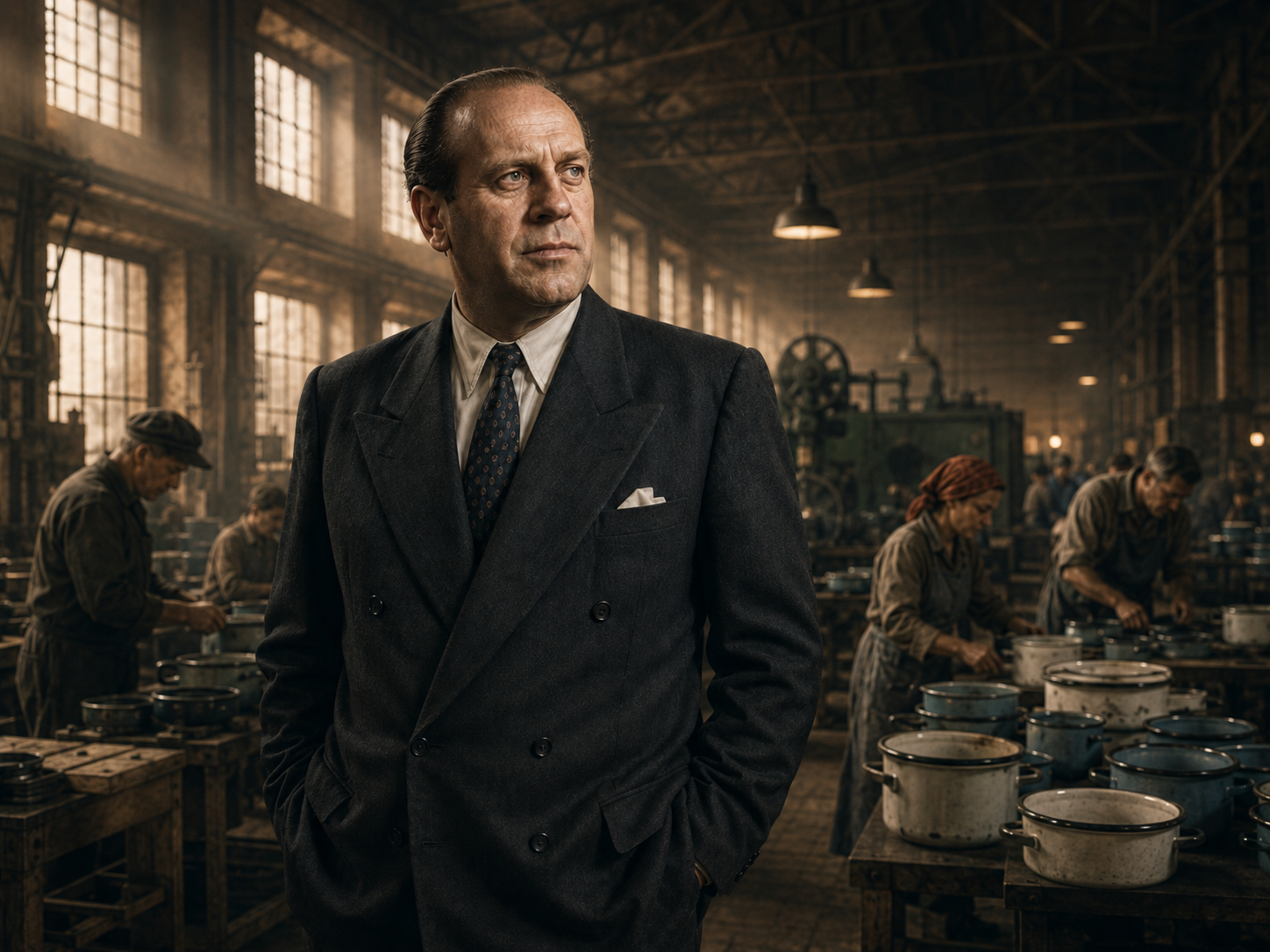
He acquired an enamelware factory in Kraków and initially employed Jewish workers partly because they were cheaper than Polish labour. Yet as Nazi persecution intensified, Schindler’s relationship with his workforce changed. He witnessed brutality at close quarters and gradually began using his money, influence and connections to keep his employees from deportation.
His factory became something extraordinary: a commercial enterprise transformed into a sanctuary.
Schindler bribed officials, manipulated records and argued that his Jewish workers were essential to the German war effort. When the Kraków ghetto was liquidated and its inhabitants were sent to forced-labour and extermination camps, Schindler fought to keep his workers alive.
“The road to atrocity begins long before the first shot is fired. It begins when we divide people into ‘us’ and ‘them’, when neighbours become labels, when difference becomes suspicion, and when another human life is somehow judged to matter less than our own. War does not create every hatred, but it gives hatred permission to march.”
Eventually, more than a thousand Jewish people survived under his protection.
His wife, Emilie Schindler, also played an important role in caring for those they protected, particularly during the final period of the war. Both Oskar and Emilie were later recognised by Yad Vashem as Righteous Among the Nations.
Oskar Schindler died in 1974 and was buried in the Catholic cemetery on Mount Zion in Jerusalem. Survivors and their descendants have continued to visit his grave, sometimes leaving stones upon it according to Jewish tradition.
Schindler was an imperfect man. That is partly why his story remains so powerful. Heroism did not require perfection. It required a decision.
Sir Nicholas Winton: The Quiet Englishman Who Saved Children
Nicholas Winton’s story began not with soldiers or resistance fighters but with paperwork, railway timetables and an increasingly desperate race against time.

In late 1938, Winton travelled to Prague, where thousands of refugees had gathered following Nazi Germany’s occupation of the Sudetenland and the growing threat to Czechoslovakia. He quickly realised that Jewish children were in particular danger.
Winton and his colleagues began organising their evacuation to Britain.
They found British foster families willing to accept the children, secured the necessary documents and organised trains carrying them from Czechoslovakia through Nazi-controlled Europe towards safety.
Between March and August 1939, hundreds of children were rescued through the operation associated with Winton. Many of their parents would later be murdered in the Holocaust.
One final train, scheduled to leave Prague on 1 September 1939 carrying hundreds more children, never departed. Germany invaded Poland that morning and the Second World War began.
For decades Winton rarely spoke about what he had done. His work became widely known only after his wife discovered documents relating to the rescue operation.
In one of the most moving moments in British television history, Winton was invited onto the BBC programme That’s Life! in 1988 without initially realising that people sitting around him were among the children he had helped save.
The presenter asked those in the audience who owed their lives to Nicholas Winton to stand.
Almost everyone surrounding him rose to their feet.
He was knighted in 2003 and died in 2015 at the age of 106.
His extraordinary achievement was accomplished not with a weapon but with organisation, persistence and the stubborn belief that children should not be abandoned.
Irena Sendler: The Woman Who Walked Into the Warsaw Ghetto
In occupied Poland, social worker Irena Sendler became part of an underground network attempting to rescue Jewish children from the Warsaw Ghetto.
The danger was almost impossible to exaggerate. German occupation authorities imposed the death penalty on Poles who assisted Jewish people.
Sendler nevertheless entered the ghetto under the cover of her social-work duties and helped arrange the escape of children through a variety of clandestine methods. They were placed with Polish families, convents, orphanages and other hiding places.
False identities were created for them.
Sendler also tried to preserve records of the children’s original names and identities in the hope that they might one day be reunited with their families.
She was eventually arrested by the Gestapo in 1943. She was tortured and sentenced to death but survived after members of the Polish underground bribed German guards.
She continued her resistance work.
The tragedy behind her rescue effort was that for many of the children there would be no surviving parents to return to after the war.
Sendler lived until 2008.
Her courage rested upon something deceptively simple: she regarded the children she encountered not as members of a category or population, but as children.

Corrie ten Boom: The House With a Hidden Room
In the Netherlands, Corrie ten Boom and members of her family used their home in Haarlem to shelter Jewish people and members of the Dutch resistance.
The Ten Boom family were devout Christians whose religious beliefs convinced them that persecution of Jewish people was morally intolerable.
A concealed space was constructed behind a false wall in Corrie’s bedroom. It became known as the hiding place.
People fleeing arrest could disappear inside it within seconds.
For years the house functioned as part of a wider underground network providing food, ration cards, forged papers and safe accommodation.
In February 1944 the Gestapo raided the Ten Boom home after receiving information from an informer.
Several people hidden behind the false wall escaped discovery and were later rescued by resistance workers, but members of the Ten Boom family were arrested.
Corrie and her sister Betsie were eventually imprisoned in Ravensbrück concentration camp. Betsie died there in December 1944.
Corrie survived.
After the war she travelled internationally speaking about forgiveness, reconciliation and the dangers of hatred. Her book The Hiding Place later introduced the family’s story to millions of readers.
Her resistance had grown out of an intensely personal moral conviction: when another human being appeared at the door in danger, the answer could not be to close it.
Father Hugh O’Flaherty: The Vatican’s Scarlet Pimpernel

Another extraordinary rescue operation developed in wartime Rome under an Irish Catholic priest, Monsignor Hugh O’Flaherty.
Working from inside the Vatican, O’Flaherty helped create an underground network that concealed escaped Allied prisoners of war, Jewish people and others threatened by the Nazis following the German occupation of Rome in 1943.
Safe houses were established across the city in apartments, convents, monasteries and private homes.
O’Flaherty became a familiar figure around St Peter’s Square, where messages could be exchanged beyond the reach of German authorities.
The Gestapo became acutely aware of his activities. The SS security chief in Rome, Herbert Kappler, reportedly regarded him as a major adversary.
Yet O’Flaherty continued.
Thousands of people were ultimately assisted by the network with which he was associated.
One of the most remarkable episodes came after the war. Kappler was imprisoned for war crimes, and O’Flaherty repeatedly visited him in prison. The former enemies spoke for years, and Kappler eventually converted to Catholicism.
O’Flaherty’s story therefore became not only one of resistance but also, controversially and profoundly, one of forgiveness.
Raoul Wallenberg: Passports Against the Death Trains
By 1944 the Nazis had begun deporting Hungary’s Jewish population to Auschwitz at terrifying speed.
Into Budapest came Swedish diplomat Raoul Wallenberg.
He began issuing protective Swedish documents known as Schutz-Passes, declaring their holders to be under Swedish protection. Wallenberg also established buildings designated as Swedish territory, where Jewish families could shelter.
The papers themselves possessed only limited legal authority. Their real power came from Wallenberg’s willingness to behave as though they carried absolute authority.
He confronted German and Hungarian officials, appeared at deportation points and sometimes removed people from columns or trains by claiming they were Swedish subjects.
Tens of thousands of people benefited directly or indirectly from the diplomatic rescue effort in Budapest.
Then, in January 1945, Wallenberg disappeared after being detained by Soviet forces.
His precise fate remains one of the enduring mysteries of the Second World War, although Soviet authorities later claimed that he died in custody in 1947.
He entered history as a diplomat who transformed bureaucracy into resistance.
Chiune Sugihara: The Consul Who Kept Signing
In Lithuania in 1940, Japanese diplomat Chiune Sugihara faced Jewish refugees desperately seeking visas that might allow them to escape Europe.
Tokyo’s rules did not permit him simply to issue the documents they needed.

Sugihara issued them anyway.
For days he wrote transit visas by hand, reportedly working for extraordinarily long hours as crowds gathered outside the Japanese consulate in Kaunas.
Even as he prepared to leave Lithuania, he continued signing documents.
Thousands of people escaped using visas issued by Sugihara, travelling across the Soviet Union and eventually reaching safer destinations.
His actions placed his diplomatic career at risk.
Decades later, Israel recognised him as Righteous Among the Nations.
Sugihara demonstrated one of the uncomfortable truths about bureaucracy: sometimes the difference between life and death is whether the person behind the desk follows the rule or follows their conscience.
Aristides de Sousa Mendes: The Diplomat Who Disobeyed
A similar decision confronted Portuguese diplomat Aristides de Sousa Mendes in France in 1940.
As German forces advanced and refugees poured southwards, thousands sought visas allowing them to enter neutral Portugal.
The Portuguese government had imposed restrictions, particularly affecting Jewish refugees.
Sousa Mendes broke those instructions.
From the Portuguese consulate in Bordeaux, he began issuing visas on an enormous scale.
He reportedly worked almost continuously while crowds filled the consulate.
His intervention allowed thousands of people to escape through Spain into Portugal and, from there, onwards to Britain, the United States and other destinations.
The Portuguese dictatorship punished him for his disobedience. His diplomatic career was effectively destroyed, and he spent his later years facing severe financial hardship.
History eventually judged his decision differently.
He too would be recognised as Righteous Among the Nations.

Maximilian Kolbe: A Life Given for Another
Not every act of resistance involved escape.
At Auschwitz in 1941, a prisoner disappeared from the camp. As punishment, the SS selected ten prisoners to die by starvation.
One of the selected men, Franciszek Gajowniczek, cried out in despair for his wife and children.
A Polish Franciscan friar, Maximilian Kolbe, stepped forward.
He asked to take the man’s place.

The SS agreed.
Kolbe was imprisoned with the other condemned men in an underground starvation bunker. After surviving for an extraordinary period without food or water, he was killed with an injection of carbolic acid.
Gajowniczek survived Auschwitz and lived until 1995.
Kolbe was canonised by Pope John Paul II in 1982, with Gajowniczek present at the ceremony.
It is difficult to imagine a more absolute rejection of the ideology upon which Auschwitz was built. The camp attempted to reduce human beings to numbers whose lives possessed no value.
Kolbe answered by declaring another person’s life valuable enough to exchange for his own.
The Courage to Disobey
The people who resisted the Holocaust were extraordinarily diverse.
Schindler was a businessman and Nazi Party member. Winton was a stockbroker. Sendler was a social worker. O’Flaherty was a Catholic priest. Wallenberg, Sugihara and Sousa Mendes were diplomats. Corrie ten Boom came from a Dutch watchmaking family. Maximilian Kolbe was a Franciscan friar.
There was no single type of rescuer.
What united them was a moment of refusal.
They refused the proposition that Jewish lives were worth less than other lives. They refused the idea that an order automatically excused obedience. They refused to accept that nothing could be done simply because doing something was dangerous.
Most importantly, they did not know how history would judge them.
There were no medals waiting.
There were no documentaries, statues or commemorations.
There was simply another frightened person standing before them and a decision that had to be made.
The Holocaust remains one of humanity’s darkest warnings about what can happen when racism becomes administration, prejudice becomes legislation and human beings are gradually transformed into categories that society is encouraged to fear, despise or ignore.
That is why the rescuers still matter.
Their stories are not comforting because they tell us that good people always triumph. They plainly did not. Millions were murdered despite extraordinary acts of courage.
Their stories matter because they prove something much more demanding.
Even when institutions fail, governments surrender morality and crowds look away, the individual human conscience does not entirely disappear.
Someone can still open the door.
Someone can still sign the visa.
Someone can still hide the child.
Someone can still say: not this person. Not while I can do something about it.


