
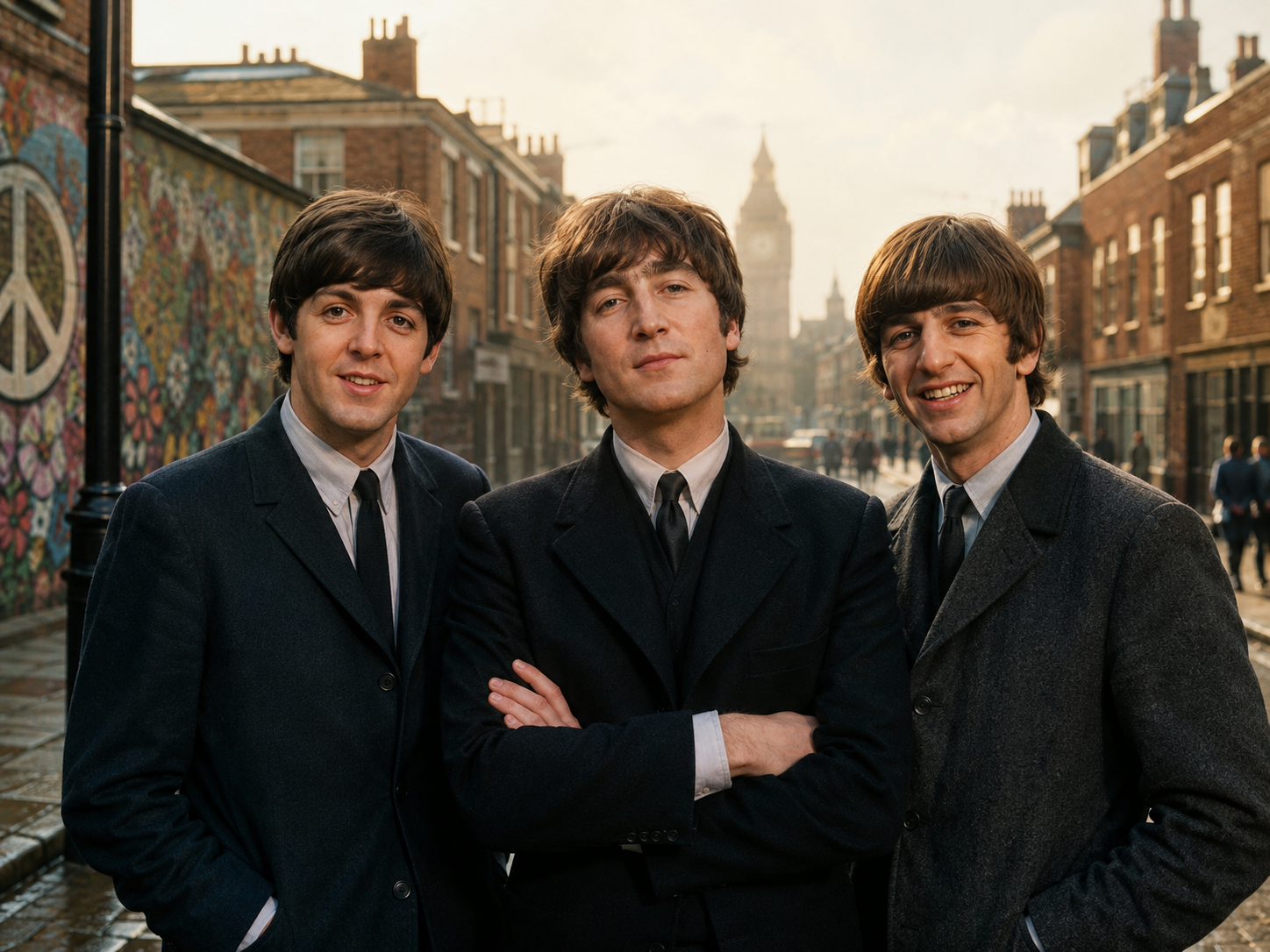
The Beatles: Four Lives That Changed the World
There are few stories in modern culture quite like that of four young men from Liverpool who became known simply as The Beatles.

John Lennon, Paul McCartney, George Harrison and Ringo Starr did far more than produce hit records. Together, they became part of the soundtrack of the twentieth century, carrying with them ideas about youth, freedom, imagination, friendship and, increasingly, peace.
Their journey began in Liverpool, but their influence quickly escaped every border placed around them. Britain had produced successful musicians before, but Beatlemania became something altogether different. Crowds screamed outside theatres, airports and hotels. Television appearances became international events. Their hairstyles were copied, their clothes imitated and their words debated.
Yet behind the phenomenon were four distinct personalities.
John Lennon brought a sharp intelligence, restless wit and increasingly political voice. During the later years of The Beatles and after the group separated, Lennon became strongly associated with campaigns for peace. Alongside his wife, Yoko Ono, he used music, interviews and public demonstrations to challenge war and encourage people to imagine a less violent world.
His murder in New York on 8 December 1980 stunned millions of people. Lennon was only 40 years old. For a musician who had become so closely identified with peace, the violence of his death carried a terrible irony.

Paul McCartney became one of the most successful songwriters and performers in popular music history. His gift for melody helped give The Beatles some of their most enduring songs, and his career continued for decades after the group ended. He has also worked repeatedly to preserve the Beatles’ musical heritage, bringing their songs to generations born long after the band itself existed.
George Harrison, often described as the quieter Beatle, brought something different to the group. His interest in Indian music and spirituality widened the band’s artistic horizons and helped introduce millions of Western listeners to sounds and ideas they may otherwise never have encountered.
George died from cancer on 29 November 2001 at the age of 58. His death was met with enormous sadness around the world. Friends and fellow musicians remembered not only his music but also his humour, spirituality and belief that there was more to life than fame or possessions.
Then there is Ringo Starr, whose distinctive drumming helped shape the sound of The Beatles and whose personality gave the group warmth and humour. Ringo has remained an enthusiastic advocate of one very simple phrase: peace and love.
That message has become almost a personal motto.
Today, Paul McCartney and Ringo Starr remain the two surviving Beatles. Alongside Yoko Ono and the families and estates connected with John and George, they have helped keep alive a legacy that is about far more than nostalgia.
The Beatles belonged to a turbulent period. Their music accompanied enormous social change, from the optimism of the early 1960s to the protests, wars and political upheavals that followed. Over time their songs grew with that changing world.
What began with youthful love songs eventually expanded into questions about loneliness, identity, spirituality, conflict and peace.
Perhaps that is why the Beatles still matter.
Their records remain, of course, but so does something less tangible: the belief that music can cross borders, strangers can discover common ground, and art can sometimes say what politics cannot.
John Lennon once became one of the world’s most recognisable advocates of peace. George Harrison searched for meaning beyond material success. Paul McCartney continues to carry their music into new generations. Ringo Starr still raises his hand and offers those familiar words: peace and love.
Four young men walked out of Liverpool and into history.
Two are gone.
Two remain.
But the music, and perhaps more importantly the hope contained within much of it, continues travelling.
And in a world still scarred by conflict, the message seems remarkably undiminished:
Peace and love are never outdated ideas.


