
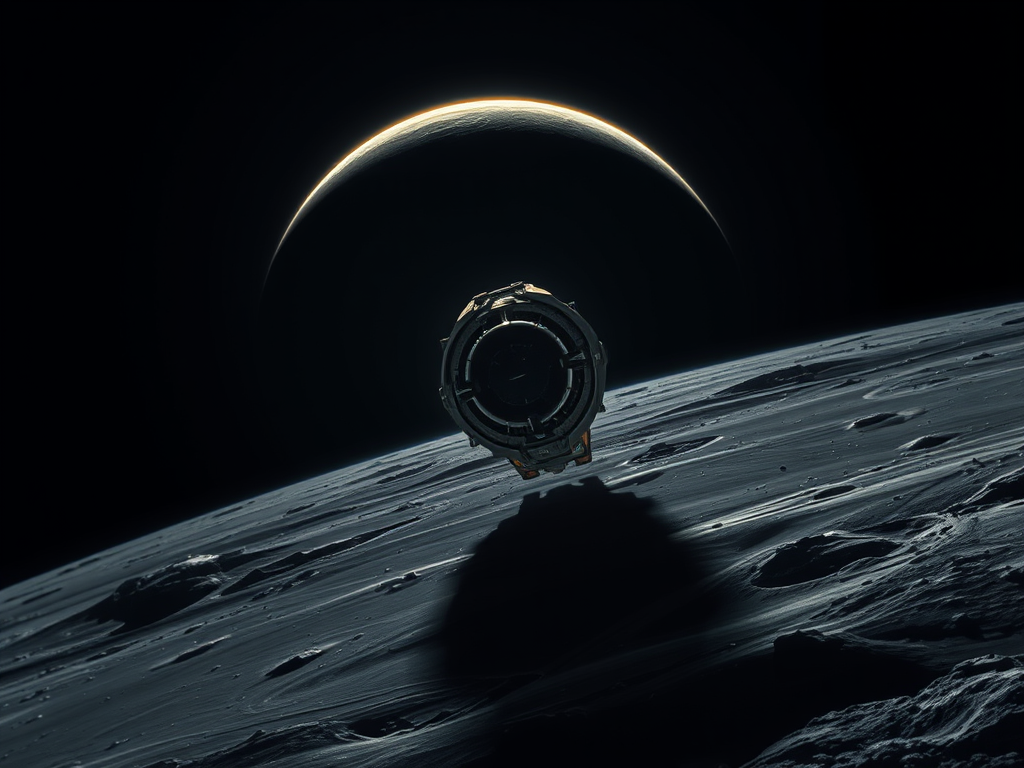
Humanity has once again turned its gaze toward the Moon, not with the urgency of rivalry, but with the patience of purpose.
By Ciceros News Desk
The successful launch of Artemis II marks a defining moment in space exploration, as NASA takes its first crewed step back into deep space in more than half a century.
Unlike the Apollo missions of the 1960s and 70s, which were driven by Cold War competition and culminated in brief lunar visits, Artemis II represents something altogether different. This mission is not about planting flags or proving capability. It is about learning, testing, and preparing for a sustained human presence beyond Earth.
Carrying four astronauts aboard the Orion spacecraft, Artemis II is designed as a critical proving ground. The crew will travel to the Moon, loop around its far side, and return to Earth, all while testing the systems that will one day support astronauts living and working on the lunar surface.
Early in the mission, minor issues such as a communications glitch and a fault with the onboard toilet system were reported. Both have since been resolved, highlighting not failure, but the very purpose of the mission itself. Artemis II is, above all, a trial run—an opportunity to identify and address problems in real time, far from Earth.

The journey to the Moon will take approximately four days, with the spacecraft following a “free return” trajectory that uses the Moon’s gravity to guide it safely back home. While there will be no landing on this mission, the experience gained will be invaluable.
NASA’s long-term goal lies with Artemis III, currently targeted for later this decade. That mission aims to return astronauts to the lunar surface, with a particular focus on the Moon’s south pole—a region believed to contain water ice that could support future habitation and fuel production.
This shift in ambition marks a fundamental change in how humanity approaches the Moon. Where Apollo was a series of short visits, Artemis is intended to lay the groundwork for permanence. The Moon is no longer just a destination; it is becoming a stepping stone for deeper space exploration, including future missions to Mars.
There are, of course, challenges. The programme is costly, technologically complex, and subject to delays. Critics argue that resources might be better spent addressing problems closer to home. Yet proponents counter that exploration has always driven innovation, inspired generations, and expanded the boundaries of what is possible.
For now, Artemis II stands as a bridge between past and future—a mission that honours the legacy of Apollo while pointing firmly toward what comes next.
As the Orion spacecraft carries its crew around the far side of the Moon, out of sight and briefly out of contact with Earth, it will echo a moment not experienced since the early 1970s. But this time, the journey is not an ending. It is the beginning of a new chapter.
And if all goes to plan, that chapter will see humanity return not just to visit the Moon, but to stay.


