
Military ready for a prolonged offensive campaign against Iran
The U.S. military is gearing up for what could become a prolonged campaign of weeks-long operations against Iran should President Donald Trump authorize strikes, according to senior U.S. officials speaking on condition of anonymity due to the classified nature of the planning.
This preparation signals a potentially far more intense and extended confrontation than any prior direct U.S.-Iran clashes, amid a tense mix of diplomacy and military buildup in the region.
High-stakes diplomacy continues
U.S. envoys Steve Witkoff and Jared Kushner are scheduled to meet Iranian representatives in Geneva on Tuesday, with Omani mediators facilitating the discussions.
The talks focus on possible curbs to Iran’s nuclear program in return for sanctions relief, though Tehran has firmly rejected tying in its ballistic missile capabilities.
Secretary of State Marco Rubio, speaking recently, emphasized that while President Trump prefers a negotiated settlement with Tehran, achieving one has proven “very hard to do.”

Military escalation raises alarms
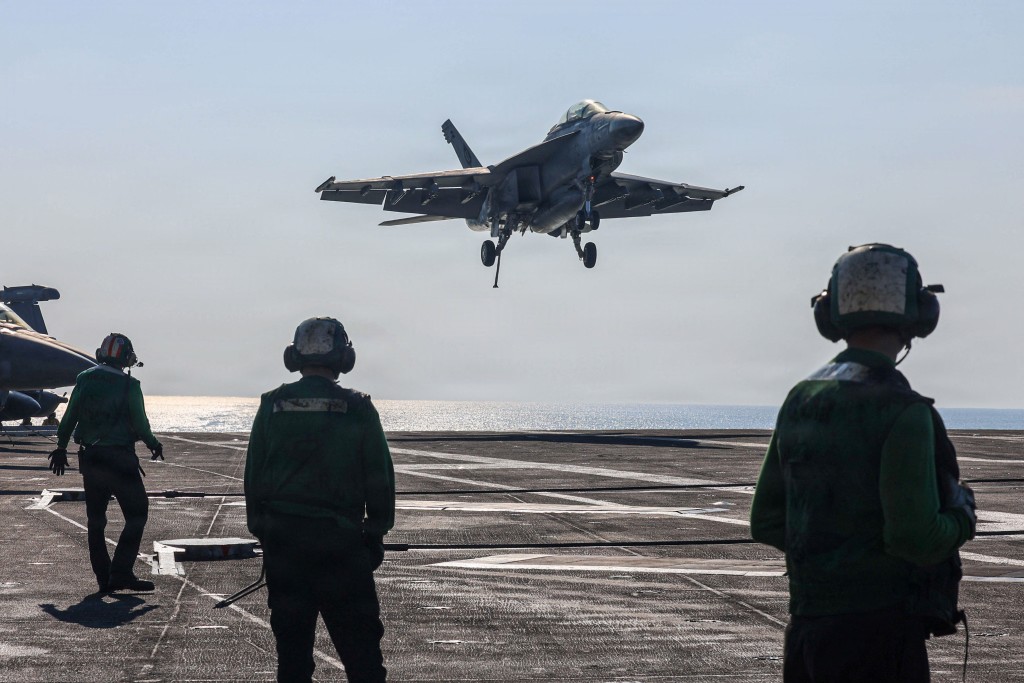
The Pentagon has ordered an additional aircraft carrier strike group to the Middle East, joining existing forces.
This deployment includes thousands more troops, advanced fighter jets, guided- missile destroyers, and other assets designed for both offensive strikes and robust defense.
The moves follow last year’s limited “Midnight Hammer” operation, where U.S. stealth bombers targeted Iranian nuclear sites in a one-time strike, met with only a restrained Iranian response against a U.S. base in Qatar.
This time, contingency planning envisions a more sustained effort. Officials indicate potential targets could expand beyond nuclear facilities to include Iranian state and security infrastructure, though specifics remain classified.
Trump’s tough rhetoric
In remarks to troops at a North Carolina base on Friday, President Trump openly mused about regime change in Iran, calling it “the best thing that could happen.”
He pointed to decades of fruitless talks stating —”For 47 years, they’ve been talking and talking and talking”—and suggested there are viable alternatives to the current leadership, without naming them.
Trump has historically expressed reluctance to commit large-scale ground forces to Iran, favoring air and naval power instead.
However, his administration’s recent actions in Venezuela—where special operations were used to capture President Nicolas Maduro—illustrate a willingness to employ targeted raids when deemed necessary.
White House spokesperson Anna Kelly responded to questions about the preparations by stating, “President Trump has all options on the table with regard to Iran.”
She added that the president weighs diverse viewpoints but ultimately decides based on what best serves U.S. national security interests. The Pentagon declined to comment.
Heightened risks of wider conflict
U.S. officials acknowledged they fully anticipate Iranian retaliation in any sustained campaign, which could trigger a cycle of strikes and counterstrikes.
Iran’s arsenal of missiles poses significant threats to American forces and regional allies.
Experts warn that such an operation would carry substantially greater dangers for U.S. personnel than limited strikes, with the potential to ignite a broader Middle East war.
Iran’s Revolutionary Guards have vowed to strike back at any U.S. bases across the region—including those in Jordan, Kuwait, Saudi Arabia, Qatar, Bahrain, the UAE, and Turkey—if Iranian territory is attacked.
Israeli Prime Minister Benjamin Netanyahu, after meeting Trump in Washington earlier this week, stressed that any deal with Iran must safeguard Israel’s core interests.
As diplomacy hangs in the balance, the shadow of military action looms larger, with the U.S. positioning itself for either a breakthrough agreement or a serious escalation.


