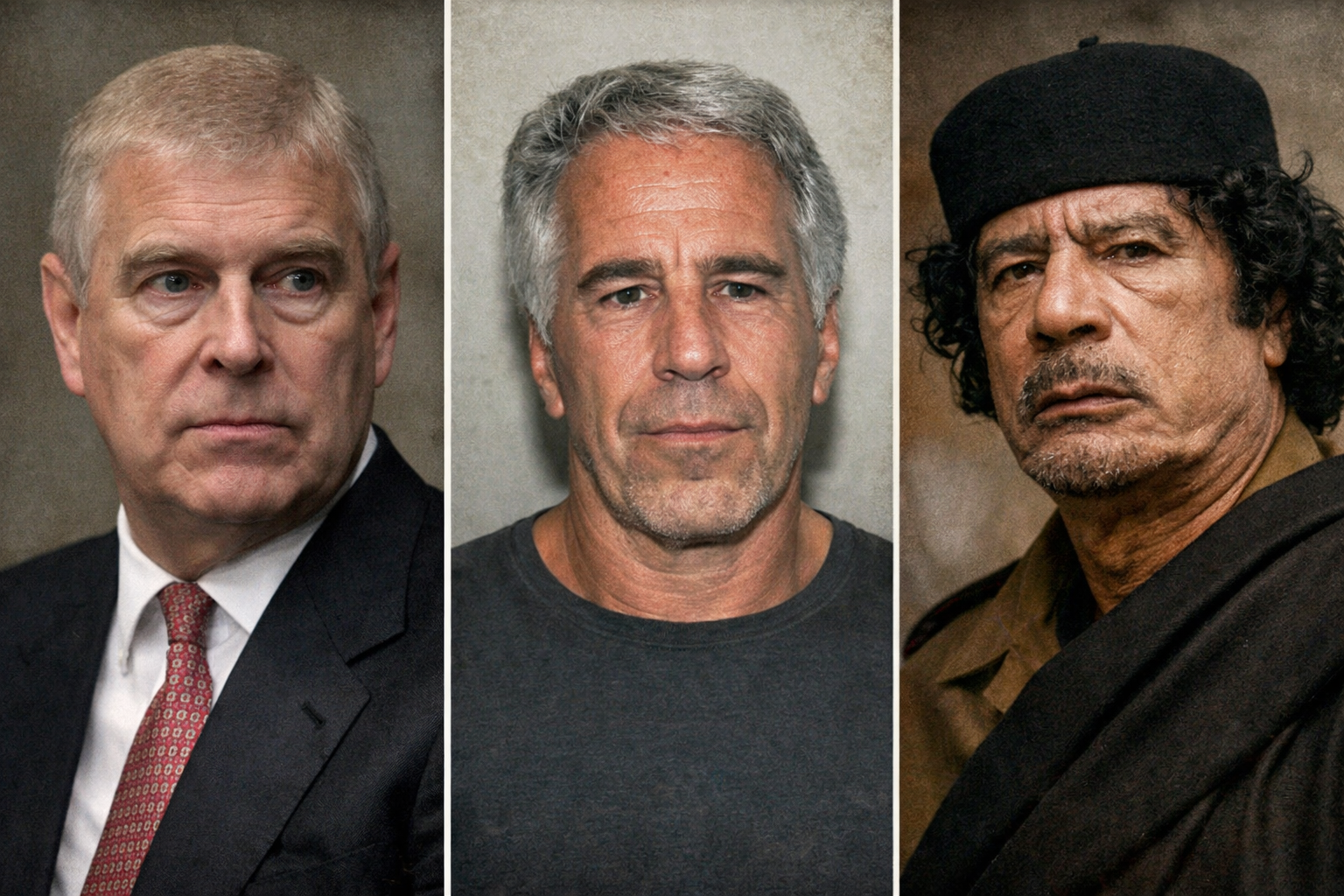
Prince Andrew, attempted to broker a meeting between Epstein and Gaddafi
LONDON — Newly released documents from the US Department of Justice have revealed email correspondence indicating that Andrew Mountbatten-Windsor, formerly known as Prince Andrew, attempted to broker a meeting between convicted sex offender Jeffrey Epstein and Libya’s then-leader, Colonel Muammar Gaddafi, in late 2010.
The exchanges, first uncovered and reported by Channel 4 News, form part of the latest batch of Epstein-related files made public by American authorities.
At the time, Mountbatten-Windsor was serving as the United Kingdom’s special representative for international trade and investment, a role that had previously brought him into contact with Gaddafi and his son, Saif al-Islam Gaddafi, during official visits to Libya.
The emails suggest Epstein, the disgraced financier later convicted of sex offences, was interested in positioning himself to manage funds for Gaddafi, who ruled Libya until his overthrow and death in 2011.
In one message, Epstein reportedly wrote that individuals who had encountered Gaddafi had inquired whether he would be willing to meet the Libyan leader, noting that Gaddafi “does not know where to put his money.”
Epstein then sought Mountbatten-Windsor’s assistance in arranging an introduction, either directly with Gaddafi or through his associates.
Mountbatten-Windsor appears to have responded positively. Correspondence involving an intermediary, David Stern — described as an associate of the former prince — shows efforts to coordinate the trip.
Epstein initially contacted Stern on 7 October 2010, expressing interest in travelling to Tripoli and asking to organise it “with PA,” a known alias for Prince Andrew used in Epstein’s communications.
Stern replied that he had spoken to “PA” and that the visit could be arranged, pending further details.
Epstein clarified his motive, suggesting Mountbatten-Windsor make the introduction to “the father” — an alias used in the emails to refer to Colonel Gaddafi, apparently to distinguish him from his more publicly prominent son.
In other contexts, Gaddafi was called “the leader” or “Brother Leader,” terms Mountbatten-Windsor himself used in separate Libya-related messages.
By early November, the exchanges escalated. On 3 November, Epstein followed up, and Stern indicated that Mountbatten-Windsor planned to speak with his Libyan contact imminently.
Shortly afterward, Mountbatten-Windsor directly messaged Epstein: “I will call you later this evening after I have had my chat with my Libyan contact to see what we can arrange for you in Tripoli.”
Hours later, he added: “Libya fixed. Call me whenever.”
A final message from Epstein on 7th November expressed willingness to travel to Tripoli for a meeting with “the leader” to offer financial advice, but only if arrangements were straightforward and the encounter guaranteed.
At that point, Epstein claimed to be in the United Arab Emirates. Subsequent travel records referenced in the files indicate he instead flew from the UAE to Turkey and then France, suggesting the Libya trip never materialised.
The use of coded references such as “the father” and “the leader” for Gaddafi underscores the sensitive nature of the discussions.
Mountbatten-Windsor’s prior official meetings with the Gaddafi family as trade envoy provided the apparent basis for his claimed access.
Mountbatten-Windsor has been contacted for comment on the revelations.
The disclosures add to ongoing scrutiny of the former royal’s associations with Epstein, whose network included numerous high-profile figures.
The emails emerge amid broader questions about potential conflicts of interest during Mountbatten-Windsor’s time as trade envoy, a position he held until stepping down in 2011.