
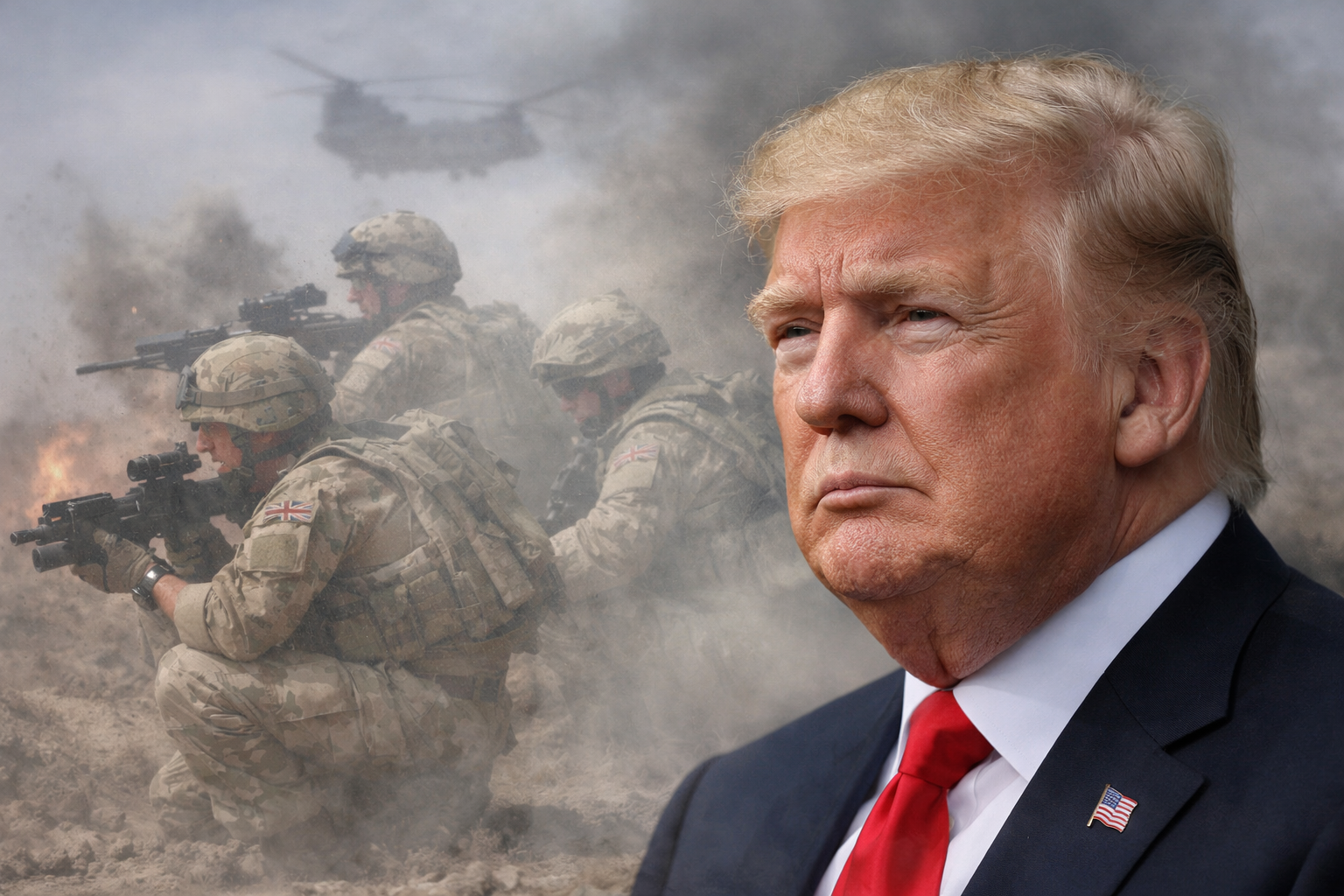
London — British politicians, veterans and bereaved families erupted in anger this week after U.S. President Donald Trump questioned the combat role of NATO allies during the Afghanistan war, suggesting allied forces “stayed a little back, a little off the front lines.”
The comments, made in an interview in Davos, Switzerland, have been widely condemned across the United Kingdom as deeply disrespectful to the memory of those who fought and died alongside American troops.

Trump’s remarks struck a raw nerve in the UK, where more than 457 British service personnel lost their lives over the course of the two-decade Afghanistan campaign and thousands more were wounded — many with life-altering injuries.
“It’s insulting and frankly appalling,” British Prime Minister Sir Keir Starmer declared at Downing Street, vowing to honour the courage and sacrifice of those who served. “Their bravery defines a generation. To suggest otherwise is an affront to our nation’s proudest traditions.”

Political Backlash Across the Spectrum
The backlash was overwhelming and bipartisan. Starmer said Trump’s comments had “caused such hurt” among families of the fallen and suggested an apology was in order.
Defence Secretary John Healey emphasised that British troops “should be remembered for who they were: heroes.”
Tory and Labour MPs alike rebuked the former U.S. president’s claim, with veteran MPs underlining that British, Canadian and other NATO forces fought “on the front line” and suffered heavy casualties.
Veterans’ relatives were equally scathing. One mother said hearing that allied troops “stayed back” felt like a personal insult to the sacrifice her son made on the battlefield.
A Broader Transatlantic Strain
Trump’s comments also reopened a broader debate about NATO’s role, the nature of military alliances, and collective defence under Article 5 — the clause activated only once in NATO history, after the September 11 attacks.
Critics in the UK went further, linking Trump’s remarks to his own controversial history of avoiding military service during the Vietnam War, a point emphasised by several politicians in social media posts and parliamentary sessions.
Defence figures pointed out that NATO allies suffered more than a thousand deaths in Afghanistan, with Britain second only to the U.S. in fatalities among partners.

Sacrifice Remembered, Respect Demanded
For many in Britain, long after troops left Helmand Province and the war officially ended, the memories of crowded repatriation ceremonies and the long struggles of injured veterans remain fresh. Those experiences are now at the heart of the political fury in Westminster.
“What was once a shared mission of security and solidarity has become a reminder that history matters — and how we speak of it matters even more,” said a former RAF officer who served in Afghanistan.
As the diplomatic ripples spread from London to Washington, Britain’s leaders have made clear that respect for its own and allied soldiers’ sacrifices is not negotiable — even as they stress the enduring importance of transatlantic cooperation.
He’s come under fire as Trump is still angry over NATO and Europe’s reaction to his bid to ‘buy’ and takeover Greenland 🇬🇱


