
THE CITY THAT ROSE WITH THE TIDE — AND THE MEGACITIES RESHAPING THE WORLD
By Cicero & ChatGPT
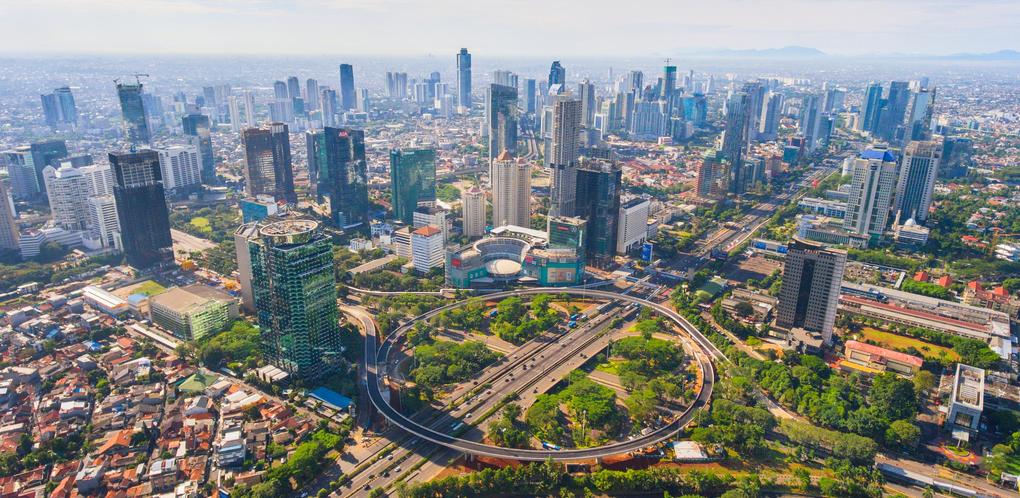
Once dismissed as a traffic-locked sprawl sinking slowly into the Java Sea, Jakarta has now surged into the very top tier of global megacities. By several international urban rankings, its greater metropolitan region now rivals — and in some tallies overtakes — Tokyo and New Delhi as the largest urban population zone on Earth.
This is not just a story of headcount. It is a story of density, trade, climate stress, and the raw mechanics of 21st-century power.

A CITY PACKED TIGHT WITH THE FUTURE
Jakarta’s metropolitan area now houses well over 30 million people, compressed into a relatively modest land footprint. While its overall density is lower than parts of New Delhi, the scale of Jakarta’s continuous urban mass is staggering: industrial zones fused to residential towers, ports welded to slums, expressways slicing through markets that never sleep.
This density is both rocket fuel and live wire:
– It powers productivity and labour supply
– It intensifies pollution, flooding, and infrastructure strain
– It turns every economic tremor into a human earthquake
Jakarta doesn’t grow politely. It surges.
THE ECONOMIC ENGINE OF SOUTHEAST ASIA
Indonesia is now one of the world’s most important middle-power economies, and Jakarta is its beating commercial heart.
Key pillars of Jakarta’s global trade role include:
– Manufacturing & industrial exports
– Palm oil, rubber, nickel, and commodities trading
– Banking, fintech, and regional finance
– Shipping and port logistics feeding Asia–Pacific trade
Indonesia’s nickel reserves alone — crucial for electric vehicle batteries — have pulled Jakarta directly into the future of green tech supply chains. As Western nations race to decarbonise, Jakarta quietly becomes a gatekeeper city for raw materials of the clean-energy age.
This is why global capital keeps flowing in — even as the streets sink.

THE CLIMATE CLOCK IS TICKING
Jakarta is also one of the most endangered megacities on Earth. Parts of it are sinking by more than 10 cm a year due to groundwater extraction and rising seas. Flooding is routine. Coastal defences are under constant strain.
Indonesia’s dramatic decision to relocate parts of its political capital away from Jakarta has not slowed its economic rise — it has merely split power between administration and commerce. Jakarta remains the country’s financial and trade cockpit, even if politicians drift elsewhere.
The city may drown slowly — but its economy still swims fast.
CHINA’S SUPER-CITIES: SCALE WE’VE NEVER SEEN BEFORE
While Jakarta surges in Southeast Asia, China is engineering an entirely different urban future — not single megacities, but entire megaregions.
Shanghai remains one of the most powerful economic cities on Earth — a titan of finance, shipping, manufacturing, and AI development.
Shenzhen, once a fishing village, is now a global tech powerhouse.
Guangzhou, Beijing, Tianjin — all knitted into super-clusters moving goods, money, and data at planetary scale.
These are not cities anymore. They are urban engines the size of small nations — purpose-built to dominate manufacturing, semiconductors, logistics, robotics, and artificial intelligence.
While Jakarta and New Delhi grow outward from human migration, China’s cities grow by state design — infrastructure first, people second.
THE NEW GLOBAL MAP: EMERGING AFFLUENT CITIES
It isn’t just Asia anymore. A new generation of cities is rising into wealth and global relevance:
Dubai – finance, luxury, logistics, AI
Lagos – Africa’s fastest-growing tech and population hub
São Paulo – Latin America’s financial heavyweight
Riyadh – oil wealth transforming into megaproject urbanism
Ho Chi Minh City – manufacturing and consumer-market breakout star
Affluence is no longer confined to the old Western capitals. We are watching a full planetary redistribution of urban wealth.
FROM EMPIRES TO ENGINES
For centuries, power lived in empires, flags, and fleets.
Now it lives in cities.
– Jakarta: rising through trade and raw materials
– Shanghai: forged in global manufacturing and finance
– New Delhi: exploding with demographic force
– Shenzhen and Guangzhou: built at the speed of algorithms
– Lagos and São Paulo: boiling with raw human momentum
These cities do not wait for permission. They outgrow politics.
THE JAKARTA PARADOX
Jakarta is the perfect emblem of the modern age:
✅ One of the largest urban populations on Earth
✅ A trade-critical global port city
✅ A climate-threatened sinkhole of density and demand
✅ A financial and industrial nerve hub for the Pacific century
It is simultaneously rising and sinking — growing richer and more vulnerable at the same time.
And that, in truth, is the future faced by every megacity now climbing toward the clouds.


