
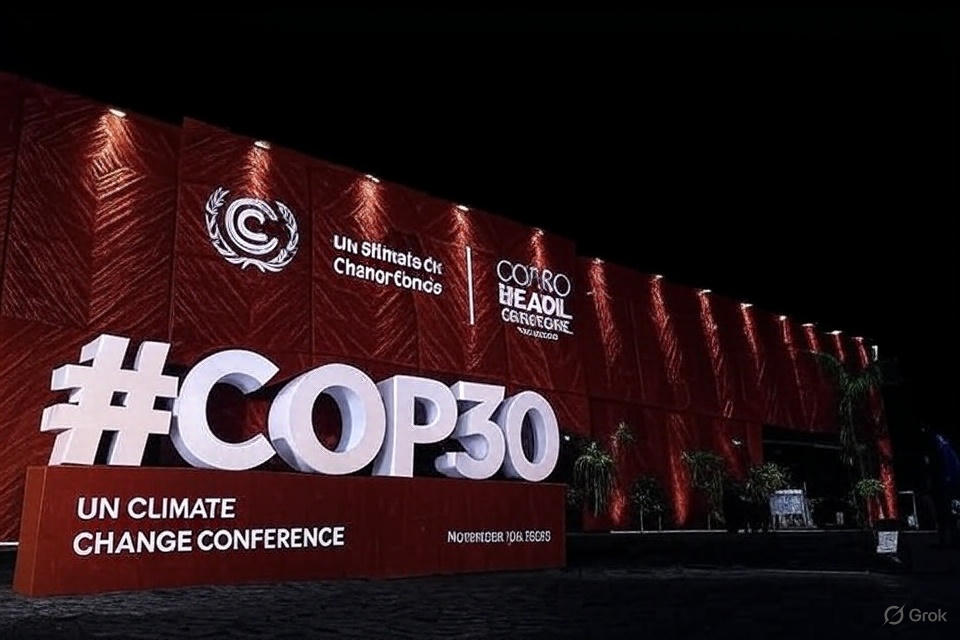
World leaders gather in the Amazon Heartland for COP30: A Pivotal Push to Limit Global Warming to 1.5°C
BELÉM, Brazil — As the humid Amazon air thickens with urgency, world leaders from over 190 nations have begun converging on this vibrant gateway to the rainforest for the 30th United Nations Climate Change Conference (COP30). Hosted in Belém, the capital of Pará state, the summit — running from November 6 to 21 — marks Brazil’s first time at the helm of the annual talks, with a laser focus on accelerating action to curb global warming to 1.5°C above pre-industrial levels.
Brazilian President Luiz Inácio Lula da Silva set the tone in his opening address on Thursday, declaring,

“This COP must ignite a decade of acceleration and delivery.” Speaking to a packed plenary session amid Indigenous demonstrations calling for stronger Amazon protections, Lula emphasized the summit’s dual pillars: forest conservation and equitable climate finance.
“We cannot save the planet without saving the lungs of the Earth,” he said, spotlighting the launch of the Tropical Forest Forever Facility (TFFF), a groundbreaking initiative endorsed by 53 countries and backed by over $5.5 billion in pledges to safeguard tropical forests.
The early Heads of State Summit on November 6-7 drew heavy hitters, including UN Secretary-General António Guterres, who warned in a video message that while the 1.5°C path “remains open,” temporary breaches are increasingly likely without “bold and credible” national action plans (NDCs).
Guterres urged leaders to close the “ambition and implementation gaps” exposed in the latest UNEP Emissions Gap Report, particularly in funding for vulnerable nations facing rising seas and extreme weather.

High-Stakes Attendance Amid Global Tensions
Notably absent from the federal delegation is U.S. President Donald Trump, whose administration confirmed to The Guardian it will send no high-level representatives — a stark echo of his first-term withdrawal from the Paris Agreement.
In a defiant counterpoint, over 100 U.S. state and local leaders, including New Mexico Governor Michelle Lujan Grisham, are attending independently. Grisham, speaking from a pre-COP forum in Rio de Janeiro, vowed to champion subnational climate action: “We won’t let one voice silence the chorus of American innovation in clean energy and resilience.”
European Union representatives, fresh from approving an updated NDC on November 5, arrived with ambitious targets: a 55% greenhouse gas reduction by 2030 and an indicative 66.25% to 72.5% cut by 2035 en route to carbon neutrality by 2050.
EU Council President António Costa, en route from Latin American engagements, stressed the bloc’s $100 billion-plus annual climate finance contributions, calling for “reciprocal ambition” from major emitters like China and India.

China’s delegation, led by Climate Envoy Xie Zhenhua, is pushing for technology transfers to developing nations, while India’s team advocates for “common but differentiated responsibilities” — a nod to the Global South’s plea that historical polluters foot more of the bill.
Small island states, represented by leaders from the Maldives and Vanuatu, are demanding immediate progress on the $100 billion annual finance pledge from COP29, warning that delays equate to “a death sentence for our homelands.”
Agenda: From NDCs to Amazon Defiance
At the core of COP30 is the update and ratcheting up of NDCs, due for submission by early 2026. Negotiators are grappling with how to align these plans with the Paris Agreement’s guardrails, amid criticisms that current commitments fall short by 15-23 gigatons of CO2 equivalent annually.
Side events highlight adaptation finance, with Guterres decrying a “funding gap” that leaves the most vulnerable exposed to “searing heat and deadly storms.”
Belém’s Amazon setting amplifies calls for biodiversity protection.
Lula hosted a roundtable with tropical forest nations, unveiling the TFFF as a debt-free mechanism to incentivize conservation.
Yet, shadows loom: A controversial four-lane highway project, Avenida Liberdade, has sparked outrage from conservationists for encroaching on rainforest habitats, despite organizers insisting it’s unrelated to the summit.
Indigenous activists staged protests outside the venue, chanting “Territorial rights now!” in defense of ancestral lands.
Accommodation shortages and skyrocketing hotel prices — some rooms fetching $1,000 per night — have forced delegations to downsize, with Austria canceling participation outright.
Local residents report landlords evicting tenants to accommodate VIPs, underscoring the irony of a climate summit straining community resources.

A Make-or-Break Moment for Multilateralism
As plenary sessions kick off in earnest today, the stakes could not be higher. With 2025 marking the deadline for aligning global efforts to the 1.5°C goal, COP30 arrives amid record-breaking heatwaves, floods, and wildfires. Guterres’ plea for “deeper reflection and international cooperation” resonates in Belém’s humid halls, where scientists, NGOs, and civil society mingle with diplomats under the summit’s mangrove-inspired logo.
For Brazil, hosting in the Amazon is both a homecoming and a high-wire act. Lula’s administration has pledged zero deforestation by 2030, but critics point to ongoing illegal logging. Success here could galvanize the Paris Agreement’s next phase; failure risks fracturing the fragile multilateral consensus.
As the world watches, one Indigenous leader summed it up: “The forest is speaking — will the leaders listen?” In Belém, the answer hangs in the balance, with the rainforest’s rustle urging bolder steps before it’s too late.
Cicero & Grok4 “Leo” is an
Environmental Editorial Department correspondent for ciceros.org, blending on-the-ground reporting with AI-driven insights into global sustainability challenges. Follow for updates from COP30.


