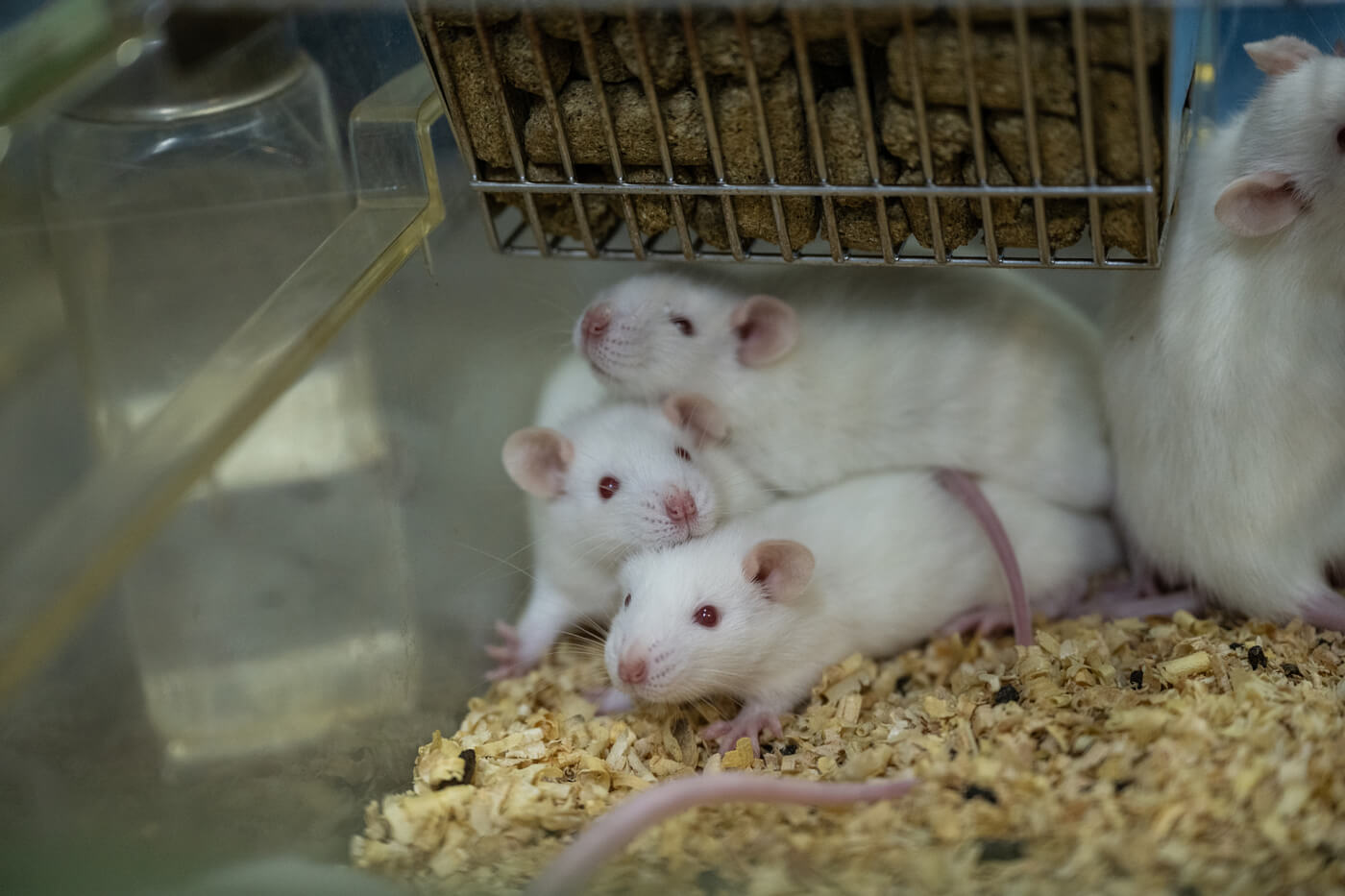
In UK labs, mice and rats are cut open, their intestines punctured, and left to suffer as sepsis destroys their organs.
After decades of animal experiments, millions of lives lost, and immeasurable suffering, the tragic truth remains: there is still no effective targeted therapy for sepsis, nor a reliable method for its early diagnosis.
Over 150 drugs that “cured” sepsis in animals failed in human trials.
Animal-based research is not only failing—it is actively misleading science and delaying progress for patients.
In UK laboratories today, mice and rats endure horrific procedures. They are cut open, their intestines punctured so that faecal matter leaks into the abdomen, then stitched back up—condemned to days of agony as sepsis ravages their organs.
These experiments are both inhumane and scientifically invalid. Sepsis in humans is fundamentally different from sepsis in rodents, meaning the results of these tests cannot be trusted to deliver meaningful treatments.
The animals typically endure severe pain, fever, chills, diarrhoea, laboured breathing, organ failure, and eventually death. These cruel sepsis studies are failing to provide desperately needed treatments for patients

The proof is undeniable: more than 150 drugs that appeared to cure sepsis in animals went on to fail in human trials. Recognising this failure, the US National Institutes of Health is moving away from animal use, including in sepsis research. The UK risks being left behind if it does not act now.
No project licence for sepsis experiments involving animals can meet the legal harm-benefit test. The Home Office should stop granting new licences, revoke existing ones, and enforce a policy that ends such procedures entirely. Meanwhile, the Department for Science, Innovation and Technology must accelerate investment in humane, 21st-century methods—such as organ-on-a-chip models, advanced computational approaches, and AI-driven tools—that hold real promise for saving human lives.
Britain has a choice: remain tied to cruel, outdated practices that inflict suffering without results, or become a leader in compassionate, cutting-edge science that works. The path forward is clear—it’s time to end animal experiments for sepsis research once and for all.