
In 1979, director Hal Ashby brought to the screen Jerzy Kosiński’s novel Being There, with Peter Sellers giving what many consider his greatest performance as Chance the Gardener.
By Cicero’s Entertainment Writer
At first glance, it is a quirky satire: a childlike man who knows nothing of the world beyond television and his walled garden somehow ascends to the highest echelons of American politics, even becoming a confidant to the President. Yet behind the laughter lies a film of unsettling resonance—one that has only grown sharper with time.
The genius of Being There is its audacious simplicity. Sellers’ Chance is not a schemer, not a Machiavellian manipulator, nor a spin-doctor. He is, in essence, a blank canvas: an illiterate man who speaks in gardening metaphors because that is all he knows. “In the spring, there will be growth,” he says, and suddenly businessmen and politicians nod solemnly, hearing profound wisdom in his words.
“There is quite simply nothing really like this film, as it takes the subject of satire to a whole new level while Sellers’ naïve, lovable character remains the anchor that drives the comedy and plot forward.”
-Rotten Tomatoes.
Chancey the Gardener—mistakenly elevated to “Chauncey Gardiner” by a slip of the tongue—becomes a mirror for everyone he encounters. They see in him what they want to see: sage advisor, economic prophet, even potential leader. He is, in truth, neither wise nor malicious, but a man with no inner agenda beyond tending to plants.
The Politics of Projection
This satire cuts deeply into the modern world. In an age where politics is as much about image and “vibes” as it is about policy, Chance feels like a prophetic creation. We’ve all seen real-world figures—celebrities, influencers, even elected officials—whose appeal is not grounded in deep knowledge or coherent vision, but in their ability to project simplicity, relatability, or an aura of inevitability.
Chance does not know how to play politics; politics plays itself through him.
A Critique for Our Times
Being There asks: is it possible that simplicity, even ignorance, could succeed where complexity fails? In a perverse way, yes. The film suggests that modern politics does not necessarily reward knowledge, integrity, or competence—it rewards perception.
There is something both comical and terrifying about the idea that the most “successful” politician may not be the clever strategist or the accomplished statesman, but the blank slate upon whom others inscribe their own desires. The gardener becomes a leader because others choose to believe.

Today, in an era dominated by spin-doctors, algorithms, soundbites, and celebrity politicians, the satire feels eerily contemporary. The question is no longer whether the naïve could rise to power, but how often they already have.
Who Is Chancey the Gardener?
So who, really, is Chance?
On the surface, he is a simpleton: a man who has lived his whole life within the walls of a wealthy man’s estate, tending the garden and absorbing television without ever grasping reality.
Symbolically, he is the ultimate outsider: a figure untouched by cynicism, bureaucracy, or ambition. He embodies innocence, but also emptiness.
For critics, he represents the dangerous allure of simplicity in a world addicted to complexity. People crave clarity, even if it is meaningless.
Chance’s appeal lies in the paradox that he says almost nothing, yet everyone hears what they want to hear. He is at once harmless and deeply threatening—a reminder that power is not always earned, but bestowed, often for the flimsiest reasons.
Conclusion: All Will Be Well in the Garden
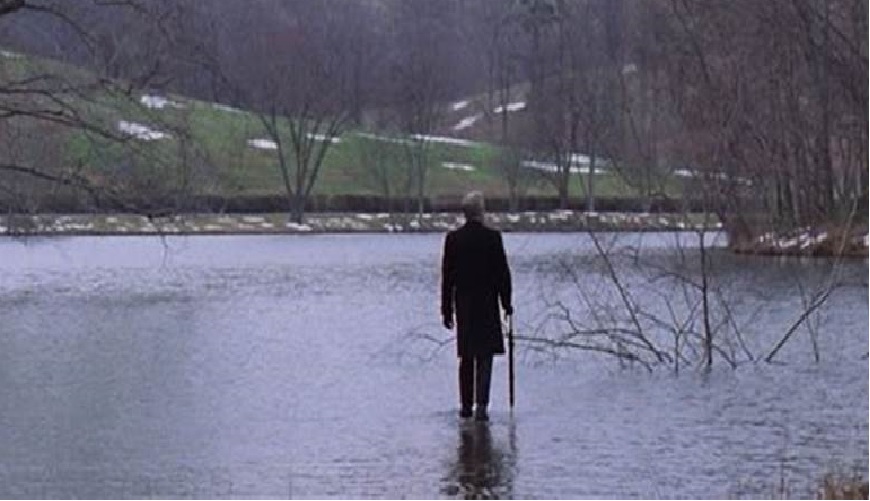
The final scenes of Being There suggest something almost mystical: Chance walking across the surface of a lake, a Christ-like figure whose simple presence commands reverence. It is a haunting image, both absurd and sublime.
The lesson? In politics, as in gardening, appearances matter more than substance. Growth, decay, cycles of renewal—these metaphors soothe a restless public. But when we place our trust in Chance the Gardener, we must ask: are we cultivating wisdom, or simply mistaking the weeds for flowers?
In our own time, the film reads less like satire and more like prophecy. All will be well in the garden, perhaps—but only if we remember that gardens require more than faith. They require work, knowledge, and vigilance.


