
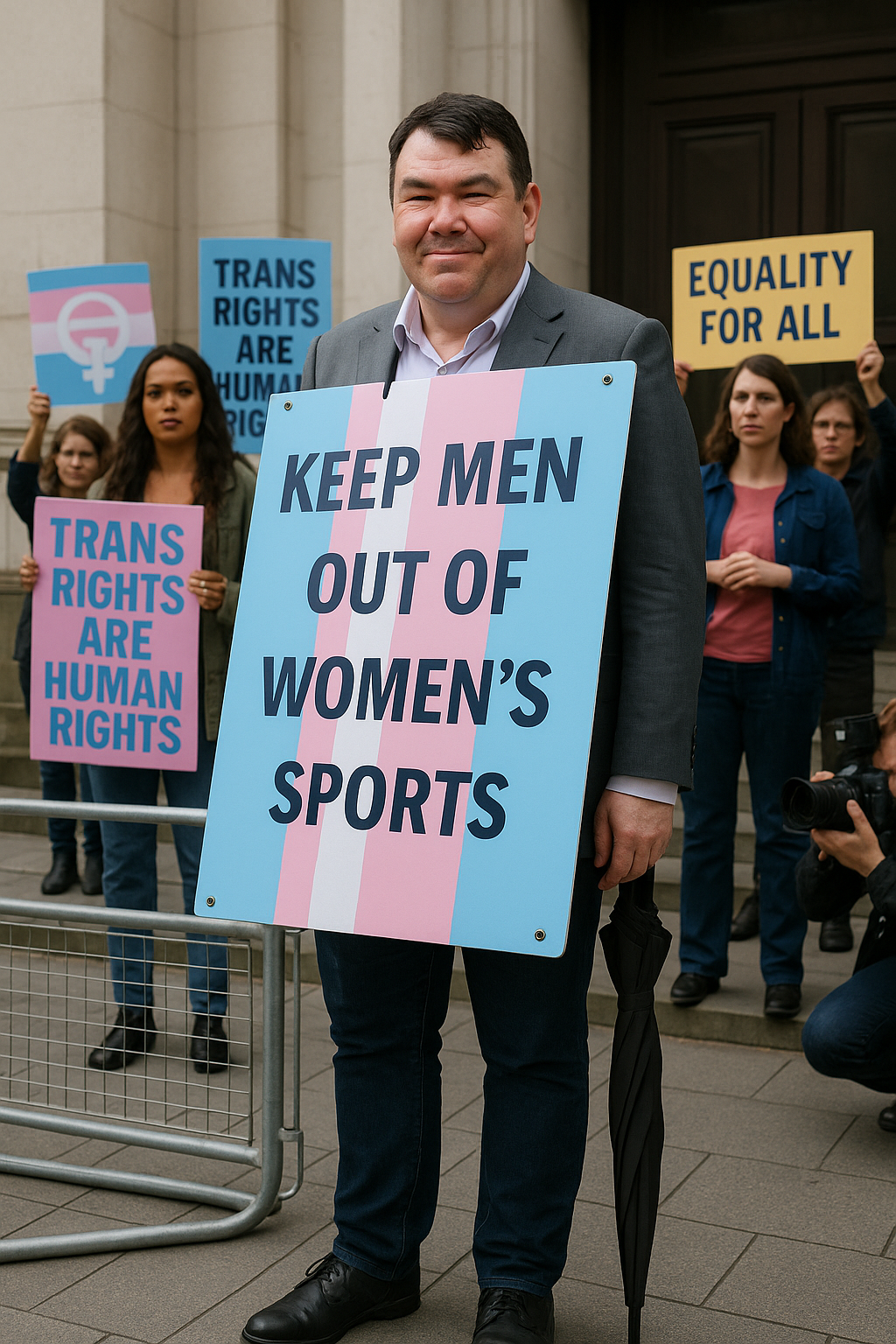
Graham Linehan, the Irish comedy writer behind Father Ted and The IT Crowd, has gone on trial in London accused of harassing a transgender teenager and damaging her phone during a confrontation at a public event.
The 57-year-old appeared at Westminster magistrates’ court on Thursday, where prosecutors alleged he targeted 18-year-old activist Sophia Brooks with a stream of online abuse before a clash at the Battle of Ideas conference last October. Linehan denies the charges.
Online Posts Under Scrutiny
Julia Faure Walker, prosecuting, told the court that Linehan used social media to “relentlessly” single out Ms Brooks, calling her a “deeply disturbed sociopath” and a “domestic terrorist”. The messages, she said, were “not merely irritating or annoying, but oppressive and unacceptable, thereby crossing the threshold into harassment”.
Ms Brooks told the court she felt “alarmed and distressed” by Linehan’s behaviour. Being denounced to his half-million followers, she said, left her fearful for her safety. “Any of which could see Mr Linehan’s post and cause great harm to me,” she added.
Clash at Conference
The court heard that the two first met in person at the Battle of Ideas festival in October 2024, where Ms Brooks challenged him about his online comments. She alleged that Linehan called her a “groomer” and asked “how many kids” she had groomed.
Later, outside the venue, she again questioned him about describing her as a “domestic terrorist”. Prosecutors said Linehan responded with further insults and then “deliberately whacked” her phone out of her hand while she filmed him.
Defence Response
In a statement to police, Linehan said he felt harassed by Ms Brooks, whom he referred to as “Tarquin”. He maintained she had provoked him by filming at close quarters and making a “provocative statement”. He admitted knocking her phone away but insisted it was a “reflex response”.
On the wider issue of his social media activity, he rejected the suggestion it amounted to harassment, describing himself as a journalist seeking to expose what he called “the tactics of trans activists”.
A Broader Backdrop
The trial follows days after Linehan’s arrest at Heathrow airport in an unrelated investigation into whether he incited violence through other online posts. That incident, in which he was met by armed officers, provoked a wave of debate about free speech and policing of online speech. He was later released on bail pending further inquiries.
His case has become part of a broader political argument over the boundaries of online expression and the adequacy of existing legislation. Senior police and politicians have suggested the current framework for regulating social media abuse and harassment is no longer fit for purpose.
Ongoing Proceedings
The trial at Westminster will continue to hear evidence over the coming days. Linehan has pleaded not guilty to both harassment and criminal damage.
Who is Graham Linehan?
Linehan rose to prominence in the 1990s as co-creator of the Channel 4 sitcom Father Ted, which became one of the most celebrated comedies of its era.
He later wrote and directed Black Books and The IT Crowd, cementing his reputation as a leading figure in British and Irish comedy.
In recent years, however, Linehan has been better known for his outspoken views on transgender rights, which have seen him banned from social media platforms, dropped by professional collaborators, and accused of fuelling online hostility.
His supporters argue he is a defender of free speech and women’s rights, while critics say his interventions have repeatedly crossed into targeted abuse.
Opinion: Finding Balance in the Debate on Women-Only Spaces
By Cicero, Editorial Dept.
The trial of Graham Linehan once again throws into sharp relief a broader cultural battle: how society accommodates transgender women, and where the boundaries of inclusion lie.
I have sympathy for both sides of this debate. Trans women deserve dignity, recognition and safety. No one should face harassment or abuse simply for living as who they are. Yet I also believe women are entitled to private spaces in certain intimate settings — changing rooms, refuges, hospital wards — where biology still carries weight.
For me, the fairest balance lies in respecting these spaces until transition is complete. After gender reassignment, a trans woman should rightly be recognised in full and welcomed into women-only environments. Before then, it seems reasonable — if difficult — to expect a degree of respect for women’s boundaries.
This is broadly in line with the approach taken by the UK Supreme Court, which has affirmed both the rights of trans people under the Equality Act and the right of institutions to make single-sex exceptions where there is a legitimate aim. It is not a perfect solution, but perhaps a pragmatic one.
What matters most is that these questions are addressed in good faith, with less shouting and more listening. The goal should not be to pit one group against another, but to seek dignity, safety and fairness for everyone.


