
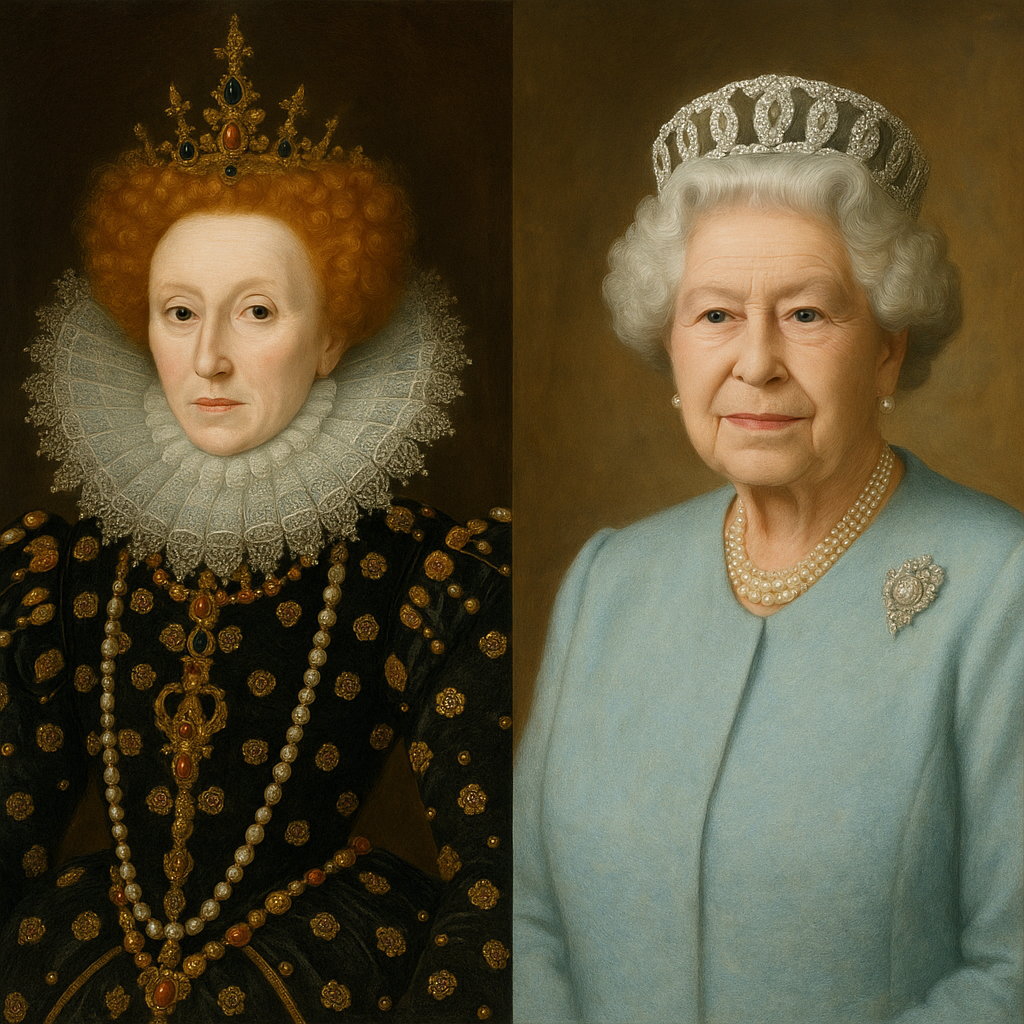
Spanning centuries, the reigns of Elizabeth I and Elizabeth II have each left an indelible mark on British history. Elizabeth I, who reigned from 1558 to 1603, is celebrated for ushering in a golden age of cultural and political achievement. Her support of the arts and deft handling of religious and international challenges set a high bar for future monarchs. Fast forward to the modern era, and Elizabeth II, whose reign began in 1952, navigated a rapidly changing world with grace and steadfast dedication. Her reign saw the transformation of the British Empire into the Commonwealth, and she became a symbol of continuity and stability.
Queen Elizabeth II’s reign, stretching from 1952 to 2022 — an astonishing 70 years — was the longest of any British monarch, and her legacy is woven through some of the most turbulent and transformative decades in modern history. Her achievements weren’t in grand legislative acts or wars waged, but in the quiet power of constancy, diplomacy, and symbolism. Let’s highlight some of the key pillars of her reign:
👑 1. Longevity and Stability
- Elizabeth II became a global symbol of continuity and stability. Through Cold Wars, Brexit, the rise and fall of 15 Prime Ministers, and tectonic social change, her calm, measured presence reassured millions.
- She outlasted world leaders from Churchill to Obama to Zelensky, anchoring the UK during seven decades of political and economic upheaval.
🌍 2. Champion of the Commonwealth
- Under her stewardship, the British Empire transformed into the Commonwealth of Nations — a voluntary association of 56 countries. She was deeply committed to this body and visited nearly every member state.
- Her diplomatic role helped soothe post-colonial tensions and maintain friendly ties with former colonies.
🕊️ 3. Soft Power Diplomacy
- The Queen undertook over 270 foreign visits to more than 100 countries — without ever needing a passport.
- She was Britain’s most effective ambassador, smoothing relations in places like Ireland (her 2011 visit was historic), South Africa (where she supported the post-apartheid transition), and Germany (marking post-war reconciliation).
🇬🇧 4. Embracing Change While Preserving Tradition
- Elizabeth II modernised the monarchy subtly but steadily — televising her coronation, allowing cameras into Buckingham Palace, and opening up royal finances to public scrutiny.
- She navigated institutional crises, such as the Diana years, the death of Prince Philip, and royal scandals, with a composed hand.
💻 5. Cultural and Technological Adaptability
- She sent her first email in 1976, launched the Royal Family’s website in 1997, and joined Instagram and Zoom in her 90s.
- Her Diamond Jubilee and Platinum Jubilee celebrations drew millions, showcasing the monarchy’s enduring place in British life.
🧡 6. A Lifetime of Service
- As a young woman, she pledged to serve her country for life — and she kept that promise until her very last days.
- She performed her final constitutional duty just two days before her death, inviting Liz Truss to form a government.
✨ Legacy in Numbers:
- 15 Prime Ministers
- Over 600 charities supported
- 21,000 official engagements
- 2,000+ Christmas messages delivered
- Billions reached globally through her appearances

Queen Elizabeth II didn’t wield power in the traditional sense — her greatness lay in endurance, dignity, and duty. In an age of noise, she was composed silence. In a time of rush, she was a steady flame.
Winston Churchill, the bulldog of Britain, her first PM — she was just 25, he was 77, full of war stories and whiskey. He reportedly adored her and treated her with grandfatherly warmth. She once said, “No one ever gives me such a sense of being guided and supported.”
Harold Wilson, by contrast, was warm, witty, and a bit of a working-class charmer. The Queen reportedly found him “relaxed and amusing” — he even called her “Ma’am” with a flat northern ‘a’. Some even say she enjoyed their off-the-record chats more than any other PM’s. He was the only one she invited for informal picnics at Balmoral.

And through it all — from Suez to strikes, the miners to the Falklands, austerity to affluence — she never gave a political opinion. That was her superpower: mystery and restraint.
Ask ChatGPT


