
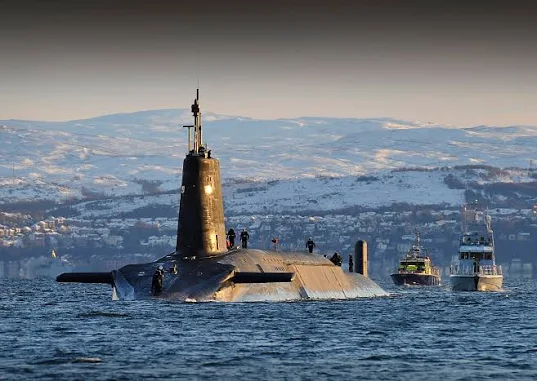
The UK government is reportedly moving forward with plans to build a fleet of 12 nuclear-equipped submarines as part of its defence strategy.
This initiative aims to bolster the nation’s defence capabilities, ensuring a robust deterrent against potential threats.
The move aligns with a broader defence review aimed at modernizing the military and adapting to evolving global security challenges.
While some view it as a necessary step to safeguard national interests, others raise concerns about the financial costs and the message it sends on the global stage.

The debate continues as the government weighs its defence priorities in an increasingly uncertain world.
What Britain already has in terms of nuclear-equipped submarines:
As of now, the UK Royal Navy operates nine nuclear-powered submarines: four Vanguard-class ballistic missile submarines and five Astute-class attack submarines. The plan is to expand this fleet to up to twelve nuclear-powered attack submarines by the late 2030s as part of the AUKUS partnership with the US and Australia.
HMS Agamemnon, the sixth Astute-class nuclear-powered attack submarine, was the last submarine launched by the Royal Navy in October 2024. Equipped with Tomahawk cruise missiles and Spearfish torpedoes, it enhances the UK’s maritime strength and underwater warfare capabilities.
The addition marked a significant step in modernizing the Royal Navy’s submarine fleet.
The Royal Navy’s current fleet includes several classes of nuclear submarines. The Vanguard-class submarines, such as HMS Vanguard submarine built in 1986, are the backbone of the UK’s nuclear deterrent and carry Trident ballistic missiles.
Meanwhile, the Astute-class submarines, including HMS Anson, are advanced attack submarines designed for a variety of roles, from intelligence gathering to hunting other submarines.
As of now, the UK is also advancing plans to replace the Vanguard class with the new Dreadnought-class submarines over the coming years. The addition of HMS Anson to the fleet highlights the ongoing modernization and expansion of the UK’s underwater capabilities.
Overall, the Royal Navy is maintaining a strong focus on both deterrence and versatile maritime security with these advanced submarine classes.


