
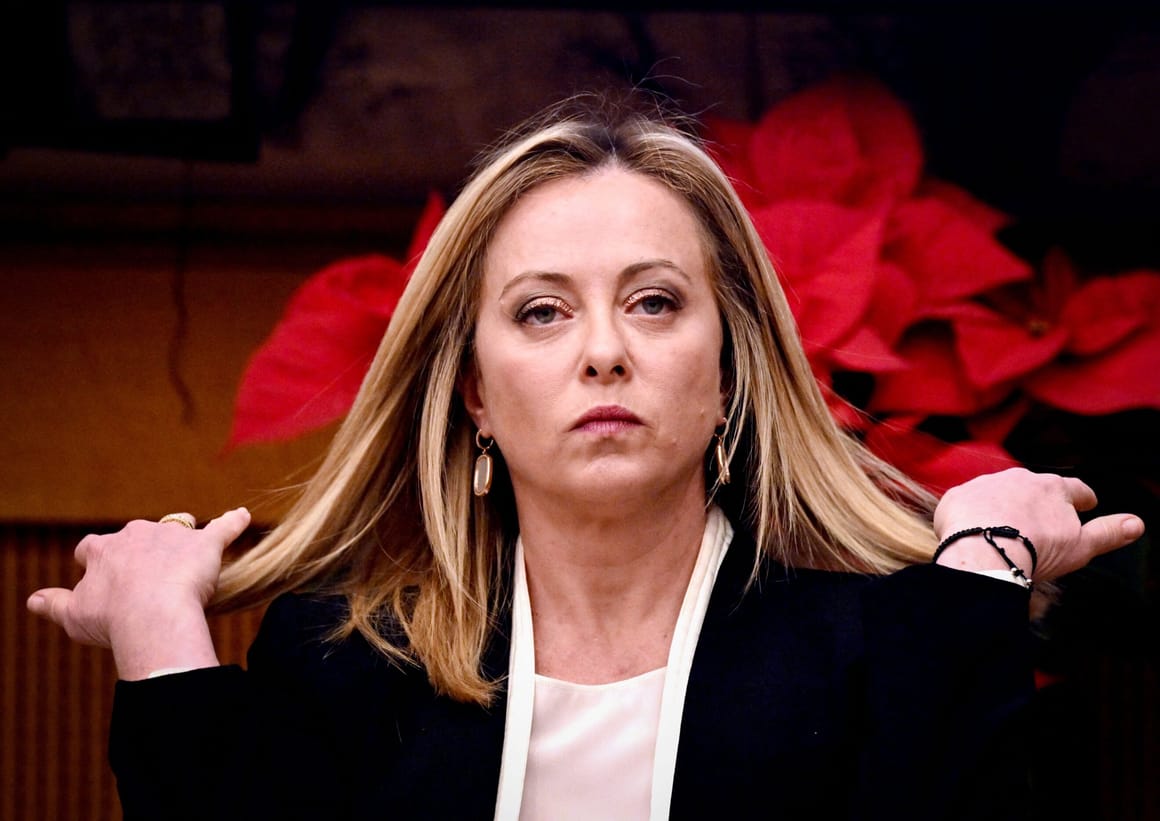
Italy’s leader, Giorgia Meloni, has secured a significant role in shaping EU policies after the four-day parliamentary elections.
Her party, the Brothers of Italy, secured over a quarter of the vote in Italy, strengthening her position both domestically and internationally.
Meanwhile, leaders of Germany and France, traditionally the bloc’s powerhouses, were dealt a bruising defeat. In Italy, Meloni’s party won over 28% of the national vote, securing around 24 seats in the 720-strong European parliament.
In France, Emmanuel Macron called a snap parliamentary election after his pro-EU centrist alliance was thumped by Marine Le Pen’s far-right National Rally (RN).
Germany’s Chancellor Olaf Scholz rejected calls for his snap election after all three left-of-centre parties in his coalition lost to the far-right Alternative for Germany and the centre-right Christian Democrats. This weak leadership is a bad position for the EU ahead of this week’s G7 summit, as the world faces two wars, including one in Europe and the possibility of a second Trump presidency in November.

Donald Tusk, Poland’s centrist prime minister, returned to power last year as uncertain about their parliamentary win over the right-wing Law and Justice Party (PiS).
Sunday’s vote suggests Tusk’s Civic Coalition emerged as Poland’s biggest party in the European Parliament, but it was the PiS’s first outright defeat in a decade.
Ursula von der Leyen is well placed to win a second five-year term as European Commission president, but she still needs an EPP alliance with the parliament’s main centrist and centre-left blocs, support from either the Greens or the eurosceptic right, and qualified majority support from the EU’s 27 national leaders.
The power in Europe is spread thinly between Meloni, Tusk, von der Leyen, and the usual suspects in Paris and Berlin, with a rowdy talking shop in the European parliament. Washington will need all of them on speed dial to address the challenges in an age of multiple competing superpowers.


