
London, June 2000
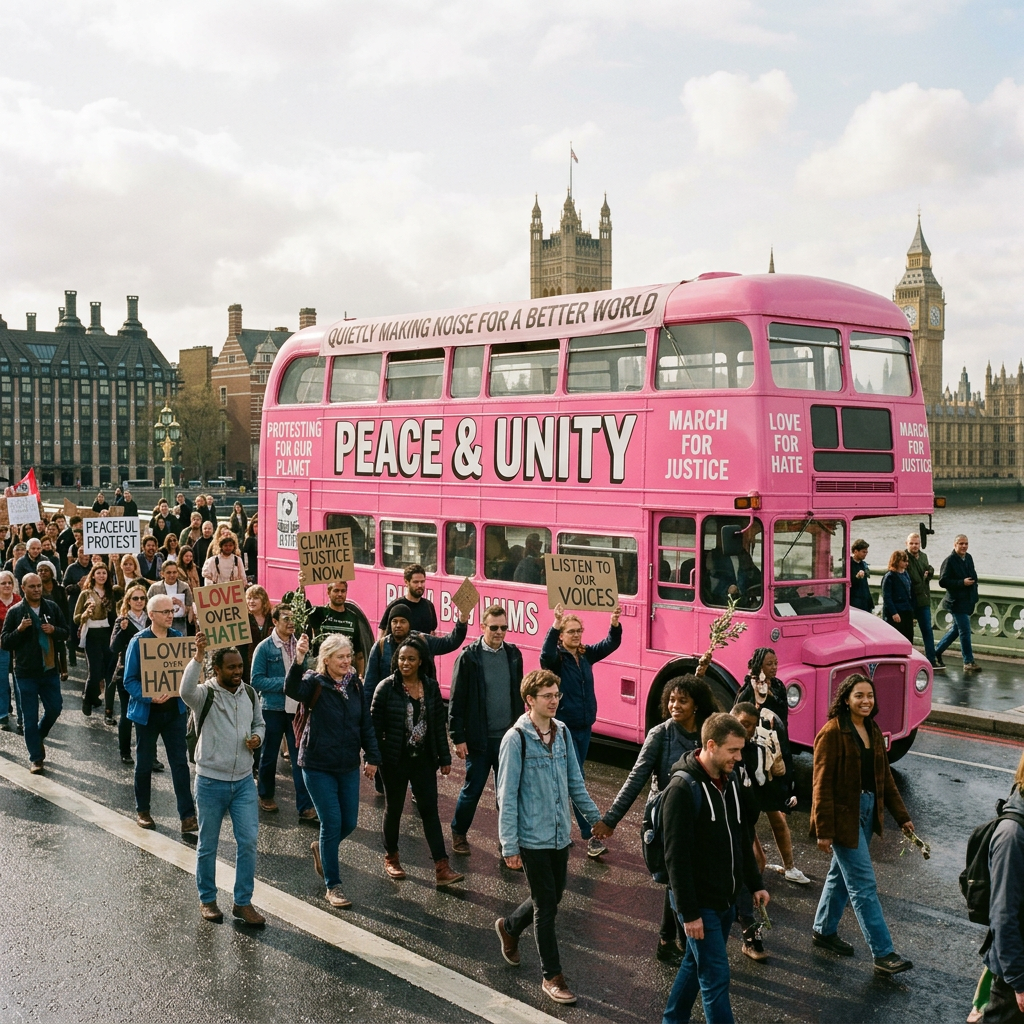
In a bold and highly visible act of civil disobedience yesterday, members of the London Lesbian Avengers brought central London traffic to a standstill by commandeering a Stagecoach number 15 bus in Piccadilly Circus and painting it pink. The protest was directed against Brian Souter, the transport magnate and owner of the Stagecoach Group, who has donated substantial funds to the “Keep the Clause” campaign opposing the repeal of Section 28.
The activists, seven women in total, boarded the bus during its regular route and refused to disembark until their demands were aired. They daubed the vehicle in bright pink paint and affixed prominent slogans calling for the immediate repeal of the legislation, which prohibits local authorities from promoting homosexuality. The choice of target was explicit: Mr Souter’s financial support for the Scottish campaign to retain Section 28, including his personal funding of a privately conducted referendum, had drawn sharp criticism from equality campaigners.
Eyewitnesses described scenes of orderly yet determined disruption as the women maintained their position on the bus, engaging with arriving journalists and television crews. One participant reportedly stated that the group had selected the number 15 route precisely because “the man who runs the company supports that law.” Police eventually removed the protesters, leading to seven arrests on charges connected with the incident.
At subsequent court proceedings, five of the women were convicted. They received community service orders and were collectively ordered to pay £2,000 in compensation for criminal damage to the vehicle. Reports indicate that aspects of the community service included work at educational establishments—an outcome noted by observers for its particular resonance given the subject matter of the protest.
Mr Souter, a prominent evangelical Christian businessman whose Stagecoach empire expanded significantly following bus and rail privatisation, has defended his support for retaining Section 28 as a matter of protecting children and upholding traditional values. He has maintained that his stance does not constitute personal prejudice. The Keep the Clause campaign, while attracting considerable participation in its referendum, proved advisory only; the Scottish Parliament enacted repeal legislation later in 2000.
Yesterday’s action forms part of a sustained wave of public demonstrations and parliamentary advocacy that has placed the future of Section 28 at the centre of national debate. Campaigners argue that the provision fosters discrimination and self-censorship in schools and public services. Supporters of retention contend that it safeguards parental rights and prevents the inappropriate introduction of sexual matters to young children.
The Pink Bus protest, with its striking visual symbolism and disruption of a major transport artery, has ensured that the arguments surrounding Section 28—and the role of wealthy individuals in shaping social policy—remain firmly in the public eye. Whether such direct-action tactics will influence the legislative timetable remains to be seen, but the images of a bright pink bus in the heart of London’s theatre district are likely to endure as a potent emblem of the ongoing contest.


