
There are few crimes that strike more deeply at the foundations of the British state than the murder of a police officer carrying out their duty. Justice, Memory and the Price of Service: Should Britain Ever Release the Killers of Police Officers Early?
An attack on an officer is not simply an assault upon an individual. It is an assault upon the rule of law itself, upon the principle that those charged with protecting the public should be able to protect the public without themselves becoming deliberate targets of violence. Every police officer who puts on a uniform accepts a degree of danger, but society has traditionally recognised that those who deliberately kill officers performing their public duty have crossed one of the gravest moral and legal boundaries imaginable.
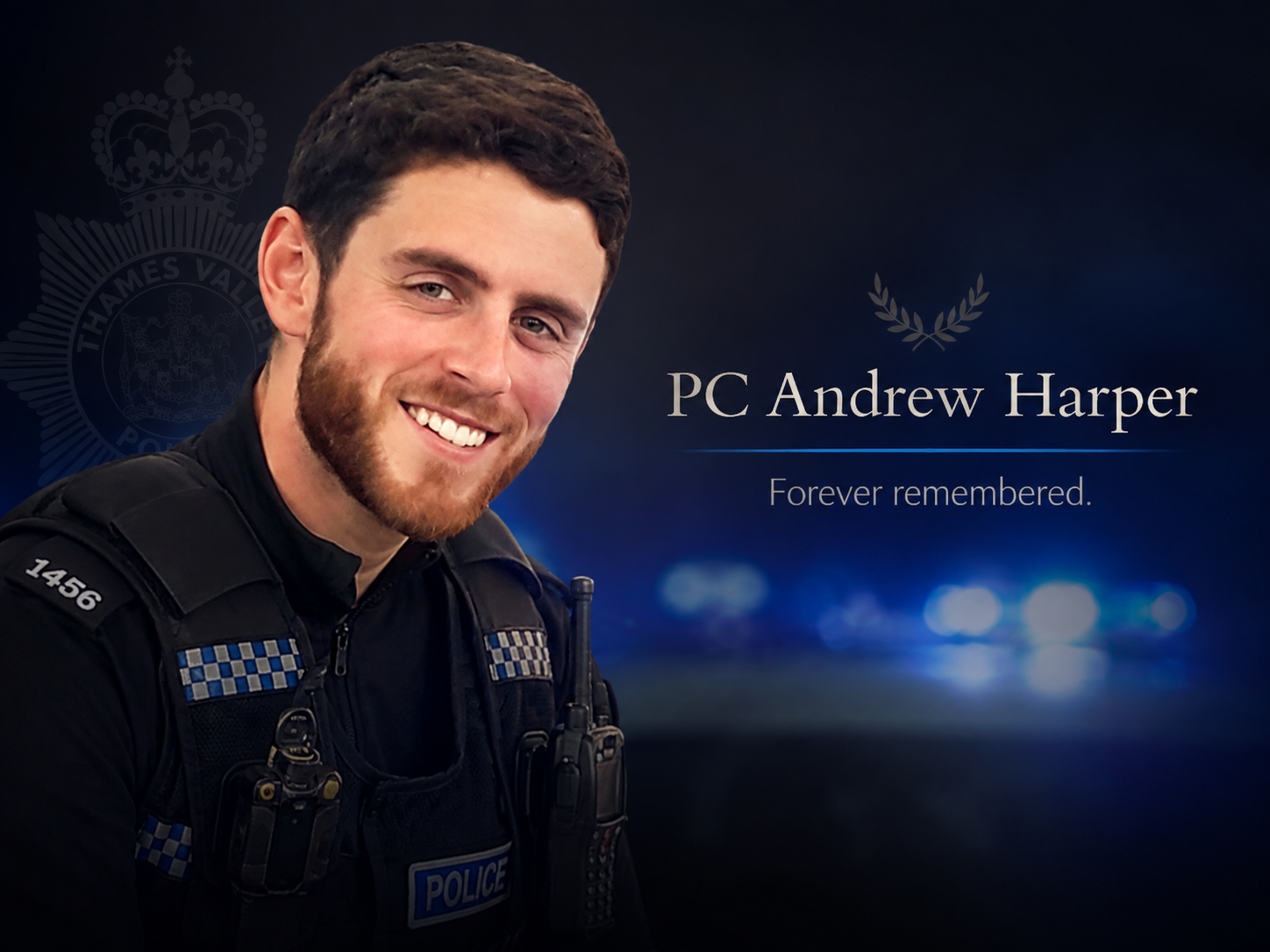
That question has once again returned to the forefront of British politics following controversy surrounding Prime Minister Andy Burnham’s review of early prisoner release policies. The Government has already announced a pause to the automatic early release of some offenders while ministers review sentencing arrangements amid growing concern from victims’ families, police organisations and members of the public. The debate intensified after it emerged that two of the men convicted over the death of PC Andrew Harper could become eligible for release under existing sentencing legislation, reopening painful questions about whether Britain’s justice system is placing sufficient weight upon crimes committed against those who serve in law enforcement.

A petition has been set up by Aileen O’Connor who is Chair of the Thames Valley Police Federation who has launched a petition to exclude people who kill or injure emergency workers from the early release scheme the petition now has over 450,000 signatories
A Death That Shocked Britain
The death of PC Andrew Harper remains one of the most distressing crimes committed against a serving police officer in modern British history. On the evening of 15 August 2019, the 28-year-old Thames Valley Police constable responded to reports of a stolen quad bike near Sulhamstead in Berkshire. During the incident he became caught in a tow rope attached to a fleeing vehicle carrying three young offenders. Helplessly entangled, Harper was dragged for well over a mile along narrow country roads at speeds approaching 60 miles per hour. The injuries inflicted upon him were catastrophic and medical staff later confirmed that little could have been done to save his life. The brutality of the incident horrified not only fellow officers but the nation as a whole, becoming a defining moment in the debate over sentencing for those responsible for killing emergency workers.
At trial, Henry Long, who drove the vehicle, received a substantially longer sentence after admitting manslaughter. His co-defendants, Jessie Cole and Albert Bowers, were also convicted of manslaughter and each received sentences of 13 years’ imprisonment. The jury had acquitted all three of murder, a verdict that left Harper’s widow, Lissie, deeply disappointed and prompted widespread calls for changes in the law. Although Harper’s Law was later introduced to strengthen sentences for those who kill emergency workers, it cannot be applied retrospectively, meaning the three offenders remain subject to the sentencing framework that existed at the time of the offence.
Growing Anger Across British Policing
The possibility that two of Harper’s killers could now become eligible for early release has provoked an unprecedented response from across the policing community. Senior police leaders, rank-and-file officers and staff associations have argued that allowing offenders responsible for such an appalling crime to leave prison early risks seriously undermining confidence in the criminal justice system. Thames Valley Police Chief Constable Jason Hogg has publicly voiced his opposition to any early release and has indicated that legal options are being explored. The Police Federation, representing thousands of serving officers throughout England and Wales, has also supported challenges to the proposal while backing public campaigns demanding that Harper’s killers serve the full sentences imposed by the courts.
Public petitions have attracted considerable support, with campaigners arguing that crimes involving the deliberate or reckless killing of police officers should occupy a unique position within British sentencing policy. For many serving officers, the issue extends far beyond one individual case. They believe it sends a message to every officer who patrols Britain’s streets that the risks they face daily may not be matched by equally robust consequences for those who inflict fatal violence upon them.
Harper’s Law
The public outcry following Andrew Harper’s death ultimately resulted in Parliament introducing what became known as Harper’s Law. The legislation, brought into force in 2022, created mandatory life sentences for offenders convicted of killing emergency workers while committing another criminal offence. It represented one of the most significant reforms of sentencing policy relating to attacks on police officers for many years and reflected widespread public support for stronger legal protection of emergency service personnel.
However, British law has long maintained the principle that criminal legislation should not operate retrospectively. While Harper’s Law now applies to future offenders, those convicted before its introduction cannot simply be resentenced under the newer provisions. That legal reality has become the centre of today’s controversy, with many victims’ families arguing that although the law cannot be changed retrospectively, early release provisions should nevertheless be reconsidered in cases involving the killing of police officers.
A Long History of Sacrifice
Andrew Harper joins a long and deeply moving roll of honour of police officers who have died protecting the public. Throughout British history, attacks upon police officers have often marked moments of profound national reflection, forcing society to examine the relationship between justice, punishment and public service.

Perhaps one of the most internationally significant cases was the murder of WPC Yvonne Fletcher in April 1984. Fletcher was policing a peaceful demonstration outside the Libyan People’s Bureau in St James’s Square, London, when shots were fired from inside the embassy building. She was struck by gunfire and later died from her injuries, prompting a major diplomatic crisis between Britain and Libya that lasted for decades. Her murder remains one of the defining attacks on British policing during the twentieth century.
Only a year later, Britain witnessed another appalling attack when PC Keith Blakelock was murdered during the Broadwater Farm riots in Tottenham. Attempting to protect firefighters responding to disturbances on the estate, Blakelock became separated from colleagues before being surrounded by a violent mob. He was repeatedly stabbed and hacked to death in one of the most shocking acts of mob violence ever directed against a British police officer. His murder fundamentally changed public perceptions of public disorder and remains one of the darkest chapters in the history of the Metropolitan Police.

In September 2012, Greater Manchester Police officers PC Nicola Hughes and PC Fiona Bone were lured into a carefully planned trap by violent criminal Dale Cregan. Responding to what appeared to be a routine burglary report, the two unarmed officers were ambushed. Cregan opened fire before detonating a hand grenade as the officers lay fatally wounded. The murders shocked the nation and the courts responded with the strongest punishment available under English law, imposing whole life orders ensuring Cregan will never be released from prison. The case demonstrated the exceptional seriousness with which the judiciary views calculated attacks upon police officers.
The dangers faced by officers stretch back much further. Detective Sergeant Sidney Miles was shot dead in Shepherd’s Bush in 1952 by 16 year old Christopher Craig while confronting armed robbers, becoming one of the earliest modern examples of a British police officer murdered by firearm while performing his duties. His death illustrated that organised violent crime has posed deadly risks to British policing for well over a century.
Deliberately Targeting the Police
Not every attack upon police officers has arisen during the commission of other crimes. Some offenders have deliberately singled out police for revenge or ideological reasons. One of the most notorious examples occurred in 2010 when Raoul Moat embarked upon a violent campaign following his release from prison. After murdering his former partner’s new boyfriend and seriously injuring his former girlfriend, Moat declared war on Northumbria Police. During the ensuing manhunt he shot PC David Rathband through the windscreen of his patrol car, leaving the officer permanently blind. Rathband later took his own life after struggling to come to terms with his injuries. Although Moat ultimately killed himself, the case reinforced concerns that police officers increasingly find themselves deliberately targeted simply because they represent the law.
Prison Reform Versus Public Confidence
The Government now finds itself attempting to balance two competing priorities. Britain’s prison population continues to place enormous pressure upon the penal system, with overcrowding creating operational challenges for prisons across England and Wales. Ministers argue that sensible reform of release arrangements may be necessary if the prison estate is to remain functional while longer-term solutions are developed.
Yet critics argue that public confidence in justice depends not only upon efficient prison management but also upon ensuring that punishment reflects the gravity of the offence. They question whether offenders responsible for the deaths of police officers, emergency workers or other victims of exceptionally grave violence should ever qualify for early release provisions intended for broader prison population management. Many believe that where someone has knowingly caused the death of a police officer performing their duty, the expectation should be that every day of the sentence imposed by the court is served.
A Defining Question for Britain
The debate surrounding PC Andrew Harper’s killers has become about far more than one tragic case. It has reopened wider questions about sentencing policy, victims’ rights and the unique position occupied by police officers within British society. Every day, thousands of officers leave their homes not knowing what dangers await them. They confront violent offenders, protect victims, maintain public order and often place themselves directly between danger and the communities they serve.
Whether the Government ultimately changes its early release policy may become one of the defining criminal justice decisions of Andy Burnham’s premiership. Whatever Parliament decides, the question facing Britain remains both simple and profound. How should a civilised society honour those who lose their lives protecting everyone else’s freedoms, and should those responsible for killing them ever expect the privilege of leaving prison early?


