
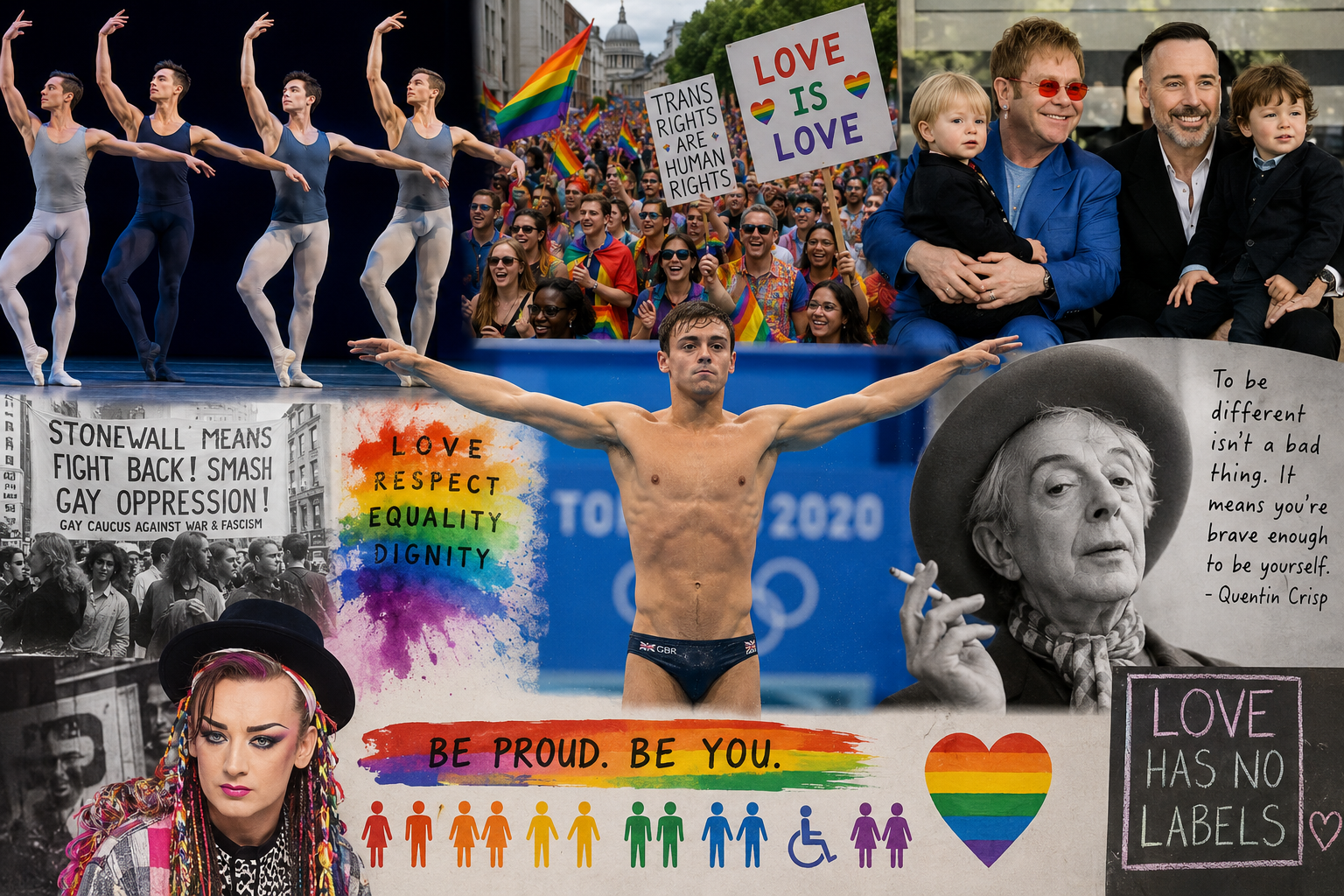
In every era, societies have drawn firm boundaries around manhood and womanhood. They have defined what men should be, what women should be, who people should love, and how they should express themselves. Yet lived experience, history, and careful study reveal a richer reality. The measure of a person lies not in a particular label, but in the courage to live truthfully.
One of the most influential figures in challenging simplistic assumptions about sexuality was Alfred Kinsey. His pioneering research in the mid-twentieth century illuminated a complexity that many had long suspected but few openly discussed. Kinsey’s work suggested that human sexuality often exists on a continuum rather than within rigid categories. While many people are exclusively heterosexual and others exclusively homosexual, a significant number experience varying degrees of attraction throughout their lives.
His findings helped normalise the idea that exploratory experiences, changing feelings, or intermediate orientations do not diminish the validity of any individual’s predominant path. Whether heterosexual, bisexual, homosexual, or somewhere in between, human beings rarely fit neatly into boxes created by society.
Long before Alfred Kinsey’s influential studies in the mid-20th century, the German physician and sexologist Magnus Hirschfeld conducted groundbreaking research in the early 1900s. Through his Institute for Sexual Science, he documented the natural spectrum of human sexuality and advocated for greater understanding and rights for sexual minorities. His work laid important foundations, demonstrating that same-sex attraction and other variations were part of normal human diversity.
By the 1960s and 1970s, a broader cultural shift—the sexual revolution—encouraged greater honesty. For the first time, many men felt able to speak openly about both their heterosexual and homosexual experiences without shame. Similarly, women became more open about their attractions to other women alongside long-accepted heterosexual desires. Life, for many, began to feel more authentic as conversations moved from secrecy to openness, fostering deeper self-understanding across orientations.
This growing spirit of honesty found powerful expression in the Stonewall Riots of 1969. When police raided the Stonewall Inn in New York City, it was the drag queens, transgender individuals, and effeminate men—who had endured repeated harassment—who famously pushed back. Accounts describe them declaring, in essence, “Back off—stop hassling us.” Their resistance became a catalyst for the modern LGBTQ+ rights movement, demonstrating that outward presentation does not equal weakness, but can embody remarkable courage and resolve.
Perhaps the greatest myth of all is the belief that labels reveal everything about a person.
For generations, stereotypes have been repeated until they acquired the appearance of truth. Gay men were often portrayed as weak or effeminate. Lesbians were frequently depicted as masculine. Heterosexual men were expected to be stoic providers, while heterosexual women were assigned equally restrictive expectations. Yet reality cheerfully ignores these assumptions every day.
Certain stories help illustrate this point. The frequently repeated anecdote surrounding the acclaimed British ballet dancer Wayne Sleep reminds us that grace and apparent effeminacy can coexist with extraordinary physical power, discipline, stamina and resilience. Elite ballet dancers endure punishing training regimes that demand strength, balance, athleticism and endurance that many would struggle to match.
Such examples challenge the notion that outward presentation defines inner character or capability. A ballet dancer may possess immense physical strength. A rugby player may be gay. A drag performer may display remarkable courage in the face of hostility. A heterosexual father may be nurturing and emotionally open. A lesbian woman may be feminine. Human beings have always been more complex than the stereotypes assigned to them.
History offers even more powerful examples. During the Stonewall Riots of 1969, drag queens, transgender individuals, effeminate men and countless others stood against harassment, discrimination and violence. Faced with oppression, they demonstrated extraordinary bravery. Their actions became a catalyst for the modern LGBT rights movement and offered a lasting reminder that courage is not measured by appearance, mannerisms or conformity to traditional ideas of masculinity and femininity.
Popular culture has continued exploring these themes. The musical Kinky Boots presents them with warmth, humour and empathy through the character of Lola, a talented drag performer whose confidence masks years of judgement and rejection. Lola challenges narrow definitions of masculinity and demonstrates that authenticity often requires far greater strength than conformity. The story celebrates self-expression while exposing the damage caused by rigid social expectations.
The late Quentin Crisp understood these tensions perhaps better than most. Living openly as an effeminate gay man during an era when such visibility attracted ridicule and hostility, he became an unlikely philosopher of individuality. As he grew older, Crisp increasingly argued that people spend too much time attempting to conform and not enough time becoming themselves. His message remains remarkably modern. Identity matters, but individuality matters more.
Today, many younger people seem less interested in rigid categories than previous generations. Some embrace labels because they provide community, understanding and belonging. Others reject labels entirely, seeing them as unnecessary limitations on the complexity of human experience. Neither approach is inherently superior. A label can be a source of comfort for one person and an unnecessary constraint for another.
What matters is that individuals are free to choose for themselves.
These narratives, alongside Kinsey’s continuum, encourage a more considered understanding of human diversity. Whether someone identifies as heterosexual and finds fulfilment in traditional relationships; bisexual and navigates attractions to more than one sex with honesty; gay and lives openly without concealment; lesbian and embraces her identity with pride; or chooses no label at all, the common foundation is integrity.
Living truthfully, forming respectful relationships and rejecting coercion, shame or pretence honours both oneself and others.
It is also important to recognise that heterosexual relationships remain the foundation upon which much of human society has been built. Through love, partnership, family and commitment, billions of heterosexual men and women have contributed to the continuity of communities, cultures and generations. Their experiences are no less valuable or meaningful than those of any minority group. Equality is not achieved by diminishing one group in favour of another. It is achieved by extending equal dignity and respect to all.
In a world where some people still face discrimination, hostility or even persecution because of who they are, authenticity carries profound importance. Pride, in its healthiest form, is not superiority. It is the quiet confidence that comes from being oneself while extending the same freedom and dignity to others.
Perhaps the future lies neither in abandoning identity nor becoming consumed by it. Rather, it lies in recognising that sexuality is only one chapter in the story of a human life. We are partners, parents, children, friends, neighbours, colleagues, artists, dreamers and citizens before we are categories.
External traits, mannerisms and labels ultimately matter less than the substance of a person’s character. Beyond every label stands a human being deserving of respect, understanding and the freedom to live honestly.
And perhaps that is the simplest truth of all: love, in all its forms, is not weakened by diversity. It is strengthened by our willingness to recognise the humanity in one another.


