
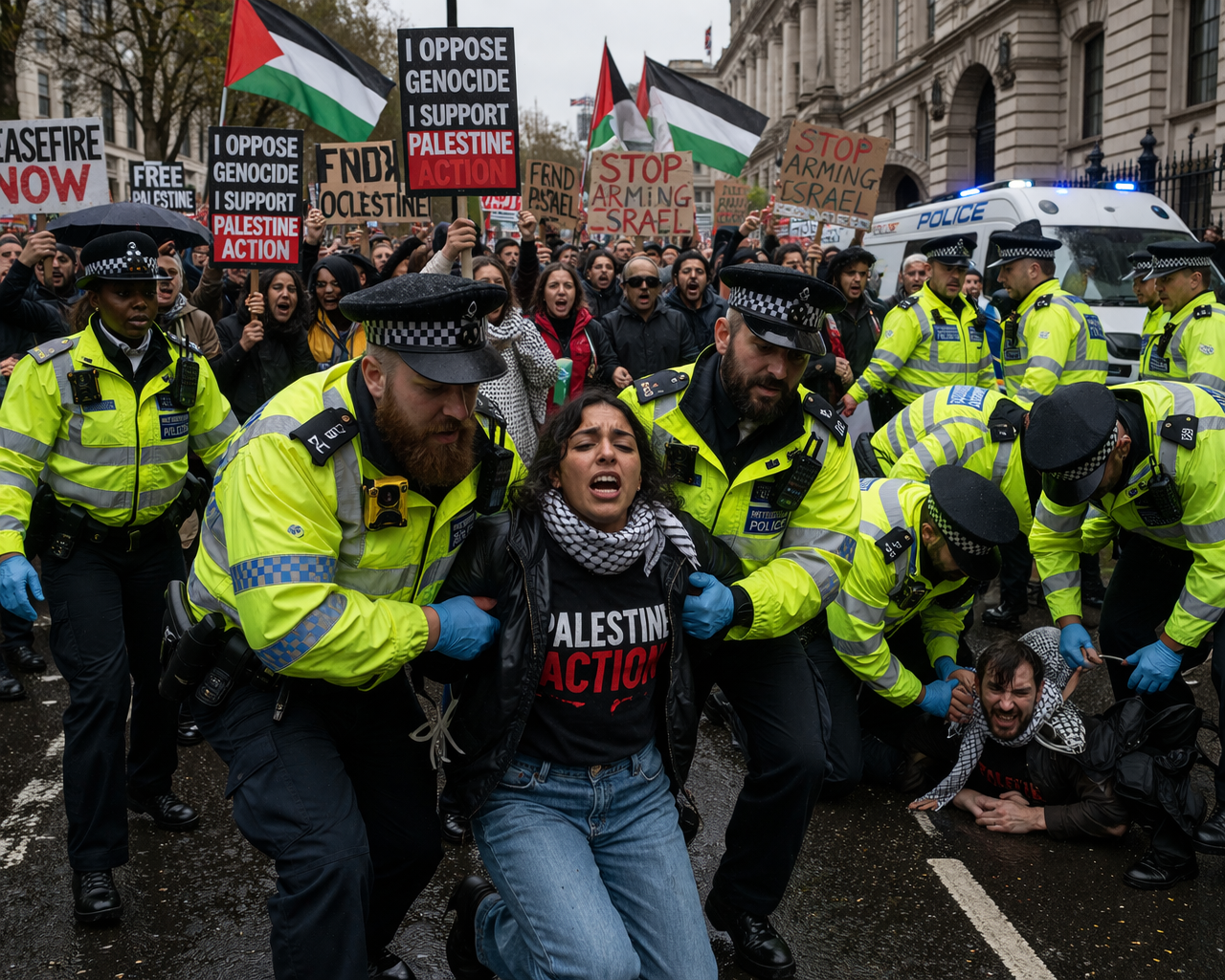
The Metropolitan Police has announced it will once again arrest individuals suspected of showing support for Palestine Action, reversing its earlier stance following a High Court ruling that deemed the group’s ban unlawful.
In the immediate aftermath of that decision, officers had paused arrests under terrorism legislation, opting instead to collect evidence for possible prosecutions at a later stage. However, the force now says that position was only temporary and has since been reconsidered.
Deputy Assistant Commissioner James Harman said the law remains in force until the government’s appeal is heard, meaning support for Palestine Action is still considered a criminal offence. He stressed that policing must reflect the law as it currently stands, not what it may become in the future, adding that enforcement would continue “without fear or favour”.
The appeal, brought by Home Secretary Shabana Mahmood, is scheduled to be heard at the Court of Appeal on 28 and 29 April. Until then, the ban on the group will remain in place.
Police say their initial response to the High Court ruling was made under pressure, as demonstrations broke out outside the court in support of Palestine Action. At the time, it was unclear whether the government would be granted permission to appeal or whether the ban would be suspended during that process.
Following further legal consideration, the Met has now confirmed that arrests are likely to resume where offences are suspected under existing legislation.
The shift in approach comes amid growing controversy surrounding protests linked to the group.

Campaign organisation Defend Our Juries, which has been involved in demonstrations where more than 2,500 people have reportedly been arrested, recently wrote to Met Commissioner Sir Mark Rowley after a woman was detained in London on 15 March.
She had been holding a sign expressing opposition to genocide while voicing support for Palestine Action.
The group has also indicated plans for a large-scale vigil on 11 April, potentially setting the stage for further confrontation with police.
Meanwhile, separate concerns have emerged over the treatment of protesters who went on hunger strike while in custody. Several individuals are now seeking legal advice over alleged medical failings during their detention.
At a press conference in London, Heba Muraisi said she endured 73 days without food but was not provided electrolytes, receiving vitamins only after a month. Another protester, Qesser Zuhrah, claimed she was denied electrolytes for 20 days and that they were withdrawn entirely after she collapsed more than six weeks into her strike.
Kamran Ahmed, who fasted for 66 days, said he continues to suffer chest pain and breathing difficulties. Others involved have reported neurological problems.
Ahmed said the experience had left lasting psychological scars, describing the ordeal as deeply traumatic. He also alleged that those on hunger strike were treated in a degrading manner and that adequate medical care was not consistently provided.
The allegations are likely to intensify scrutiny of both policing tactics and the handling of detainees, as legal challenges loom and tensions around the issue continue to escalate.


