
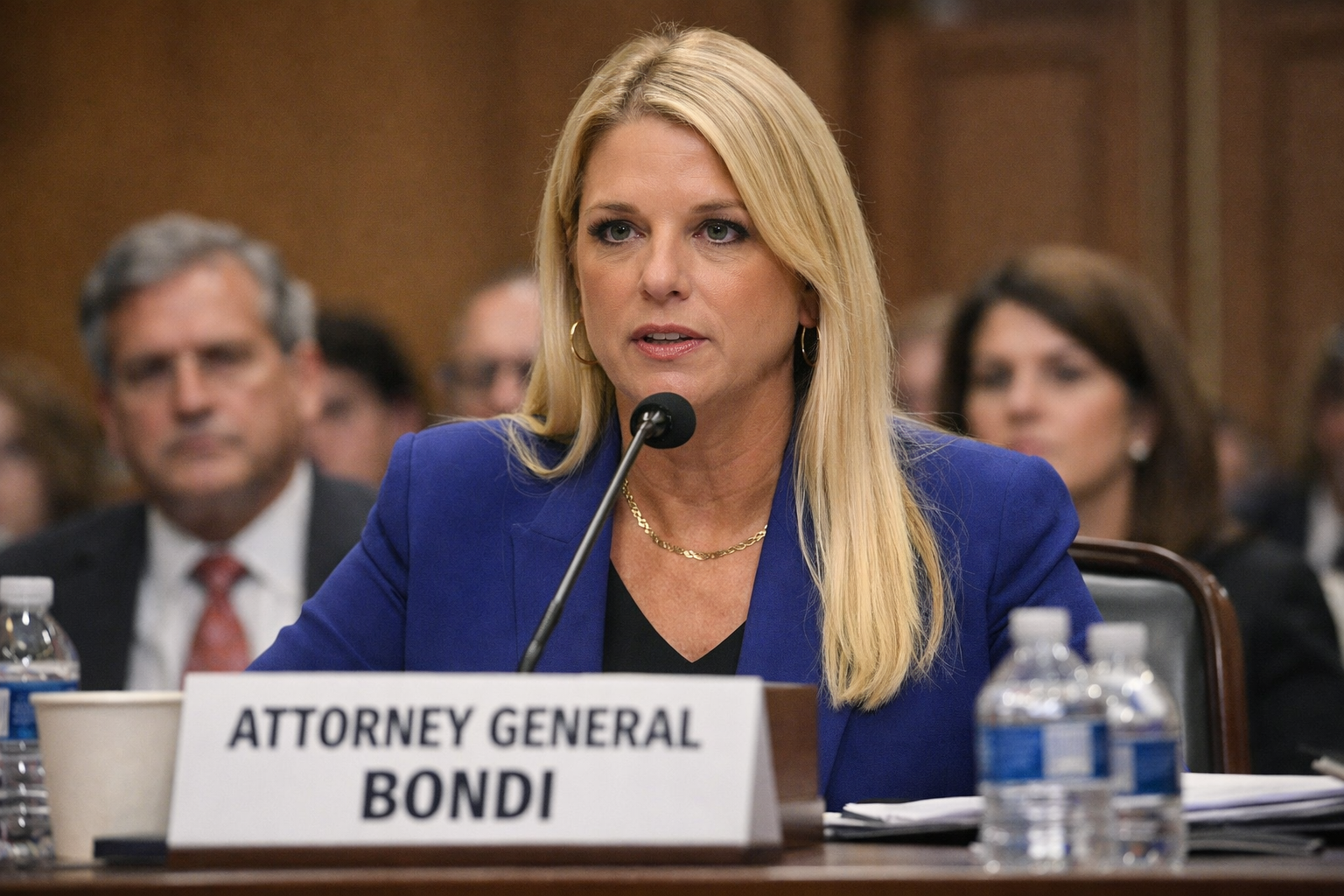
“Brawl on the Hill”: Attorney General Bondi Snubs Bondi’s Epstein Hearing Becomes Political Spectacle, Survivors Left in Shadow as Congressional Committee Hearing turns into Mayhem
WASHINGTON DC, Feb. 11, 2026 — What was widely hoped to be a solemn congressional examination into the Department of Justice’s handling of the Jeffrey Epstein scandal instead spiralled into a fractious display of partisan combat, leaving survivors of sexual abuse feeling sidelined and unheard.
Witnesses, lawmakers, and advocates alike are describing Wednesday’s House Judiciary Committee hearing as less a respectful reckoning than a raw political mud-slinging contest.
Attorney General Pam Bondi appeared before Congress for more than five hours, tasked with answering sharp questions about the Justice Department’s release — and mishandling — of millions of pages of files connected to Epstein’s criminal enterprise.
Survivors were seated in the public gallery, their pain palpable as lawmakers pressed for accountability over documents that mistakenly exposed victims’ identities and failed to fully redact powerful individuals potentially implicated in abuse.
But what unfolded was not the respectful hearing many had hoped for. Bondi offered expressions of sympathy for victims, calling Epstein a “monster,” yet consistently refused direct apologies or to fully engage with survivors’ concerns when pressed.
She dismissed repeated requests from Democrats for an unambiguous acknowledgment of the harm caused by the Justice Department’s disclosure errors, instead labelling such demands as “theatrics” and political stunts.
The tone of the hearing quickly deteriorated into heated exchanges. As Democratic lawmakers sought to spotlight the DOJ’s failures, Bondi repeatedly shifted the discussion, defending her department’s actions, pivoting to broader law-and-order topics, and launching pointed personal remarks at her questioners.
At times she accused members of the panel of ridiculing sacred institutions and deployed sharp insults rather than substantive answers.
Rep. Pramila Jayapal (D-WA), who had urged Bondi to apologize directly to the Epstein survivors present, was rebuffed; Bondi stated she would “not get in the gutter” with her critics.
Representatives complained that survivors raised their hands when asked if they had tried — without success — to engage the DOJ directly, a moment that underscored the deep distrust between victims and the Justice Department.
Rather than centering survivors’ experiences, the hearing drifted into broader political territory. Bondi devoted significant attention to defending the American economy and crime statistics, often anchoring her answers in praise for the administration she serves.
Critics on both sides of the aisle argued that such diversions betrayed the focus of the hearing and further alienated survivors whose names, privacy, and dignity were at stake in the transcript releases.
The result was a hearing that many observers now describe as a missed opportunity — a moment that might have offered closure, transparency, and justice instead devolved into political theatrics and partisan shouting.
Survivors of Epstein’s abuse, who had hoped to witness accountability from the nation’s chief law enforcement officer, were left feeling ignored even as politicians jousted across party lines.
As debate continues about the government’s responsibility to protect those harmed by trafficking and abuse, Wednesday’s hearing now stands as a stark reminder: in America’s capital, political contests can sometimes eclipse the very people they are meant to serve.


