
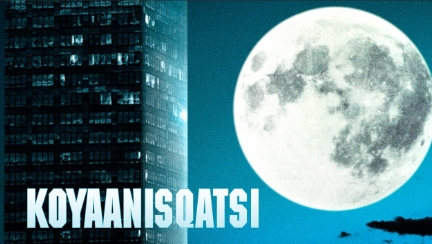
A desert wind blows, a city hums, and the pulse of glass and steel collides with the heartbeat of the earth. This is the world Koyaanisqatsi invites us to stare at — unfiltered and unafraid
Koyaanisqatsi trusts the viewer in a way most cinema never dares. It hands you the world — deserts breathing under rolling clouds, cities pulsing like circuitry — and lets you decide what it all means. The natural world moves with an ancient patience, as if time itself were stretching its limbs. Then the tempo shifts. Machines whir. People blur into patterns. Cars flow like liquid metal. Skyscrapers flicker like data streams. It’s beautiful, unsettling, and strangely intimate, as though you’re watching humanity from a vantage point just outside yourself.
Koyaanisqatsi[b] is a 1982 American non-narrative documentary film directed and produced by Godfrey Reggio, featuring music by Philip Glass and cinematography by Ron Fricke. Described as an “essay in images and sound on the state of American civilization”
Directed by Godfrey Reggio and produced by Francis Ford Coppola, Koyaanisqatsi is a cinematic experience that defies conventional storytelling, offering a mesmerising, non-narrative meditation on humanity’s relationship with nature and technology. Released in 1982, this experimental documentary remains a landmark in visual and auditory storytelling, captivating audiences with its hypnotic imagery and Philip Glass’s iconic score.
The title, Koyaanisqatsi, comes from a Hopi word meaning “life out of balance”, and the film embodies this concept through a series of stunning vignettes. Without dialogue or characters, it juxtaposes pristine natural landscapes with the frenetic pace of urban life. Slow-motion shots of clouds rolling over desert cliffs give way to time-lapse sequences of bustling city streets, assembly lines, and glowing skyscrapers. Cinematographer Ron Fricke’s work is breathtaking, capturing the awe-inspiring beauty of untouched canyons and the alienating sprawl of modern civilisation with equal clarity.

Philip Glass’s minimalist score is the film’s heartbeat, weaving repetitive, pulsating rhythms that amplify the emotional weight of each scene. The music shifts from serene to chaotic, mirroring the film’s exploration of harmony and discord. It’s impossible to overstate how integral Glass’s composition is to the experience—Koyaanisqatsi is as much an aural journey as a visual one.
Reggio’s direction, with Coppola’s backing, takes a bold stance: there’s no hand-holding exposition. The film trusts its audience to interpret its message, which feels both timeless and urgent. It questions whether humanity’s technological progress has tipped the scales toward chaos, a theme that resonates even more in 2025 as we grapple with climate change and digital overload. Yet, it’s not preachy; the absence of words allows viewers to project their own reflections onto the imagery.
That said, Koyaanisqatsi isn’t for everyone. Its 86-minute runtime, devoid of plot or characters, can feel demanding or repetitive for those accustomed to traditional films. Some may find its message ambiguous or its pace uneven, particularly in the slower natural sequences. But for those willing to surrender to its rhythm, it’s a transformative experience that lingers long after the credits roll.
In a world saturated with overstuffed blockbusters, Koyaanisqatsi stands out as a bold, wordless poem—a reminder of cinema’s power to provoke thought and stir the soul. It’s not just a film; it’s a mirror reflecting our own existence, asking us to consider what “balance” truly means.


