By Entertainment Correspondent
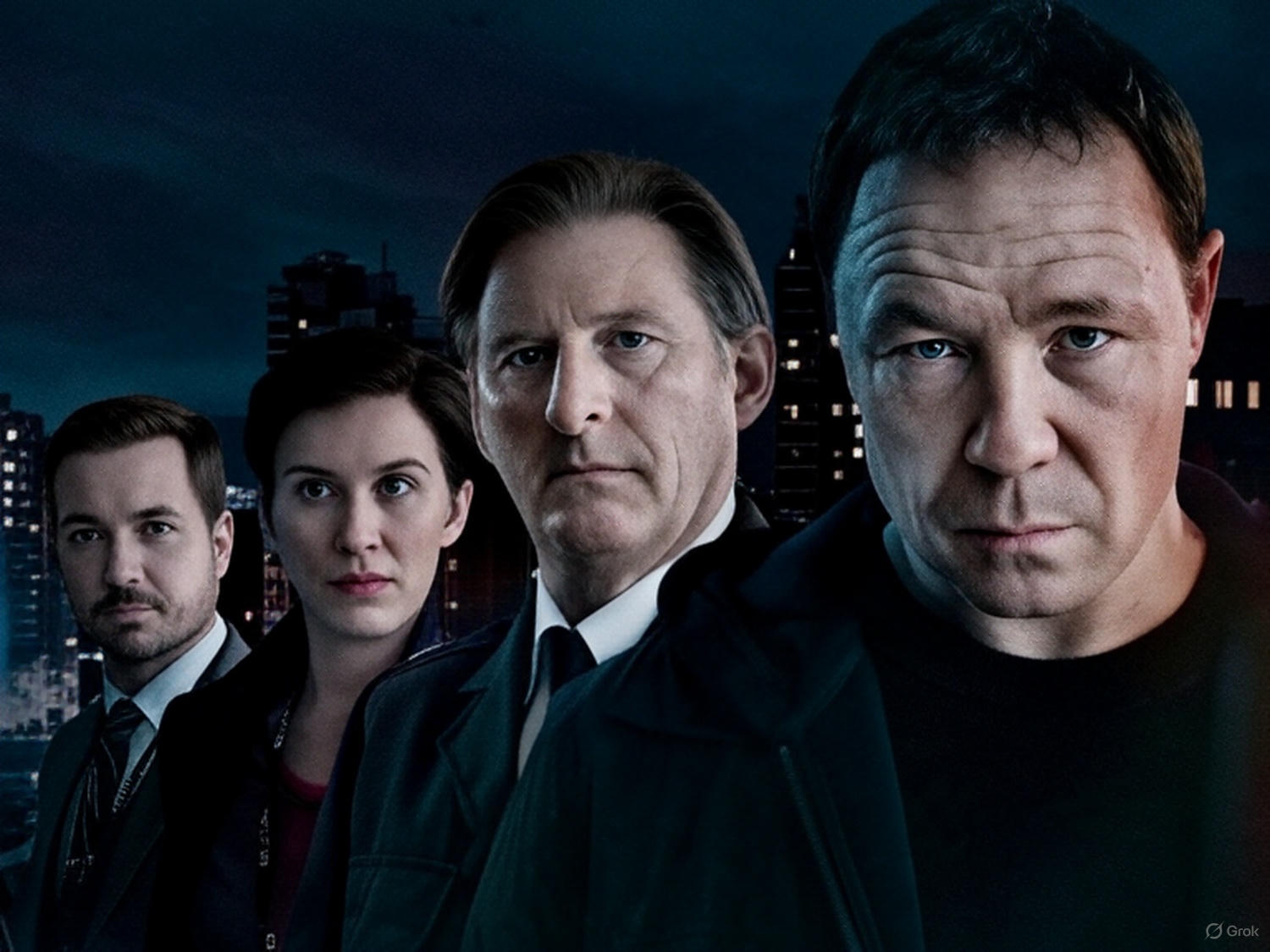
In an era shaped by political mistrust and post-austerity cynicism, Line of Duty arrived like a thunderclap — a crime drama that held a mirror up to Britain’s own institutions. First airing on BBC Two in 2012 before moving to BBC One due to overwhelming demand, Jed Mercurio’s masterful creation became more than just a television series; it was a cultural reckoning with power, corruption, and the uneasy grey zones of morality.
At the centre of this storm stood AC-12 — the anti-corruption unit whose mission was as noble as it was fraught: to root out “bent coppers” within the force. The phrase, now immortalised by Superintendent Ted Hastings, became a national mantra. Adrian Dunbar’s portrayal of Hastings — the upright, occasionally pompous but deeply principled commander — gave the show its moral compass. His famous catchphrases, “Mother of God” and “We’re interested in one thing and one thing only: bent coppers,” delivered with Northern Irish gravitas, are now part of British pop folklore.

Flanking him were Martin Compston’s DS Steve Arnott — driven, upright, yet forever wrestling with the compromises of the job — and Vicky McClure’s DI Kate Fleming, whose calm intellect and fearless integrity provided the soul of the team. Together, the trio became the heartbeat of the series, exposing corruption in a police world that too often mirrors the political and corporate spheres beyond it.
Mercurio’s writing struck a raw nerve with post-financial-crisis Britain: bureaucratic red tape, crumbling trust in authority, and the unending dance between justice and compromise. Each series was built around a self-contained investigation, yet woven with threads of a larger conspiracy — the shadowy network led by the enigmatic “H.”
Guest stars turned in some of the finest performances of their careers: Lennie James as the conflicted DCI Tony Gates; Keeley Hawes as the extraordinary DI Lindsay Denton, whose layered portrayal blurred the lines between victim and villain; Thandiwe Newton’s calculating DCI Roz Huntley; and Stephen Graham’s electrifying John Corbett, whose volatility hid deep tragedy.

By the time the final episode aired, Line of Duty had drawn record-breaking audiences — the BBC’s highest in years — and sparked endless debate across living rooms and social media feeds. Even its polarising finale underscored its power: it wasn’t simply a “whodunnit” but a study of institutional decay, and how ordinary people navigate truth in a system built on half-truths.
For Britain, reeling from scandals and shaken faith in authority, Line of Duty was more than entertainment — it was catharsis. Its legacy lies not just in the millions who watched, but in how it captured the nation’s hunger for accountability, one interrogation at a time.
And as Hastings might remind us, eyes blazing across the glass table:
“There’s only one thing I’m interested in and that is catching bent coppers.”