
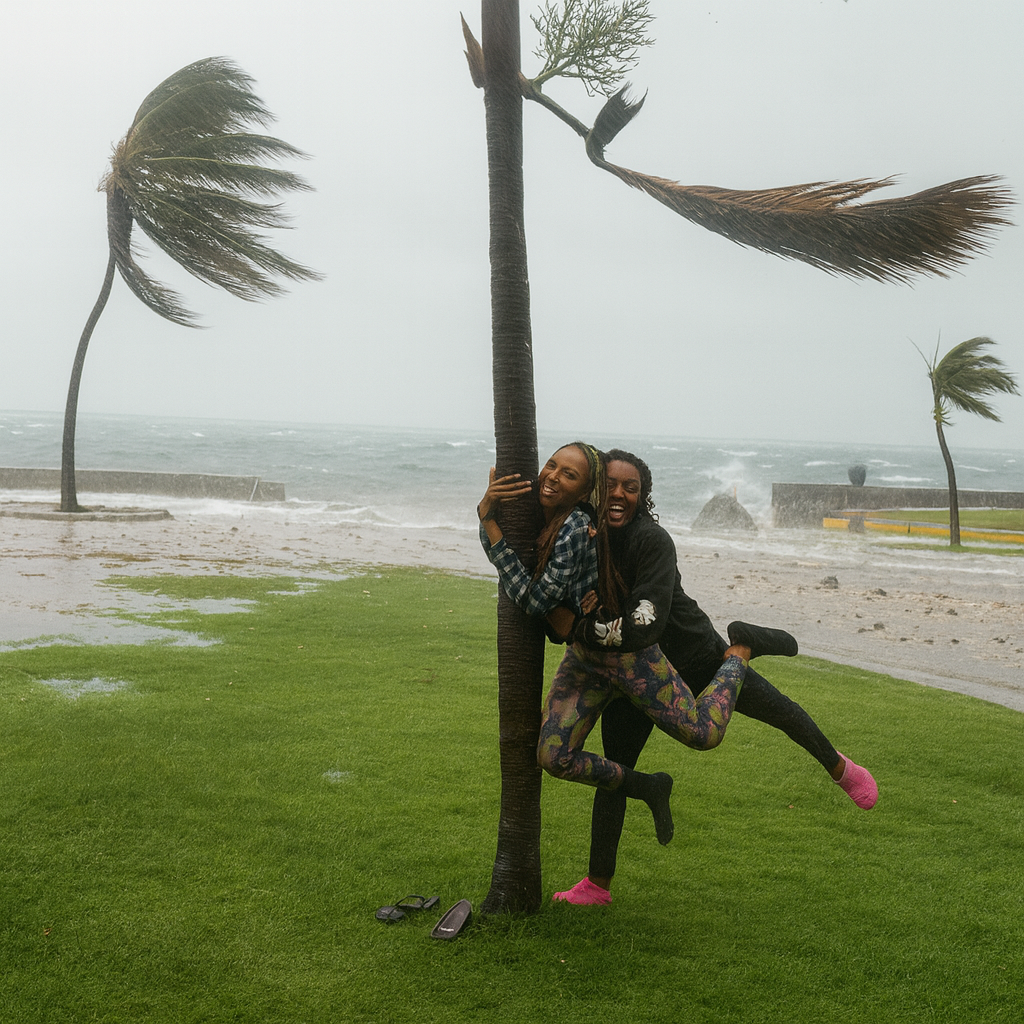
Hurricane Melissa leaves widespread devastation, but hope rises from the rubble
Kingston, Jamaica – As dawn broke over Jamaica on Monday morning, the winds had finally stilled. Hurricane Melissa — a monstrous Category 5 storm — had passed. But in her wake lay a battered island: uprooted trees, flattened homes, flooded roads, and the hollowed-out shell of communities that had stood tall just days before.
In the capital, Kingston, electricity remained out across many districts. Entire stretches of coastal road in St. Mary and Portland had vanished beneath landslides. In Clarendon and Manchester, roofs were torn from schools and churches. Jamaica’s Meteorological Service recorded winds reaching up to 180 mph, and preliminary government reports suggest damages in excess of $2 billion USD.
Collin Henry McDonald, a 64-year-old retiree in Portland Cottage, speaking of the impact of the hurricane, said, “It’s like a roaring lion. It’s mad. Really mad.”

Another resident spoke of the preparations Jamaicans made in the knowledge of Hurricane Melissa. Natassia Wright, a Kingston resident, told reporters, “Jamaicans had done their best to prepare for Melissa, including by tying down any objects that could be turned into ‘missiles’.”
Human Stories of Strength Amid the Storm
Even as the last gusts of wind blew out to sea, communities were already rallying. Neighbours began digging each other out. Makeshift soup kitchens sprang up in Montego Bay. At a community centre in Trench Town, teenagers handed out bottled water and tarpaulin.
Churches opened their doors as shelters. Local musicians organised free benefit concerts on social media live streams to raise funds for displaced families.
Government Response and Rebuilding Plan
Prime Minister Andrew Holness addressed the nation late Monday, announcing a coordinated national rebuilding plan over the coming weeks. He said he is calling on Jamaicans to continue the work of nation-building with unity, innovation, and pride.

“We have faced the fury of the storm. Now we rise. The government will be deploying emergency grants, housing support, and reconstruction crews in every parish,” he said.
Temporary housing units are expected to arrive by sea within the week. Emergency medical teams have been deployed to rural clinics still without power. A special recovery task force has been established, with coordination from the National Works Agency and support from the Jamaican Defence Force engineers.
Diaspora and International Aid Steps In
Support is also pouring in from abroad. The UK government pledged £10 million in immediate aid, and the EU announced emergency relief supplies via its humanitarian airbridge. UNICEF, the Red Cross, and Doctors Without Borders have already begun flying in supplies and setting up temporary medical stations.
Perhaps most touchingly, members of the Jamaican diaspora — particularly in London, Birmingham, and Manchester — are playing a critical role. Families across the UK have been wiring money home at record levels through remittance services.
“It’s just natural. My mum is in Clarendon — no roof, no power. Of course we send what we can,” said Desrene Forrester, a care worker in Croydon who has launched a GoFundMe to support her village.
The Jamaican High Commission in London has opened a dedicated hurricane fund, with thousands already responding. Community centres across the UK have become collection points for clothes, dry goods, and water purification tablets.
Resilience Written in the Sand
As the waters recede and the dust settles, what remains is not only destruction — but determination. Jamaica has faced hurricanes before. Melissa may have shaken the island, but it has not broken its spirit.
“This is who we are,” said poet and survivor Michael Linton, whose hillside home was washed away in Mandeville. “We bend, but we don’t break. And when the sun comes back, we start again.”
And in the stillness after the storm, under the golden light of a Caribbean sunset, it is clear: Jamaica will rebuild — with grace, grit, and unity.


