
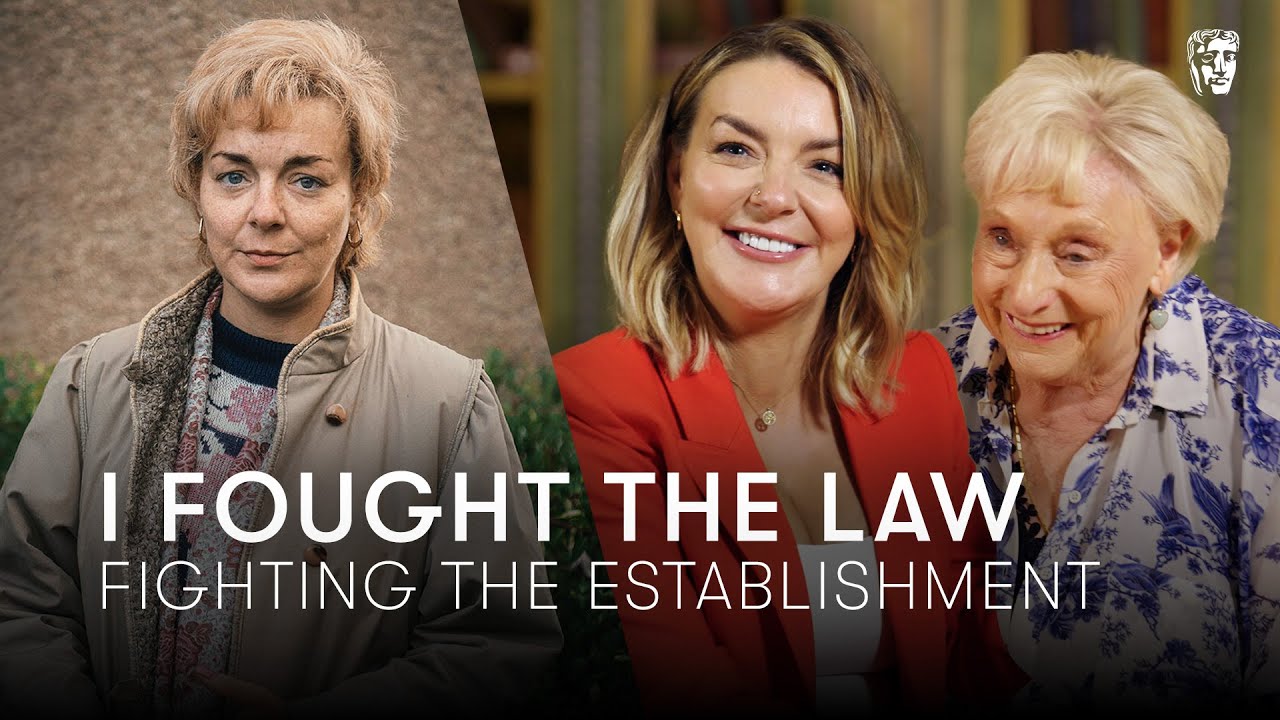
Sheridan Smith is outstanding in ITV’s “I Fought the Law”. The harrowing true-crime drama revisits the Julie Hogg murder. It explores the failures of Britain’s old double jeopardy law. The story highlights one mother’s fight for justice.
From its opening scenes, ITV’s I Fought the Law pulls you into a despair so raw. It’s hollowing. The themes of grief, frustration, and injustice are evident. Sheridan Smith portrays Ann Ming (Julie Hogg’s mother). She anchors the series with a performance that is fierce. Her portrayal is also heartbreakingly vulnerable. You believe every tear, every word she swallows and every time she stands up to be heard. She doesn’t play grief like a costume; she lives it.
Over four parts, the show stretches the horror of Julie’s disappearance long enough to weigh you down. It then intercepts with the grinding bureaucracy, the archaic law, the public silence, and Ann’s relentless campaign. The courtroom dramas are tense. However, it’s the quieter moments that sting the hardest. Ann sits alone, while her husband Charlie (played with restrained pain by Daniel York Loh) tries to hold her up. Community reaction, the waiting, and the turning over and over of evidence add to the tension.
Visually, it’s modest but effective. The design isn’t about glitz; it’s worn-out furnishings, grey skies, hushed conversations. The choices make you feel the decades passing. The legal reform is not just an abstract policy change. It is the slow-burning fight of a mother. She refuses to accept “that’s just how it is.”

There are a couple of scenes that lean into melodrama. However, the source material is so heart wrenching. As a result, the show rarely steps over the line. It shows the police’s missteps. It reveals the toll on Julie’s little boy Kevin. The way Ann is dismissed by officials is evident. It portrays the sense of being trapped by a law centuries out of date. The legal history, particularly the double jeopardy rule, is not treated as dry trivia. The writers highlight its human consequences. They show what happens when someone gets away with murder because of a law nobody has questioned for ages.
By the end, when justice is finally served (in part), it’s cathartic but bittersweet. The show doesn’t promise closure, and it knows it can’t restore what was lost. Nevertheless, I Fought the Law shows how one mother’s refusal to give up can bend the arc of legal history.
On balance, I’d give it 4 out of 5 stars. Powerful, painful, beautifully acted. A bit of heaviness in tone (unsurprising given the subject), but that’s what this story deserves.

The Real Case: Julie Hogg, Billy Dunlop & the Double Jeopardy Law
To understand the drama, you must recognise how injustice was baked into the system. Ann Ming’s campaign helped change this unjust law.
Here’s how it played out in real life:
- Julie Hogg was 22, a young mother, living in Billingham, County Durham. On 16 November 1989, she was murdered — strangled and sexually assaulted — by her neighbour William “Billy” Dunlop.
- After her disappearance, police treated it as a missing person case. Julie’s home was searched, but nothing obvious was found. Eighty days after she vanished, Ann Ming, her mother, discovered her body behind a bath panel in her own house. The smell led to removing a bath panel; she was found naked, wrapped in a blanket.
- The forensics were strong: DNA on the blanket, fibres, and Julie’s house keys found under floorboards in Dunlop’s home.
- Dunlop was tried twice in 1991. The first trial (May) ended with a jury that could not reach a verdict. The second trial (October) also ended with a hung jury. He was thus acquitted and, under the law at the time, could not be retried. That law is the double jeopardy principle — preventing someone from being tried again for the same offence after acquittal.
- Later, while in prison for another serious offence, Dunlop admittedly boasted about Julie’s murder. He also gave a confession—letters, talks, etc. But the law still prevented retrial unless there was new legal ground. He was, however, convicted of perjury for lying during the trials and given extra years.
- Ann Ming’s campaign: she fought for many years. Approached MPs, worked with the Law Commission, fought in parliament, and argued the law was unjust. Eventually, the law was changed via the Criminal Justice Act 2003. This change allows retrial in serious cases if new and compelling evidence emerges after acquittal. Julie Hogg’s case was among the first to benefit.
- In 2006, Billy Dunlop was convicted of Julie’s murder and given a life sentence, with a minimum term (tariff) of 17 years.
- The aftermath remains painful. Julie’s son Kevin grew up without his mother. Ann Ming, now elderly, is still very much involved in refusing Dunlop’s move to open facilities or parole. She argues he remains dangerous. Ann believes that victims’ families deserve to be listened to.

Where the Drama Matches/Diverges
- I Fought the Law is based on Ann Ming’s book For the Love of Julie. Ming was consulted during production. That gives it a strong claim to authenticity in many of the emotional beats and timelines.
- Some minor simplifying or compression of events is inevitable. Legal procedural detail, passage of time, and small personal moments might be dramatised more for emotional clarity than strict chronology. But by most reviews, the show “strays far less than many similar stories” from the truth.
- The portrayal of the double jeopardy law is handled accurately. It shows how the law blocked justice even when Dunlop openly boasted.
Thoughts & Takeaways
- Legal reform matters: this was never just about one sad case. What Ann Ming did changed the law, which potentially changed many lives after. It shows the frustration of knowing something is wrong. The law doesn’t see it yet. It illustrates how long it takes to move an entire system.
- The weight of evidence is not always enough. A verdict demands more: confidence, alignment of detail. The drama presses this home. Forensic evidence can be strong. However, if investigations are weak or delayed, the case can slip through. This happens despite the truth being more or less known.
- For viewers: this drama stresses that justice can be slow, unjust, and painful. It emphasises that grieving people often don’t come with emotional breaks. It also highlights the courage required to insist on being heard. People push back against institutions that are inert or defensive rather than concerned with actual truth.


