
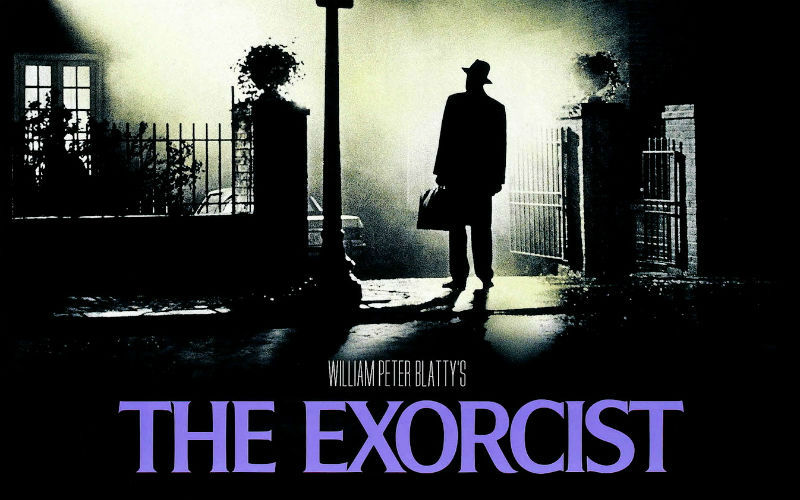
Review by Ciceros.org
When The Exorcist first hit cinema screens in 1973, audiences weren’t prepared. They fainted. Vomited. Some reportedly fled the theatres in panic. Others queued around the block for hours just to experience the hysteria themselves.
Nearly half a century later, William Friedkin’s unholy alliance with author-screenwriter William Peter Blatty still casts a long and chilling shadow across the horror genre. This wasn’t just a film — it was a cultural exorcism.
Based on Blatty’s 1971 novel (itself inspired by a 1949 case of alleged demonic possession), The Exorcist tells the story of Regan MacNeil, a 12-year-old girl living with her mother in Georgetown who begins to exhibit increasingly disturbing behaviour. Not tantrums or mood swings — but something else. Something other. As doctors fail to diagnose her, and as her voice deepens and her body contorts unnaturally, two priests are summoned to do battle with a darkness that science can’t comprehend.
Friedkin directs with a documentarian’s eye, grounding the supernatural in stark realism. That’s part of what makes The Exorcist so terrifying. He never treats the subject with irony or cheap thrills. The cold hospital scenes are just as unsettling as the bed-bound terrors. It’s clinical. Measured. Believable.
Blatty’s script walks the tightrope between theological debate and primal horror. Questions of faith, guilt, and spiritual warfare simmer beneath the pea soup and levitation. It’s a story about evil, yes, but also about the fragility of belief and the cost of redemption.
Aspects of Blatty’s novel were inspired by the 1949 exorcism performed by Jesuit priest William S. Bowdern
Ellen Burstyn is phenomenal as Regan’s mother, torn between rationality and terror. Jason Miller brings a weary humanity to Father Karras, the Jesuit priest haunted by personal doubt and the slow disintegration of his faith. And then there’s Max von Sydow, delivering quiet authority as Father Merrin — the seasoned exorcist who knows that when the devil comes knocking, it rarely leaves quietly.
But the true axis of the film is Linda Blair. Her performance as Regan — or rather, Regan possessed — is extraordinary. Twisted, tormented, profane. That sweet face becoming a canvas for some of the most grotesque effects in cinema history. Blair was only a child, and yet she became the vessel through which The Exorcist lodged itself into our nightmares forever.

And what nightmares they are. From the rotating head to the spider-walk, from subliminal flashes of a white-faced demon to the ghastly utterances of a voice that sounds less human than abyssal — this is horror at its most visceral. The sound design alone is a masterclass in unease.
The Exorcist didn’t just push boundaries — it bulldozed them. It was the first horror film to be nominated for Best Picture at the Oscars. It’s been banned, protested, and endlessly parodied — but never forgotten. It’s the cinematic equivalent of staring into the abyss and hearing it whisper your name.
Even now, in an age of CGI ghosts and jump-scare franchises, The Exorcist remains unchallenged in its ability to crawl under your skin and gnaw on your soul. It is not just a film. It is an experience.
Verdict:
A chilling meditation on faith, evil, and the limits of the human mind. The Exorcist is not merely the scariest film of all time — it is, perhaps, the most important horror film ever made. Enter at your own risk.
The Film is available on @VirginMedia @Sky @Prime


