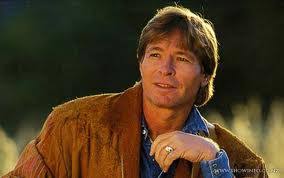
John Denver (born Henry John Deutschendorf Jr., December 31, 1943 – October 12, 1997) was an American singer-songwriter, actor, and activist whose wholesome, nature-celebrating folk and country music made him one of the best-selling artists of the 1970s.
His acoustic style, optimistic lyrics about love, the outdoors, and simple joys, and his warm tenor voice earned him massive popularity. He sold over 33 million records in the U.S. alone, with 12 gold and four platinum albums and timeless hits that still resonate today.
Early Life Denver was born in Roswell, New Mexico, to Erma Louise Swope and U.S. Air Force Captain Henry John “Dutch” Deutschendorf Sr., a decorated pilot.
Frequent moves due to his father’s career made him feel rootless as a child. He found solace in music at age 11 when his grandmother gave him a Gibson acoustic guitar. He took lessons, joined a boys’ choir, and performed locally.After a brief stint studying architecture at Texas Tech University (where he sang in the folk group The Alpine Trio), he dropped out in 1963 and moved to Los Angeles to pursue music.
He adopted the stage name “John Denver” inspired by Colorado’s capital, a state whose mountains he deeply loved.Rise to Fame and Breakthrough Denver’s big break came in 1965 when he beat out 250 others to replace Chad Mitchell in the Chad Mitchell Trio (later simply the Mitchell Trio).
He honed his skills over three albums and developed his songwriting.His song “Leaving on a Jet Plane” (originally “Babe, I Hate to Go”), given as a Christmas gift, became a No. 1 hit for Peter, Paul and Mary in 1969. This launched his solo career with RCA Records. His early albums Rhymes & Reasons (1969), Take Me to Tomorrow, and Whose Garden Was This (both 1970) mixed originals and covers.The breakthrough came with Poems, Prayers & Promises (1971), featuring “Take Me Home, Country Roads,” which hit No. 2 on the Billboard Hot 100. Follow-ups like Rocky Mountain High (1972) and its title track solidified his image as a voice of the American West.Peak Success in the 1970s Denver dominated the mid-1970s with a string of No. 1 hits: “Sunshine on My Shoulders,” “Annie’s Song” (written for his first wife), “Thank God I’m a Country Boy,” and “I’m Sorry.” Key albums included Back Home Again (1974) and Windsong (1975).
His Greatest Hits album was a massive seller.He blended folk, country, pop, and soft rock, often performing solo or with minimal acoustic accompaniment. Songs praised nature (“Rocky Mountain High,” “Calypso”), relationships, and home. He hosted TV specials (including with the Muppets), starred in the 1977 hit film Oh, God! opposite George Burns, and appeared on variety shows.
His look—long blond hair, wire-rimmed glasses, and embroidered Western shirts—became iconic.Later Career, Activism, and Broader World Commercial peaks faded in the late 1970s and 1980s as tastes shifted, but Denver continued recording (e.g., Seasons of the Heart, Dreamland Express) and touring.
He explored new territories, becoming one of the first Western artists to tour the USSR (1980s) and mainland China (1992), using music for cultural exchange and peace.A passionate environmentalist, he advocated conservation through songs like “Whose Garden Was This?” and “Calypso” (honoring Jacques Cousteau’s ship).
He founded the Windstar Foundation for sustainable living, supported anti-hunger efforts (including with The Hunger Project), opposed nuclear arms and oil drilling in sensitive areas, and testified against music censorship. He also backed space exploration and received awards like the Presidential World Without Hunger Award. Denver was an avid pilot (taught by his father), photographer, skier, and outdoorsman who lived in Aspen, Colorado, for much of his life. Colorado later adopted “Rocky Mountain High” as a state song; West Virginia did the same for “Take Me Home, Country Roads.”Personal Life and Death Denver married Annie Martell in 1967 (divorced 1982); she inspired “Annie’s Song.” They had a son, Zak, and adopted children Anna Kate and Jesse Belle (the latter with his second wife, Cassandra Delaney, married 1988–1993). His autobiography Take Me Home (1994) discussed personal struggles, including infidelity and family issues.On October 12, 1997, at age 53, Denver died when his experimental Rutan Long-EZ plane crashed into Monterey Bay, California, during touch-and-go landings. He was the sole occupant.Legacy in Music Denver’s “world in music” emphasized accessibility, positivity, and connection—to nature, people, and causes. He recorded about 300 songs (roughly 200 self-written) across 30+ studio albums, live records, and compilations. His work bridged folk traditions with mainstream appeal, influencing later artists who celebrate storytelling and environmental themes.Decades later, his songs remain staples in playlists, sing-alongs, and cultural references. They evoke a sense of belonging and wonder at the natural world, proving enduringly relevant in an often divided era. John Denver’s voice continues to take listeners “home” through music.